Diálogo con el cuerpo
DOI:
https://doi.org/10.14422/pym.i388.y2021.006Palabras clave:
lenguaje corporal, fluidez con la música, escucha individual y grupal, teatro físico, educación a través del ArteResumen
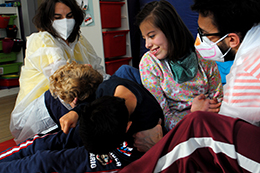
En ocasiones nos empeñamos en hacer uso de un lenguaje oral creyendo que es la mejor vía de comunicación en las aulas. A lo largo de 6 meses una maestra y un educador teatral hemos podido colaborar juntos haciendo de la comunicación no verbal y la estimulación sensorial herramientas del desarrollo cognitivo y psicomotriz en alumnos con pluridiversidad funcional. Durante este tiempo hemos generado dinámicas que han favorecido las capacidades expresivas de alumnos, educadores y familias.
Descargas
Descargas
Publicado
Número
Sección
Licencia
El Servicio de Publicaciones de la Universidad Pontificia Comillas (la editorial) conserva los derechos patrimoniales (copyright) de las obras publicadas en Padres y Maestros.
Pasado el periodo de embargo está permitida la reutilización del contenido bajo una Licencia Creative Commons Atribución-NoComercial-SinDerivadas 3.0 Unported.