El valor de la diversidad: el rol estratégico de las mujeres en el renacimiento de los territorios rezagados en Italia



Starting from the theoretical and research findings developed within the Horizon Europe Re-Place Project, this paper analyses the specificity of female migratory pathways in left-behind areas. It emphasizes the importance of a gender-sensitive perspective in restoring a “sense of place” in regions often overlooked by public policies. Focusing on national and international mobility dynamics in specific Italian areas—especially in the post-pandemic context—the research highlights women as central protagonists. While affective and subjective dimensions shape all migratory pathways, female mobility presents a particular complexity where intimate motivations are deeply intertwined with economic and systemic factors. This complexity is compounded by the systemic disadvantages and exclusions faced by women—issues that have worsened since the pandemic, despite a recovery in mobility.
Employing a multidisciplinary approach, the study combines extensive data from leading research with key players and individuals. Through in-depth interviews, it investigates how gender functions as a social structure and examines both the amplification of inequalities and the emergence of potential paradigm shifts. Particular attention is given to how women’s transformative roles in small municipalities foster plural, community-oriented contexts, combat gender gaps, and contribute to territorial regeneration.
A partir de los hallazgos teóricos y empíricos desarrollados en el marco del Proyecto Horizon Europe Re-Place, este artículo analiza la especificidad de las trayectorias migratorias femeninas en los territorios rezagados (left-behind areas). Se subraya la relevancia de adoptar una perspectiva sensible al género para restituir un “sentido de lugar” (sense of place) en regiones frecuentemente invisibilizadas por las políticas públicas. Centrándose en las dinámicas de movilidad nacional e internacional en determinadas áreas italianas —particularmente en el contexto pospandémico—, la investigación sitúa a las mujeres como protagonistas centrales. Si bien las dimensiones afectivas y subjetivas configuran todas las trayectorias migratorias, la movilidad femenina presenta una complejidad particular, en la que las motivaciones íntimas se entrelazan profundamente con factores económicos y sistémicos. Esta complejidad se ve agravada por las desventajas estructurales y las exclusiones que enfrentan las mujeres, problemáticas que se han intensificado desde la pandemia, pese a la recuperación de los flujos de movilidad.
Mediante un enfoque multidisciplinario, el estudio articula datos procedentes de investigaciones de referencia con actores clave e individuos. A través de entrevistas en profundidad, se indaga cómo el género opera como estructura social, examinando tanto la amplificación de las desigualdades como la emergencia de potenciales cambios de paradigma. Se presta especial atención al modo en que los roles transformadores de las mujeres en los pequeños municipios propician contextos plurales y orientados a la comunidad, contribuyen a reducir las brechas de género y favorecen la regeneración territorial.

Women; migration; left-behind areas; soft power; social and cultural innovation; generativity
Mujeres; migración; territorios rezagados; poder blando; innovación social y cultural; generatividad

1. Introduction
A crucial strand of contemporary migration studies has highlighted the key role of women’s mobility in understanding how social change unfolds across countries of origin, transit and destination (Macioti, Vitantonio & Persano, 2007; Tognetti Bordogna, 2015; Canta, 2017; Montecalvo, 2019; Mora & Piper, 2021). Far from being a marginal or merely accompanying component of migration, women increasingly occupy central positions in organising household strategies, creating new social and symbolic ties, and preserving and revitalising local memory. Female mobility—including inward movements such as new arrivals and return migrations, as well as outward projects such as temporary, seasonal or circular migration—acts as a catalyst for transformation by introducing new skills, imaginaries and relational networks that connect marginal areas to wider spatial scales (Ciofalo & Gavrila, 2020; Fondazione Migrantes, 2023, 2024). Building on the literature that conceives gender as a social structure shaping opportunities, constraints and identities, this paper adopts an intersectional perspective to examine how gender, class, age and nationality intersect in women’s trajectories of (im)mobility in “left‑behind” areas.
In Italy, these dynamics are particularly salient in left-behind areas, which have been experiencing long‑term demographic decline and structural disadvantage. According to recent data, more than 4,000 municipalities located in predominantly mountainous and rural regions are at risk of depopulation, facing an average annual demographic decrease of −5.5%, twice the national rate of −2.2% (ISTAT, 2024). With around 13 million residents, projections estimate that 82% of these municipalities will be in decline by 2043 (ISTAT, 2025). These territories are characterised by limited access to essential services, inadequate infrastructure and persistent out‑migration of young people, trends that have intensified in the post‑pandemic transition and are compounded by record‑low fertility rates (1.18 children per woman in 2024). Within this broader scenario, the Horizon Europe Re‑Place Project has developed a comparative framework to analyse how different types of left‑behind areas are affected by, and can potentially harness, diverse forms of mobility and immobility. The cases of two left-behind areas in Italy—in Southern Cilento and in the Graian Alps—exemplify distinct configurations of territorial marginality and migratory experience.
Against this backdrop, the paper investigates how women’s migratory pathways contribute to the socio‑economic and cultural regeneration of left‑behind places, while at the same time revealing the persistence and reconfiguration of gendered inequalities. Our analysis draws on qualitative data, gathered through 24 in-depth interviews with local stakeholders and 81 interviews with individuals, 52 of whom were women and 37 of whom had direct mobility experience. Theoretically, the study is grounded at the intersection of gender studies and spatial sociology and challenges rigid dichotomies between economic and affective drivers of migration (Carling & Collins, 2018; Hagen‑Zanker, Hennessey, & Mazzilli, 2023), proposing instead the notion of a “tradition–innovation polarity” that structures women’s negotiations with local contexts. The main argument advanced is that women—whether long‑term residents, returnees, newcomers or out‑migrants—are not passive victims of depopulation, but active agents who mobilise translocal resources and practices to restore a sense of place and to experiment with new forms of community‑oriented development. The following pages first introduce the methodological approach and case‑study design, then examine the empirical material from Southern Cilento and the Graian Alps, and finally reflect on what these findings suggest for a gender‑sensitive vision of local and regional development.
2. Context and theoretical framework. Migrant women in the Italian and international landscape, from invisibility to generativity
In Italy and Europe, migration has historically been interpreted primarily through a male lens, with the female dimension often overlooked or relegated to a passive and subordinate role (Kofman, 1999). However, this androcentric paradigm has been vigorously challenged by the “engendering migration” literature, which has shifted the analytical focus from women as mere “dependents” to gender as a constitutive element of mobility (Hondagneu-Sotelo, 1994; Mahler & Pessar, 2006). Pioneering works and subsequent scholarship have highlighted the qualitative transformation of the “feminisation of migration,” recognizing women’s agency in transnational care chains, global labour markets, and family survival strategies (Morokvasic, 1984; Lutz, 2010; Piper, 2008).
Recent studies show that an increasing number of women migrate independently of their family units (Staniscia, 2009), and that throughout the migration process they are able to build and/or maintain complex relationships in both origin and destination contexts. Equally importantly, research has highlighted that, in order to rebuild relationships and activate circular and reciprocal processes of coexistence, it is particularly effective to work primarily with women.
Federici (2014) describes women as the cornerstone upon which everyday coexistence is built: their strength and autonomy are crucial for the integration of the entire family, and even when they migrate alone, they often play a key role in sustaining transnational family life, welfare arrangements, and work. In this view, the relational dimension is essential and must be reconstructed whenever mobility-related ruptures lead to isolation or deadlock, opening up possibilities for new forms of connection grounded in an awareness of women’s own value, their capacity to act as bridges between cultures, and the powerful impact of mutual support among women.
This perspective resonates with what Edgar Morin (2007) identifies as a necessary paradigm shift from “Ego-regulation”—centred on individualistic competition and accumulation—to “eco-regulation” and “social-regulation,” which re-embeds human existence within its environmental and community bonds. Unlike liberal corporate feminism, which primarily seeks to break the “glass ceiling” for a privileged few (Reinhold, 2005), this ecological orientation underpins a feminism of the “majority.” It prioritizes the collective quality of life over individual career progression, aiming to combat labour exploitation, revalue the systematic delegation of care work, and guarantee the right to health and an unpolluted environment. By opposing profit maximization logic that severs social ties, this approach reframes women’s agency not just as economic empowerment, but as a central force in regenerating the “sense of place” (Meyrowitz, 1985) and community cohesion.
This perspective is particularly relevant when examining the living conditions of migrant women, who are exposed to multiple and intersecting forms of discrimination: on the one hand, as women in societies still deeply marked by gender inequalities, and on the other, as migrants, often perceived as “foreign bodies” within the social fabric (Teodorescu, 2024). In Italy, for example, only 47.5% of foreign women aged 15-64 are employed, compared to 74.9% of foreign men (Openpolis, 2023, 2024). Especially for those originating from non-European countries, the Italian labour market often offers jobs that do not match their level of qualification: migrant women are frequently employed in disadvantaged positions characterised by limited social mobility and lower wages (Staniscia, 2009), thereby contributing to the phenomenon of the so-called “working poor.”
Since 2005, the female component has begun to acquire increasing weight, due both to the rise in the aforementioned family reunifications (mostly involving women) and to the eastward expansion of the EU free movement area, which has generated new migration flows from Eastern Europe (ISMU, 2020, 2025). Although the highest share was recorded in 2012 (53.2%), it can nonetheless be argued that over the last twenty years it has remained relatively stable, fluctuating between 50% and 53% (IDOS, 2023).
The roots of this phenomenon can be traced back to the 1970s, when women began arriving in Italy with migration projects driven by emancipatory aspirations, to the point that scholars started to speak of a “feminisation of migration flows” (Quartararo, 2011; Salmi, 2018). The emancipation of Italian women inevitably intersects with that of migrant women, and female migration gradually came to be recognised as a new reality with its own specific features: the migrant woman, once invisible and passive, increasingly becomes an active protagonist of social and economic life. Her role changes, yet forms of invisibility persist. This invisibility has many faces: it concerns being a woman, a migrant, and confined to the domestic sphere; being embedded in a complex labour market; and remaining largely absent from media agendas. In the five-year period 2019-2023, news items addressing migration from a gender perspective numbered only 113, corresponding to 1% of the 12,468 pieces devoted to migration-related issues (Fondazione Migrantes, 2024).
Migrant women therefore bear the double disadvantage of being women—perceived as weaker, more fragile and more vulnerable, and thus discriminated against at multiple levels—while at the same time often displaying, compared with male migrants, a greater capacity to innovate, to identify resources and solutions, and to build networks (UNFPA, 2006; IDOS, 2023). Marginalised and excluded, yet strongly present in domestic and care work, capable of saving money and sending remittances (Montanari & Staniscia, 2009), and skilled at weaving together tradition and change, migrant women are in fact marked by a strong social protagonism. This protagonism—as will be shown through the interviews conducted with women with mobility experience analysed in the current paper—takes shape in the maintenance of ties with their place of origin and in their ability to build new relationships in the host country. It is also expressed in the strategies of adaptation they develop, drawing on their work and cultural competences to navigate different situations, thereby contributing to transforming and making sense of the migratory experience and enriching the new socio-cultural context in which they live.
This vitality—visible both in quantitative data and in women’s capacity to influence multiple spheres of society—also characterises Italian women abroad. Since 2006, the number of Italians registered in AIRE (the Registry of Italians Resident Abroad) has increased by 91%, with women’s emigration growing by 99.3%. A trend that has grown further in recent years, with the presence of Italian women abroad reaching nearly 116%, compared to 98.3% of men (Fondazione Migrantes, 2025).
Over time, the traditional figure of the migrant woman who moves abroad solely to reunite her family has been progressively replaced by that of a modern, dynamic woman, motivated by the prospect of an independent life, greater economic well-being and a more rewarding professional career, and increasingly oriented towards countries with fewer gender barriers to positions of responsibility and higher pay (Fondazione Migrantes, 2023). Not surprisingly, among older individuals who decide to move abroad after retirement, women are far less driven than men by the search for tax or economic advantages. As our interviewees note, many women are also driven by the search for welfare systems abroad that are more responsive to their needs as workers and mothers, and more supportive of children and family life. This contributes to the presence of 3,856,922 families among the nearly 6.5 million Italian citizens residing abroad (Fondazione Migrantes, 2025). The drivers of women’s mobility lie, therefore, not so much in economic interest as in the pursuit of well-being linked to gender valorisation, the recognition of their skills and merits, and the possibility of living closer to loved ones. The considerations developed so far can also be extended to what is now the most significant component of Italy’s migration dynamics, namely internal mobility. On average, of around two million changes of residence per year, three quarters concern movements between Italian municipalities. Recent studies (Fondazione Migrantes, 2024) show that six out of ten of these moves take place within the same province, one in ten within the same region, and three in ten involve movement to another region; more than one third of the latter flows originate in the Mezzogiorno1 and are directed towards the Centre-North.
Since 2014, the population of the so-called aree interne (inner areas)—many of which, though not exclusively, are located in Southern Italy—has fallen by 5%, equivalent to about 700,000 inhabitants (ISTAT, 2024). Although depopulation affects both women and men, several studies show that women’s presence—often sustained by return migration—is crucial to the demographic and social stability of these territories, and that in some areas a modest countertrend is emerging thanks to the growth of female employment (Rosina, 2024; Corazza, 2025). The activism displayed by women in marginalised areas (Cersosimo et al., 2025), particularly through their engagement in neo-rural initiatives and associative life, makes it possible to explore the complex interplay between gender dynamics and biographical trajectories, tensions between mobility and permanence, territorial constraints, processes of marginalisation and practices of emancipation. This dynamism offers fertile ground for analysing inequalities from an intersectional perspective and for grasping the transformative potential that exists within internal areas (Cersosimo et al., 2025; Ferrazzi, 2025; Associazione Italiadecide, 2025), which nevertheless remain strongly affected by adverse structural trends.
Deaths, declining births, internal migration towards larger or metropolitan cities and outward migration across national borders are converging to produce trends that are highly problematic and detrimental for the country as a whole (De Rossi, 2020; Barbera, Cersosimo, & De Rossi, 2022). It is precisely in this context that a project such as Re-Place takes shape, promoting a development model for marginal territories grounded in solidarity, co-creation and the valorisation of migratory experience in all its different components. In this perspective, the notion of “generativity” highlighted by Fondazione Migrantes (2024) is particularly relevant, understood not as an abstract idea but as a practice rooted in people’s lived experiences:
The key word is generativity, which is not an abstract concept but rather rooted in people. And it is precisely generative people who make a difference, regardless of their place of origin or where they live. Generative people experience generativity as a community, and to best express their potential and capabilities, replicating good practices, they must be guided by a policy that is also community-based and aimed at the well-being of all. (Fondazione Migrantes, 2024, p. 13)
This concept—understood as a new way of thinking and acting, both individually and collectively, which entails socially oriented, creative and responsible action capable of positively influencing how people produce, innovate and inhabit places, breathing new life into them (Magatti & Giaccardi, 2014; Dario, 2014)—is particularly emblematic of the role played by the women interviewed. Drawing on their mobility experiences, these women were driven by highly complex motivations, rooted in intimacy and subjectivity, which—as will be shown—have been translated into strong forms of social protagonism, making them an important resource for the territories that have welcomed them.
3. Methodological issues. From macro-level analyses to in-depth interviews in Southern Cilento (Southern Italy) and the Graian Alps (Northern Italy)
The complexity of the multiple and diverse processes affecting the geographical areas examined in the Re-Place Project2—beginning with the dynamics of female mobility—was explored by drawing on the experience of local experts as well as individuals and families with and without migratory backgrounds.3 Their perspectives were collected on both conventional development strategies (material infrastructure, innovation and business) and non-conventional dimensions of development (well-being, identity and attachment to place, social innovation and community development), as well as on the broader effects triggered by migration processes (McGarrigle et al., 2024).4
To this end, 24 in-depth interviews (Kvale, 1996; Minichiello et al., 2008; Montesperelli, 2010, 2014) were conducted with key informants from the private sector (employers, social entrepreneurs/eco-entrepreneurs, non-profit organisations, business associations), the public sector (public administrators and representatives of public bodies) and civil society (political parties, social partners, citizens’ groups, non-governmental institutions, associations), along with 81 in-depth interviews with individuals and families with and without migratory experience. Recruitment of opinion leaders and individuals/families was initiated with the support of local mediators, enabling the highly pertinent identification of the aforementioned profiles, who were subsequently contacted by Re-Place researchers via telephone and/or email to request their participation in the study.5
Given the substantial amount of material collected, this paper focuses on selected elements emerging from the in-depth interviews with female experts and women with migratory experience (Table 1). These elements are interpreted through a theoretical framework that conceives of gender as a social structure (Risman, 2004)—that is, as a set of roles, behaviours, expectations and meanings that a society associates with gender differences, shaping relationships and individual identities in culturally and historically specific ways rather than reflecting innate or biological traits. Through this process, the main agencies of socialisation transmit stereotypes and normative models, creating a complex system that influences women’s identities and their scope for action.
Such a framework inevitably adopts an intersectional perspective, considering how gender interacts with other social categorisations that often function as power differentials, such as ethnicity, class, nationality, age and (dis)ability (Crenshaw, 2017; Arruzza, Bhattacharya, & Fraser, 2019). Within the context of “left-behind” areas, the aim is to explore whether mobility acts as a transformative answer to territorial marginalisation. Specifically, we investigate how women’s migratory pathways—intersecting with local constraints—either reproduce systemic inequalities or, conversely, generate new forms of community resilience (Allievi, 2025). By focusing on these dynamics, the study assesses if female mobility can trigger a paradigm shift capable of countering both gender gaps and the socio-economic decline of small municipalities.6
| Category | Southern Cilento | Graian Alps | Total |
|---|---|---|---|
| LOCAL FEMALE STAKEHOLDERS | |||
| Local Stakeholders | 2 (Institutional sector) | 7 (2 Institutional, 2 Private, 3 Third sector) | |
| TOTAL NUMBER OF INTERVIEWS WITH FEMALE STAKEHOLDERS | 2 | 7 | 9 |
| FORMER AND CURRENT RESIDENTS IN THE CASE STUDY AREAS | |||
| Women with mobility experience | 13 | 24 | 37 |
| In-migrants | 8 | 19 | 27 |
| Internal out-migrants | 3 | 5 | 8 |
| International out-migrants | 2 | 0 | 2 |
| Women without mobility experience | 7 | 8 | 15 |
| TOTAL NUMBER OF INTERVIEWS WITH FEMALE CURRENT AND FORMER RESIDENTS | 20 | 32 | 52 |
From this perspective, attention focused on the testimonies of female stakeholders, representing 2 out of 14 experts interviewed in Southern Cilento, 7 out of 10 in the Graian Alps, and, overall, 9 out of 24 when considering both case studies together (Table 1). This difference between the two territories reflects the greater barriers that women in Southern Italy face in the labour market, often hindering their professional advancement, which often prevent them from breaking through the “glass ceiling” (van Zoonen, 1994; Agenda Digitale, 2025).
The presence of women increases considerably when the wider sample of civil society is considered. In Southern Cilento, 20 out of 40 respondents among the former or current residents were women. Female participation was even higher in the Graian Alps, involving 32 women out of 41 interviewees, bringing the overall number of women interviewed across both case studies to 52 out of 81, 37 of which with migratory experience (Table 1).
Regarding age, the distribution of women interviewed belonging to civil society is relatively homogeneous, with a prevalence of interviewees in the 40-59 age bracket compared to the 18-39 group and the over-60s. This overall balance results from a higher presence of young women in Southern Cilento and a higher proportion of women over 60 in the Graian Alps, while the 40-59 age group shows greater equilibrium between the two areas. In terms of socio-professional status, most interviewees in the two case studies are employed, many of them in the education and healthcare sectors, followed by retired women, female entrepreneurs, and unemployed women. It is noteworthy that women’s protagonism in the Graian Alps case study emerges not only in the entrepreneurial sphere—which is strongly connected to the interviewees’ migration backgrounds, as only 1 of the 6 entrepreneurs has no mobility experience—but also among employed women, who often represent local institutions, and among retired women, who assume leading roles within local associations. In terms of mobility profiles, there is a clear predominance of interviewees with migration experience (Table 1).
The element that truly differentiates the two contexts is the trajectory of this mobility, which appears much more heterogeneous in the Southern Cilento area. Of the 13 women with migratory experience interviewed, 8 chose to settle—either permanently or temporarily—while 5 moved to other Italian regions (mainly in the Centre-North) or abroad (particularly Germany and Iceland). By contrast, the migratory experiences in the Graian Alps are characterized by a prevalence of “proximity” internal mobility: although diverse, the movements of the 24 women—both incoming and outgoing—have primarily involved towns or cities within the same region, with Turin acting as the central hub, reflecting a more localized pattern of exchange.
4. Results
4.1. Southern Cilento: Negotiating tradition and innovation in women’s mobility pathways
In the Southern Cilento context, women’s mobility is shaped by what we define as a “tradition-innovation polarity:” on one side, enduring expectations tied to family care, cultural reproduction, and territorially bounded gender roles (tradition); on the other, emerging practices of economic independence, educational mobility, and redefinition of place-based identities (innovation). This dynamic tension illuminates how women negotiate agency within structural constraints.
The interviews with female stakeholders and women from civil society, reveal a profound attachment to place, expressed through the active preservation of community heritage, from patronal festivals and traditional weddings to the recovery of local historical memory. This emerges very clearly from the words of one of the experts interviewed, who notes how the isolation of these territories has played a decisive role in preserving such traditions:
The weaknesses, which ultimately also became strengths for future development, are precisely the “insularity” of these environments, because those who could, pursued education, and those who studied became high achievers; thus, they moved to metropolitan cities where they became successful in their work […]. This “closure” is both a weakness and a strength, because it has also allowed these territories to preserve their traditions, and fortunately, family values here are very strong and deeply felt. In the end, closure has become an openness towards other places. (Stakeholder, institutional sector, former teacher)
At the same time, a sociopolitical and cultural ferment is emerging, grounded in the recovery of local roots. A particularly illustrative example is a process of generational renewal driven by the active participation of young people in civic and community life through initiatives aimed at both revitalizing local traditions and fostering innovation.
The fact that there is now a younger local administration has brought about a change […]. At present there is a strong wave of renewal, especially driven by university students: young people have created a beautiful association called “Radica,” which already evokes the idea of roots, and they are carrying out important work to recover local traditions. (Stakeholder, institutional sector representative, mayor)
Women’s mobility is driven by a strong desire for education and is therefore often linked to university choices (Wiest, 2016), but it is also shaped by the difficulties of reconciling emotional ties, skills and the desire to remain in the local area. The testimonies collected show that women are frequently the protagonists of emigration decisions when confronted with the constraints imposed by the territory—first and foremost the lack of jobs matching their skills. These limitations are acknowledged even by those who have chosen to stay, who describe Cilento as a “rough diamond” worth investing in:
What I previously saw as a constraint, forcing me to stay here, probably wasn’t as bad as I thought, because I believe Cilento is a bit like a rough diamond: it has so much to offer, but you also have to learn how to value it and dig deep. (Non‑migrant woman, 34 years old)
These assessments must contend with a range of gendered expectations and role constraints (Ruspini, 2009; Wiest, 2016). Only when specific family and work conditions are in place, and when a reflexive awareness has developed through life-course transitions, does returning to the hometown become a viable option:
At 18 I ran away from my hometown—quite literally ran away—because at a certain point you feel the need to see new environments […]. Later on, I found myself weighing family considerations more heavily, including the prospect of raising a child in a quieter context rather than in the city, and it was largely these reasons that motivated me to come back. (Return migrant, 34 years old)
Obviously, my only thought was always to come back—I had that desire and I still do—but now the situation is a bit different because I have two children who were born there, are growing up there and have settled in there; it would be difficult for them to move here and adapt, but it’s also hard to be there on my own without any help […]. So here my main strength is definitely my family, the fact that it’s a small town where everyone knows each other. And there the strength is that you have better career opportunities: if you’re good, you get ahead, and that’s encouraging for someone just starting out. (International out-migrant, 35 years old)
Similar experiences can be observed in other territorial contexts, particularly in Eastern European countries. Proximity to family, a peaceful environment and a close relationship with nature are among the key factors driving highly qualified young women to return to rural areas in countries such as Poland (Musial, 2025). Although return migration and the arrival of new residents can bring fresh energy, Southern Cilento still faces structural challenges (fragile infrastructure, limited community resources and persistent social isolation), which become even more acute when viewed through the lens of women’s experiences (Johansson, 2016). Despite this, the statements of younger generations of women—often compelled to emigrate—reveal a strong sense of attachment to place and a desire to contribute to its development by drawing on the knowledge and skills acquired in other Italian and/or international contexts, trusting in what the future, however uncertain, may hold:
For now, I don’t see any real possibility of investing there, but I would like to see my area grow, drawing on what I am doing and on the experience I have gained—myself and other people of my age, those who have stayed, those who have left and would like to return because, after all, it is home. I don’t know what will be possible in the future, but if we start laying the foundations now… (Internal out-migrant, 22 years old)
However, especially in the case of experiences abroad in European countries such as those in Northern Europe—which show greater sensitivity toward policies for reconciling work and family life and, more generally, are more committed to reducing the gender gap across different spheres of society—this sense of attachment is weakened, and a certain impatience emerges toward the “closure” previously mentioned, which is often perceived as an insurmountable obstacle to full self-determination:
Nordic countries have a different sensitivity to these issues… you don’t need to have two years of parental leave, a year or even six months is enough, but not one or two weeks or a month like it is there [referring to Italy] at the moment… for me, many things have simply become unacceptable: I cannot accept that, just because I am a woman, I am seen as a machine for having children, that I cannot weigh more than 70 kilos… it is an alienating reality, and I cannot imagine starting to go backwards again on these things. (International out-migrant, 28 years old)
Other women, while clearly highlighting certain limitations of the Cilento territory—particularly with regard to the needs of young people—appear, conversely, ready to put aside their personal aspirations, opting for more or less temporary returns to Southern Cilento. Such choices often serve to activate informal support networks and mechanisms of social cohesion aimed at sustaining the most vulnerable groups, thereby giving concrete form to that socially oriented, creative and responsible generative action capable of positively influencing the ways in which places are produced, innovated and inhabited:
I had suggested creating a meeting place for older people, using a building owned by the municipality, refurbishing it and bringing elderly people there and then, having worked with the cooperative in care services… also to enable an exchange of knowledge, where you teach them and they teach you. (Return migrant, 48 years old)
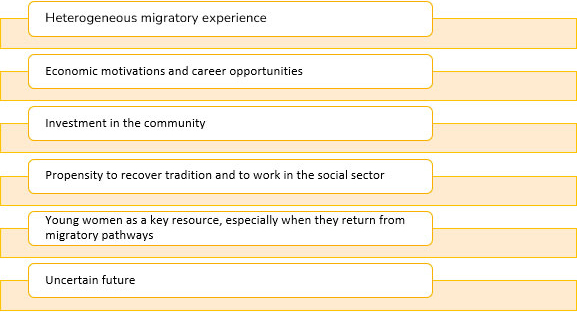
The migration trajectories of the interviewed women thus appear highly heterogeneous, yet they are consistently marked by a clear intention to invest in the local community. In this way, they become a valuable resource for the social fabric, which—through its more traditional agents of socialisation—stands out for its capacity to welcome and include:
I was born in Mexico City, and my story is a bit unusual and a bit romantic, because for more than 35 years I had dreamed of living between the sea and the mountains […]. I love nature and tranquillity. These are intangible things, but they truly have a value that people sometimes fail to see […]. These are the reasons why my son and I want to stay here […]. At the parish they have been incredibly kind to us and have really included us. (International in-migrant, 50 years old)
From this perspective, the interviews show that women’s mobility plays a decisive role in revitalising territories long perceived as static (McGarrigle et al., 2024). Women who move, return and weave connections between different places activate cultural practices—associations, events, services, educational initiatives—that reshape public space and generate new narratives of marginalisation and resistance. In these processes, the tension between tradition and innovation takes the form of a generative polarization: it opens up spaces where migrant and local memories can enter into dialogue, intertwine and produce shared accounts of vulnerability and coping strategies (Gavrila, 2026).
Figure 1 summarizes the main characteristics of the female mobility in Southern Cilento.
4.2. Graian Alps: Women at the forefront of new models of socio-economic innovation
In the Graian Alps area, the structural lack of essential services and public transport creates severe barriers to daily mobility. This isolation particularly affects vulnerable groups like the elderly and young people, who are less likely to own private vehicles. These difficulties become even more acute for women who, when they become mothers, often find themselves having to emigrate because of social isolation and the distance from key early-childhood services (above all schools and hospitals), despite their strong attachment to place, which leads them not to abandon entirely the hope of returning once their children have grown up:
We really love the mountains, but we hardly ever go there because we always have to be looking after our child… and I also think that a family needs a solid social network around it […]. So we decided to go back to Brianza, where there are more services. I really miss that very wild, authentic relationship with nature here, because I loved spending time in the woods, outdoors, in contact with extreme nature, going for long walks up on the peaks where there is no phone signal. (Internal out-migrant, 46 years old)
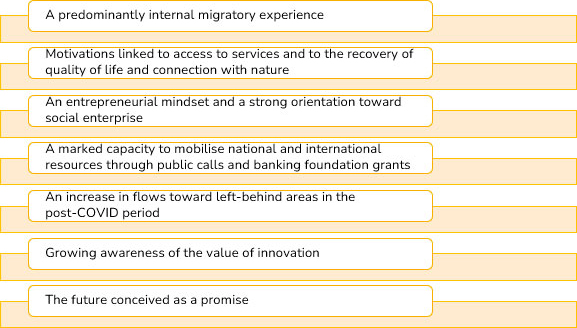
In this regard, female stakeholders from the institutional sector demonstrate a strong awareness of structural weaknesses in infrastructure and services. Crucially, they display a proactive capacity to mobilise diverse resources—ranging from regional public calls to EU funding—to address these long-standing deficits. Beyond specific welfare initiatives like Accorciamo le distanze (aimed at reducing transport-related barriers for medical care), their efforts extend to broader territorial development, including mobility infrastructure, environmental sustainability, and community hubs. This strategic approach is evident in their ability to secure funding for tangible improvements:
All the municipalities and the Unions pay close attention to public calls for funding […]. At the moment we have applied for, and should soon be ranked in, a call for footpath networks that will cover the entire territory of the Union […]. We have won several regional calls that have enabled us to carry out substantial work on the wood supply chain. (Stakeholder, institutional sector representative, mayor)
Furthermore, their engagement with international networks highlights a vision that connects local needs with broader EU priorities, particularly regarding climate adaptation and tourism.
Women play a strategic role in territorial regeneration not by imposing abstract models of modernization, but by promoting a situated approach to innovation that respects local constraints. While aiming for inclusive governance in line with EU paradigms, female stakeholders demonstrate a sophisticated understanding of how “innovation” must be carefully adapted to marginal contexts to avoid damaging fragile socio-environmental balances. As noted by Corrado (2010), creativity in Alpine areas often means reinterpreting traditional resources rather than replacing them. This reflexive and sustainable vision of innovation—where “new” means making the territory usable again without distorting it—is clearly articulated by local experts:
Talking about innovation in agricultural management in mountain areas is a bit ambitious, given the constraints imposed by the territory on the one hand […]; on the other hand, if these areas were approached with an uncritical drive for innovation, their very structure could be devastated. I believe that the most innovative aspect of land associations is their ability to reclaim these plots and make them usable again in a sustainable way, enabling modest yet significant economies of scale. (Stakeholder, third‑sector representative, association president)
An awareness that has also shaped the mobility trajectories of the women in the Graian Alps, where female-led entrepreneurial and associative models have emerged, capable of generating stable employment and multifunctional services. The collected testimonies reveal a strong female protagonism, keen to make the most of local potential and enthusiastically “living on bread and innovation,” despite the risks inherent in such complex and pioneering initiatives:
Many years ago we set up a cooperative that managed the cross‑country ski trail. Then we started doing forestry work and environmental maintenance as well […]. We also specialised in managing public calls, and we work mainly for public bodies […]. With this company we have specialised in chestnut management, from pruning to dealing with residues. We then created a family farm through which we mainly grow herbs. In particular, we are reclaiming land that has been abandoned for 60-70 years, and we believe in it strongly. I always say, with a healthy dose of madness. (Internal in-migrant, 50 years old)
I liked the idea—I had always wanted, sooner or later, to try to open something of my own—and so, once we saw that it was feasible, we started working on the project […]. It’s partly my way of doing things, because I persist until I manage to achieve what I have imagined, and partly, of course, a bit of recklessness, enthusiasm—all these small traits together have kept me going. (Internal in-migrant, 35 years old)
Among the many initiatives launched, hybrid social enterprises stand out—often with female leadership—which finance community activities, family support and inclusion projects, and which promote and enhance pluralism and social cohesion, as emerges from the words of one interviewee:
The main goal of our cooperative is to act as a kind of leaven, an enzyme of local development […]. We also work with new citizens, that is, people who are on a pathway to obtain international protection and who arrive via different migration routes or sea landings. (Stakeholder, private‑sector representative, board member of a social cooperative)
Women’s entrepreneurial capacity in rural areas has been highlighted as a key driver of resilience across various European contexts. For instance, research in Poland (Rollnik-Sadowska, 2016) demonstrates how female entrepreneurship is closely linked to the innovative use of traditional local resources, functioning both as a response to unemployment and as a strategy for reconciling work and family life, a dynamic that mirrors the Italian experience. In parallel, voluntary and social-promotion associations engage women in designing events, educational programmes and activities for local sustainability, thereby profoundly strengthening the sense of belonging and cohesion within the place.
The vast majority of members of the “Strong Ring” are women, and they are all very happy to be part of it, and what makes me proudest is that we have created a community. We meet every fifteen days, and they have even asked to continue during the summer, when the other women come up who are usually not here in winter […]. What pleases me most is that we all belong to the association, we are all involved […] and therefore we all feel part of something. (Internal in-migrant, 58 years old)
From the collected testimonies it also emerges that, in the post-COVID period, there has been a substantial increase in temporary and/or permanent migration flows toward these territories—especially from neighbouring areas and, in particular, from the city of Turin—also in light of the opportunities created by digital technologies, which are making the much-discussed concept of “metro-mountain” increasingly tangible and encouraging an expansion of opportunities and, consequently, a vision of the future as a promise (Barbera & De Rossi, 2021).
Working online, I have to say I have seen a major change, because the organisations and people I regularly collaborated with—for whom remote work or online meetings were already normal before—have now seen these practices become much more common for everyone. As a result, it has become easier to live far from urban centres. Whereas before one always had to justify this choice, now many people have moved to the mountains. (Internal in-migrant, 45 years old)
These flows are also the outcome of a new female imaginary that views rurality as an idyll, as a healthy place removed from the disturbances of modernity (Wiest, 2016). The female protagonism observed in the Graian Alps thus charts a promising path for turning left-behind areas from places of inequality into opportunities for the country as a whole (Barca, Carrosio, & Lucatelli, 2018), whereby “going freelance” has effectively become “placing oneself at the centre,” with positive spillovers for the entire community.
I have drawn on all the skills I have acquired over the years—at university, at work, and through my experience with mushrooms—and I completed the “Starting a Business” programme offered by the Region […]. I have already planned some activities for this summer; for example, I have started collaborations with a mountain pasture to help people get to know it and begin working there, and at the same time we are setting up the mushroom farm. (Internal in-migrant, 30 years old)
In this context, women’s openness to new opportunities and their generative entrepreneurial spirit—acting as a “leaven” for local development and attentive also to the most disadvantaged groups—make it possible to frame the female mobility observed in the Graian Alps as a “gentle revolution” and, as such, a valuable resource for the regeneration of these places:
I studied Communication Sciences and Semiotics and, at the same time, I am a musician […] and I collaborate with various organisations in the Piedmontese area, especially on projects linked to traditional and folk music […]. There is a CAS (Extraordinary Reception Centre for migrants) here, hosting around fifty families […], which I see as something inherently positive, but they must be given the opportunity to learn the language, to integrate, to understand, to be able to work […]. The “Coro Moro” was a wonderful experience: it really allowed some of the young people to be recognised by local residents and thus to break the ice, to manage to integrate, but above all to see themselves as part of something positive […]. There was a truly enriching exchange. (Internal in-migrant, 45 years old)
Figure 2 summarizes the main characteristics of female mobility in the Graian Alps.
4.3. Two faces of the same country: A North-South comparative perspective
Our analysis has highlighted differences in the relationship between tradition and development: in the South, a diffuse, community-oriented form of governance seems to prevail, with innovation processes that unfold through the recovery of local roots; in the North, an entrepreneurial female leadership emerges, able to connect local networks with EU-funded opportunities.
In Southern Cilento, women’s mobility appears more diversified (combining internal and international dimensions) and shaped by life needs linked to personal and/or professional fulfilment. Out-migration—especially international mobility among young women—becomes a way to overcome the limits to personal and professional growth associated with gender (being a woman) and territorial origin (being born in a left-behind area) (Sonzogno, Urso, & Faggian, 2022; Sonzogno & Urso, 2025). These constraints are compounded by family control—particularly from male relatives—and by social expectations that confine young women to traditional care and domestic roles (Leone, Iovino, & Orio, 2025).
In the Graian Alps, women’s mobility appears less diversified (mainly following internal trajectories) and is driven by lifestyle choices evoking a “return to one’s roots,” linked to the opportunities offered by unspoilt nature, especially in the post-COVID period.
In both areas, post-pandemic mobility intensifies toward urban centres, but women play a key role in maintaining social ties and fostering participatory regeneration. The latter—as the literature on the topic argues (Casavecchia, 2014)—entails a transformative action directed toward a freely chosen goal, respectful of the context and open to the future. Beyond being guided by subjective choices and a sense of purpose—since regeneration means giving new life, bringing forth, and making visible what is somehow rooted in the origin, with deep roots that precede the action and make it possible—this action is also projected toward the future because it embodies “the ability to see, discern and imagine, to recognise what has potential, to understand the conditions under which it can develop, to exercise imagination and hope with competence and care” (Ibid.).
With regard to the mobility pathways undertaken, all the interviewees strongly invoke this concept: in Southern Cilento, by prioritising the relationship between past and future, the object of inner tensions; in the Graian Alps, by effectively unsealing the future, opening up to the new opportunities offered by the territory and practising a form of “return to one’s roots.” In both cases, the regenerative action of these women adds social value, unlocking “the static regime of exchange and equivalences and, in doing so, increasing life. Open to novelty, it is an unprecedented gaze on the world. For this reason, it finds original paths, even by activating resources that have not yet been used” (Ibid.).
The thematic analysis of the in-depth interviews thus made it possible to identify three main directions along which the value of diversity takes shape:7
Generational dynamics and female leadership
The women’s accounts highlight an increasing female participation in decision-making processes, both at the institutional and associative level. Generational change in some municipalities has strengthened young people’s political engagement, catalysing initiatives that reinforce local belonging and territorial cohesion. Female leadership emerges both in the management of local projects and in the capacity to create formal and informal collaborative networks. The role of women’s leadership in left-behind areas is also emphasised by Lucatelli (2025), who underlines women’s protagonism in institutions—albeit rarely in top positions—as well as in associations, third-sector organisations, community life, schools and healthcare facilities.
Innovation, tradition and sustainability
The dimension of innovation is closely intertwined with the valorisation of local traditions, as shown by social enterprises that propose hybrid models combining economic development and social impact. Broadly speaking, women entrepreneurs and managers emerge as drivers of change: in the Graian Alps, by diversifying employment opportunities and ensuring the sustainable management of local resources; and in Southern Cilento, as “explorers” of new opportunities abroad and key actors in processes that enhance local resources and traditions.
Barriers and policies
Structural barriers persist: difficulties in accessing services, infrastructure gaps, the low representation of women in top management roles (especially in Southern Cilento), and an employment gap that confirms European trends, with women in EU rural areas having employment rates 13-20 percentage points lower than men. However, numerous EU—and national—funded initiatives promote women’s protagonism through dedicated funding, training programmes, living labs and exchange networks that connect local women entrepreneurs and innovators—forms of support that were already documented several decades ago (Schommer, 2002).
The specificity of women’s pathways in migration processes (Ciofalo & Gavrila, 2020) has thus made it possible to grasp the relevance of a gender-sensitive perspective in restoring a “sense of place” (Meyrowitz, 1985) to the territorial areas analysed, which are often overlooked by public policies (Apitzsch & Kontos, 2008). The personal journeys and social integration trajectories of women with mobility experience are the outcome and expression of a form of protagonism that is autonomous from the male world and from an Italian society that—especially in Southern Cilento—offers them limited and unfulfilling opportunities. At the same time, their lives are marked by economic, family and cultural barriers and constraints that fuel conditions of vulnerability, at times hindering their capacity for participatory regeneration. It is therefore necessary to rethink policies in ways that—by overcoming the often ideological approach to migration (de Haas, 2024)—integrate an intersectional perspective into intervention strategies and place the gender dimension at the centre, including the monitoring and evaluation of interventions, as called for by the 2030 Agenda for Sustainable Development and the Global Compact for Migration (IDOS, 2023).
5. Discussion and Conclusion. Moving into the future: women’s pathways in the rebirth of places
Our analysis shows how the female mobility trajectories represent a real challenge to traditional gender stereotypes, both in the countries of origin and in those of arrival. Women with mobility experience have not simply followed traditional, linear migratory paths driven by economic needs or family reunification; rather, they have been moved by highly complex motivations that have resulted in strong forms of social protagonism. Adopting a gender-sensitive perspective in storytelling is essential for valuing all the components of the local communities. When properly enhanced through public narratives that highlight the richness and complexity of their physical, economic, social and, above all, human “landscapes,” these complementary factors help strengthen the soft power of these places (Gavrila & Rumi, 2025).
Enhancing the role of women with migratory experience in Italian left-behind areas is crucial for regenerating places in decline. In the case studies analysed, women’s participation in governance, associative life and entrepreneurship has produced tangible changes in local socio-economic models and has increased awareness of both structural challenges and territorial potential. This finding is consistent with recent research highlighting the central contribution of women to the revitalisation of left-behind areas in Italy (Sonzogno & Urso, 2025), particularly in terms of their decisions to stay, return or move in ways that sustain local communities.
In relation to the core question of this special issue, the analysis suggests that women’s mobility does not simply accelerate processes of emptying or brain drain, but can also activate countervailing dynamics. When appropriate conditions are in place, women’s mobility helps to reweave social ties, introduce new skills and imaginaries, and support experimental forms of welfare from below. In this sense, female mobility appears as an ambivalent but potentially transformative force: it can reproduce inequalities when constrained by structural disadvantages, yet it can also contribute to reversing trajectories of decline when embedded in enabling local and multilevel governance frameworks.
Theoretically, the paper shows that a gender-sensitive and intersectional lens is indispensable for understanding how mobility interacts with territorial marginalisation. Rather than treating gender as an additive variable, the study illustrates how women’s trajectories intersect with class, age, origin and family status to shape differentiated capacities to act on, and within, left-behind areas. This perspective refines current debates on left-behind places by foregrounding female agency not only as labour supply or care resource, but as a driver of symbolic re-signification and of new forms of community-based innovation (Crenshaw, 2017; Arruzza, Bhattacharya, & Fraser, 2019; Allievi, 2025).
From a policy standpoint, the findings indicate that mobility can become part of the answer to territorial abandonment only if accompanied by gender-responsive measures. This entails supporting women’s access to decent work, housing and services in left-behind areas; recognising and resourcing their associative and entrepreneurial initiatives; and integrating their voices into the design, implementation and monitoring of development strategies (Teodorescu, 2024; Fondazione Migrantes, 2024). In conclusion, the gender perspective emerges as both an analytical and an operational tool for tackling demographic crises and for valuing the plurality of skills and experiences that women bring to the construction of more inclusive, resilient and sustainable territories.
Acknowledgements
The study was funded by the Horizon Europe Project Re-Place - Reframing Non-Metropolitan Left Behind Places Through Mobility and Alternative Development (Horizon grant #101094087) (HORIZON-CL2-2022-TRANSFORMATIONS-01 - A sustainable future for Europe).
References
Agenda Digitale. (2025, February 14). Digital gender gap, questione meridionale e femminile: La triplice disuguaglianza. https://www.agendadigitale.eu/cultura-digitale/gap-di-ogni-genere-il-triplice-svantaggio-di-essere-donna-al-sud/
Allievi, S. (2025). Diversità e convivenza. Le conseguenze culturali delle migrazioni. Laterza.
Apitzsch, U., & Kontos, M. (eds.). (2008). Self-employment activities of women and minorities: Their success or failure in relation to social citizenship policies. VS Verlag für Sozialwissenschaften. https://doi.org/10.1007/978-3-531-90816-8
Arruzza, C., Bhattacharya, T., & Fraser, N. (2019). Feminism for the 99 percent: A manifesto. Verso.
Associazione Italiadecide. (2025). La cultura e i territori. Valori, modelli e strumenti per lo sviluppo delle aree interne. Il Mulino.
Barbera, F., & De Rossi, A. (eds.). (2021). Metromontagna. Un progetto per riabitare l’Italia. Donzelli.
Barbera, F., Cersosimo, D., & De Rossi, A. (2022). Contro i borghi. Il Belpaese che dimentica i Paesi. Donzelli.
Barca, F., Carrosio, G., & Lucatelli, S. (2018). Le aree interne da luogo di disuguaglianza a opportunità per il Paese: Teoria, dati, politica. In L. Paolazzi, T. Gargiulo & M. Sylos Labini (eds.), Le carte sostenibili dell’Italia. Marsilio.
Canta, C. C. (ed.). (2017). Voci di donne dal Mediterraneo. Carocci.
Carling, J., & Collins, F. (2018). Aspiration, desire and drivers of migration. Journal of Ethnic and Migration Studies, 44(6), 909-926. https://doi.org/10.1080/1369183X.2017.1384134
Casavecchia, A. (2014, November 28). Generatività sociale. Bene Comune. https://www.benecomune.net/rivista/rubriche/parole/generativita-sociale/
Cersosimo, D., Ciampi, S., Dicks, B., Iovino, G., Leone, S., Licursi, S., Lucatelli, S., Lupo, V., Orio, A., Sonzogno, G. V., Storti, D., & Urso, G. (2025). Report Donne e aree interne. Riabitare l’Italia. https://riabitarelitalia.net/RIABITARE_LITALIA/
Ciofalo, G., & Gavrila, M. (2020). Migrations, Italy, and Europe between research data and media narratives. Anàlisi, 115-130. https://doi.org/10.5565/rev/analisi.3254
Corazza, L. (2025). Nelle aree interne. In genere. https://www.ingenere.it/articoli/nelle-aree-interne
Corrado, F. (2010). I territori alpini tra marginalità e innovazione verso nuove politiche di sviluppo. In F. Corrado (ed.), Ri-abitare le Alpi. Nuovi abitanti e politiche di sviluppo (pp. 13-34). Eidon Edizioni.
Crenshaw, K. (2017). On intersectionality: Essential writings. The New Press.
Dario, N. (2014). On the concept of generativity. Formazione e Insegnamento, 12(4), 83-94. https://ojs.pensamultimedia.it/index.php/siref/article/view/1613
de Haas, H. (2024). Migrazioni. La verità oltre le ideologie. Dati alla mano. Einaudi.
De Rossi, A. (ed.). (2020). Riabitare l’Italia. Le aree interne tra abbandoni e riconquiste. Donzelli.
European Commission. (2021). Ethics in Social Sciences and Humanities. https://ec.europa.eu/info/funding-tenders/opportunities/docs/2021-2027/horizon/guidance/ethics-in-social-science-and-humanities_he_en.pdf
Federici, S. (2014). La pietra d’angolo. Africa e Mediterraneo, 79. https://www.africaemediterraneo.it/blog/index.php/2014/01/
Ferrazzi, A. (2025). Il futuro ad alta quota. Montagne, aree interne, periferie. La rivincita dei luoghi che voglio contare. Rubbettino.
Fondazione Migrantes. (2023). Rapporto Italiani nel mondo 2023. Tau Editrice. https://www.migrantes.it/wp-content/uploads/sites/50/2023/11/Sintesi_RIM2023.pdf
Fondazione Migrantes. (2024). Rapporto Italiani nel mondo 2024. Tau Editrice. https://www.migrantes.it/wp-content/uploads/sites/50/2024/11/RIM24_Sintesi.pdf
Fondazione Migrantes. (2025). Rapporto Italiani nel mondo 2025. Tau Editrice. https://www.migrantes.it/wp-content/uploads/sites/50/2025/11/Sintesi_RIM2025.pdf
Gavrila, M. (2026). “Per tutti i gusti?” Democratizzazione dell’accesso alla cultura, insicurezza e libertà tra Bauman, migrazioni e territori interni, in press.
Gavrila, M., & Rumi, C. (2025). Re-Place: Un approccio transdisciplinare per la rinascita dei territori lasciati indietro in Italia e in Europa. In E. Di Giovanni & D. Salzano (eds.), Aree interne, spopolamento e rigenerazione territoriale (pp. 37-52). CNR Edizioni. https://doi.org/10.48217/MNLSDG01
Hagen-Zanker, J., Hennessey, G., & Mazzilli, C. (2023). Subjective and intangible factors in migration decision-making: A review of side-lined literature. Migration Studies, 11(2), 349-359. https://doi.org/10.1093/migration/mnad003
Hondagneu-Sotelo, P. (1994). Gendered Transitions: Mexican Experiences of Immigration. University of California.
IDOS - Study and Research Centre. (2023). Le migrazioni femminili in Italia. Percorsi di affermazione oltre la vulnerabilità. Edizioni IDOS.
ISMU. (2020). L’immigrazione è donna. Fondazione ISMU. https://www.ismu.org/in-italia-limmigrazione-e-donna/
ISMU. (2025). 30º Rapporto sulle migrazioni 2024. Fondazione ISMU. https://www.ismu.org/wp-content/uploads/2025/02/30-Rapporto-ISMU-ETS_2024.pdf
ISTAT. (2023). Popolazione residente e dinamica della popolazione. https://www.istat.it/wp-content/uploads/2024/12/CENSIMENTO-E-DINAMICA-DELLA-POPOLAZIONE-2023.pdf
ISTAT. (2024). La demografia delle aree interne: Dinamiche recenti e prospettive future. https://www.istat.it/wp-content/uploads/2024/07/STATISTICA-FOCUS-DEMOGRAFIA-DELLE-AREE-INTERNE_26_07.pdf
ISTAT. (2025). Demographic indicators 2024. https://www.istat.it/wp-content/uploads/2025/03/DEMOGRAPHIC-INDICATORS_YEAR-2024.pdf
Johansson, M. (2016). Young women and rural exodus: Swedish experiences. Journal of Rural Studies, 43, 291-300. https://doi.org/10.1016/j.jrurstud.2015.04.002
Kofman, E. (1999). Female “birds of passage” a decade later: Gender and immigration in the European Union. International Migration Review, 33(2), 269-299. https://doi.org/10.2307/2547698
Kvale, S. (1996). InterViews: An introduction to qualitative research interviewing. Sage.
Leone, S., Iovino, G., & Orio, A. (2025). Vivere le aree interne: Condizioni e prospettive delle giovani donne. In D. Cersosimo, S. Ciampi, B. Dicks, G. Iovino, S. Leone, S. Licursi, S. Lucatelli, V. Lupo, A. Orio, G. V. Sonzogno, D. Storti & G. Urso (eds.), Report Donne e aree interne (pp. 13-26). Riabitare l’Italia. https://riabitarelitalia.net/RIABITARE_LITALIA/report-donne-e-aree-interne/
Lucatelli, S. (2025). Introduzione. In D. Cersosimo, S. Ciampi, B. Dicks, G. Iovino, S. Leone, S. Licursi, S. Lucatelli, V. Lupo, A. Orio, G. V. Sonzogno, D. Storti & G. Urso (eds.), Report Donne e aree interne (pp. 6-8). Riabitare l’Italia. https://riabitarelitalia.net/RIABITARE_LITALIA/report-donne-e-aree-interne/
Lutz, H. (2010). Gender in Migratory Process. Journal of Ethnic and Migration Studies, 36, 1647-1663. https://doi.org/10.1080/1369183X.2010.489373
Macioti, M. I., Vitantonio, G., & Persano, P. (2007). Migrazioni al femminile. Protagoniste di inediti percorsi. EUM.
Magatti, M., & Giaccardi, C. (2014). Generativi di tutto il mondo unitevi! Feltrinelli.
Mahler, S. J., & Pessar, P. R. (2006). Gender Matters: Ethnographers Bring Gender from the Periphery toward the Core of Migration Studies. International Migration Review, 40(1). https://doi.org/10.1111/j.1747-7379.2006.00002.x
McGarrigle, J., Desille, A., Safina, A., Staniscia, B., Mendoza, C., Göler, D., Sacha, E., Dominguez-Mujica, J., Parreño, J. M., Vale, M., Berzins, M., Rodriguez, M., & Krisjane, Z. (2024). Reframing non-metropolitan left behind places through mobility and alternative development. Replace Proyect. https://replace-horizon.eu/wp-content/uploads/2025/02/Re-Place_Innovativeconcepts_Webversion.pdf
Meyrowitz, J. (1985). No sense of place: The impact of electronic media on social behavior. Oxford University Press.
Minichiello, V., Aroni, R., & Hays, T. (2008). In-depth interviewing: Principles, techniques, analysis. Pearson.
Montanari, A., & Staniscia, B. (2009). Female migration in a changing world: Eastern Europeans in Central Italy. Espace, Populations, Sociétés, 2, 227-241. https://doi.org/10.4000/eps.4784
Montecalvo, M. S. (2019). Mediterraneo femminile. Pensa Multimedia.
Montesperelli, P. (2010). L’intervista ermeneutica. FrancoAngeli.
Montesperelli, P. (2014). Comunicare e interpretare: Introduzione all’ermeneutica per la ricerca sociale. Egea.
Mora, C., & Piper, N. (eds.). (2021). The Palgrave Handbook of Gender and Migration. Palgrave McMillan. https://doi.org/10.1007/978-3-030-63347-9
Morin, E. (2007). L’anno I dell’era ecologica. Armando Editore.
Morokvasic, M. (1984). Birds of Passage are also Women. International Migration Review, 18(4). https://doi.org/10.2307/2546066
Musiał, K. (2025). The experiences of female university graduates returning to rural areas to live in their family home. Youth in Central and Eastern Europe, 12(19). https://doi.org/10.24917/ycee.12243
Openpolis. (2023, June 23). Le donne straniere sono doppiamente penalizzate sul lavoro. https://www.openpolis.it/le-donne-straniere-sono-doppiamente-penalizzate-sul-lavoro/
Openpolis. (2024, March 8). Il doppio ostacolo delle donne straniere nel percorso di emancipazione. https://www.openpolis.it/il-doppio-ostacolo-delle-donne-straniere-nel-percorso-di-emancipazione/
Piper, N. (2008). Feminisation of Migration and the Social Dimensions of Development: The Asian Case. Third World Quarterly, 29(7), 1287-1303. https://doi.org/10.1080/01436590802386427
Quartararo, G. (2011). La migrazione femminile tra speranze e diritti. Amministrazione in cammino. https://www.amministrazioneincammino.luiss.it/wp-content/uploads/2011/01/IL-FENOMENO-IMMIGRAZIONE.pdf
Reinhold, B. (2005). Smashing glass ceilings: Why women still find it tough to advance to the executive suite. Journal of Organizational Excellence, 24(3), 43-55. https://doi.org/10.1002/joe.20054
Risman, B. J. (2004). Gender as a social structure: Theory wrestling with activism. Gender & Society, 18(4), 429-450. https://doi.org/10.1177/0891243204265349
Rollnik-Sadowska, E. (2016). The hidden potential of female entrepreneurship in rural Poland. In K. Wiest (ed.), Women and migration in rural Europe (pp. 150-169). Palgrave Macmillan. https://doi.org/10.1007/978-1-137-48304-1_8
Rosina, A. (2024). Demografia delle aree interne e condizioni per una inversione di tendenza. CNEL. https://politichecoesione.governo.it/media/ihnf1qaq/1_contributo-cnel-demografia-delle-aree-interne-e-condizioni-per-uninversione-di-tendenza.pdf
Ruspini, E. (2009). Le identità di genere. Carocci.
Salmi, P. (2018). Donne e migrazioni: la triplice invisibilità. Journal of Sex and Gender Specific Medicine, 4(2), 87-88. https://www.gendermedjournal.it/archivio/3013/articoli/30126/
Schommer, B. (2002). Report from the Women’s Workshop of the Mountain States-General in Turin, Italy: Women on the climb. Mountain Research and Development, 22(1), 82-83. https://doi.org/10.1659/0276-4741(2002)022[0082:RFTWSW]2.0.CO;2
Sonzogno, G. V. (2025). Giovani donne nelle aree interne: Vincoli, desideri e propensione a migrare e restare. In D. Cersosimo, S. Ciampi, B. Dicks, G. Iovino, S. Leone, S. Licursi, S. Lucatelli, V. Lupo, A. Orio, G. V. Sonzogno, D. Storti & G. Urso (eds.), Report Donne e aree interne. Riabitare l’Italia. https://riabitarelitalia.net/RIABITARE_LITALIA/
Sonzogno, G. V., Urso, G., & Faggian, A. (2022). Migration propensity of peripheral youth: Insights from Italy. Regional Studies, Regional Science, 9(1), 709-726. https://doi.org/10.1080/21681376.2022.2139195
Staniscia, B. (2009). Migration of women to Eastern Italy: Towards an Adriatic model? Geographical Review of Japan Series B, 81(1), 16-33. https://doi.org/10.4157/geogrevjapanb.81.16
Teodorescu, L. (2024). Women on the move: Understanding the female face of migration to develop targeted policies. European View, 23(1), 55-63. https://doi.org/10.1177/17816858241246662
Tognetti Bordogna, M. (2015). Donne e percorsi migratori. Per una sociologia delle migrazioni. FrancoAngeli.
UNFPA. (2006). Un fiume possente ma silenzioso: Le donne migranti. Aidos. https://aidos.it/wp-content/uploads/2017/05/Rapp-UNFPA-2006-completo.pdf
van Zoonen, L. (1994). Feminist media studies. Sage.
Wiest, K. (2016). Introduction: Women and migration in rural Europe. In K. Wiest (ed.), Women and migration in rural Europe (pp. 1-22). Palgrave Macmillan. https://doi.org/10.1007/978-1-137-48304-1_1