Características sociodemográficas y dinámicas de migración interna de la población surasiática en España: una aproximación mediante el modelo de gravedad



The South Asian population is one of the fastest-growing immigrant communities in Spain. Since 2000, internal migration has led to their spread along the Mediterranean coast, forming new settlement clusters with diverse socio-economic and demographic characteristics. This study analyses the evolution of South Asian migration using data from Spain’s national population registers, 2021 Census and macroeconomic statistics. It focuses on two main aspects: evolution of the size and composition of the South Asian population in Spain, and the determinants of their internal migration from 1998 to 2023. Using the Gravity Model, the study evaluates how economic opportunities, social networks and migration costs influence relocation decisions. Results show that provinces such as Barcelona, Madrid, and Valencia, offering better employment prospects and established migrant networks, serve as key internal migration hubs. However, physical distance and family reunification continues to act as a major deterrent to mobility within the country.
La población surasiática es una de las comunidades inmigrantes de más rápido crecimiento en España. Desde el año 2000, la migración interna ha llevado a su dispersión a lo largo de la costa mediterránea, formando nuevos núcleos de asentamiento con características socioeconómicas y demográficas diversas. Este estudio analiza la evolución de la migración surasiática utilizando datos del padrón municipal, censo 2021, y estadísticas macroeconómicas. Se centra en dos aspectos principales: los cambios en el tamaño y la composición de la población surasiática en España, y los determinantes de su migración interna entre 1998 y 2023. A través del Modelo de Gravedad, el estudio evalúa cómo las oportunidades económicas y los costos asociados a la migración influyen en las decisiones de reubicación. Los resultados muestran que provincias como Barcelona, Madrid y Valencia, que ofrecen mejores perspectivas de empleo y redes de migrantes consolidadas, actúan como principales polos de migración interna. Sin embargo, la distancia física y la reunificación familiar siguen siendo factores importantes que limitan la movilidad dentro del país.

South Asian population; internal migration; socio-demographic factors; gravity model; Spain
Población surasiática; migración interna; factores sociodemográficos; modelo de gravedad; España

1. Introduction
The migration of South Asians, particularly from India, Pakistan, and Bangladesh, to Europe has become a prominent feature of contemporary migration dynamics. Within this broader trend, Spain has emerged as an increasingly important destination in the European Union. As of 2024, there were 217,616 South Asians residing in Spain (based on country of birth), accounting for approximately 2.46% of the total migrant population and 0.45% of the national population. While relatively modest in absolute terms, the South Asian population (SAP) represents one of the fastest-growing immigrant communities in the country, having expanded more than twentyfold over the past two decades. Despite the growing relevance of South Asians in Spain’s demographic landscape, scholarly attention has largely focused on international inflows and settlement patterns, with limited research dedicated to the internal migration and redistribution of this group following their initial arrival. Yet, internal mobility is a key indicator of migrants’ social and economic integration, as well as of regional labour market and housing dynamics (Recaño, 2020).
South Asian immigrants have displayed distinctive patterns of settlement and mobility compared to other migrant groups (Garha et al., 2016). Initially concentrated in major urban hubs such as Barcelona, Madrid, and Valencia, South Asians have increasingly diversified their socio-economic and demographic profile, and internal distribution across Spanish provinces in response to employment opportunities, housing affordability, and social networks. Existing literature highlights the role of individual characteristics, economic drivers, and regional attributes in shaping internal mobility (Czaika & Reinprecht, 2022; de Haas, 2021). However, empirical studies specifically addressing the internal migration patterns of South Asians in Spain remain scarce. This study seeks to address this gap through a dual objective: first, to trace the evolution of the size and socio-demographic composition of the SAP in Spain; and second, to analyse their internal migration dynamics between 1998 and 2023 using an extended Gravity Model framework. By integrating micro-level demographic data with regional socio-economic indicators, the research aims to identify the principal factors influencing the secondary mobility of South Asian immigrants across Spanish provinces. In doing so, it contributes to the broader literature on migrant integration and spatial mobility, offering insights of relevance to regional development policies and immigrant support systems.
The gravity model of migration provides a robust theoretical and empirical framework for analysing internal migration flows (Anderson, 2011). Widely applied in both internal and international contexts (Bălan et al., 2013; Ramos, 2016; Cushing & Poot, 2004; Poot et al., 2016; Karemera et al., 2000; Caballero Reina et al., 2024), the model allows for the inclusion of diverse explanatory variables, including demographic structure, migrant networks, economic conditions, and policy environments (Belot & Ederveen, 2012). In Spain, the gravity model has been used to examine interregional migration among both foreign nationals and the native population. For example, Maza et al. (2019) applied the model to identify key determinants of immigrant mobility, while Maza (2020) explored internal migration trends in the post-crisis period.
The paper is structured as follows: Section 2 outlines the data sources and methodology; Section 3 presents the evolution and socio-demographic characteristics of the South Asian population in Spain; Section 4 analyses internal migration patterns and their determinants at the provincial level; and Section 5 concludes with key findings and policy implications.
2. Data Sources and Methods
2.1. Data sources
To analyse the international influx and internal migration patterns of the SAP within Spain, data from the Estadística de Variaciones Residenciales (EVR) for the period 1998-2021 and the Estadísticas de Cambio Residencial y Migración (ECMR) for the years 2022-2023 were used. This dataset, produced annually by the Instituto Nacional de Estadística (INE), records residential movements both within and between Spanish municipalities. The EVR is derived from updates to the Padrón Municipal (Municipal Register), a local registry in which all residents in Spain, both nationals and foreigners, must be listed. The EVR captures both inter-municipal and intra-provincial moves, and includes information such as age, sex, place of origin, place of destination, and nationality. This enables disaggregated analysis of migration flows by demographic characteristics and spatial dimensions. For this study, both EVR and ECMR data were aggregated to the provincial level to align with other regional economic indicators and ensure consistency in the geographic units of analysis.
To study the evolution of the size and demographic characteristics of the SAP and provide demographic context and population denominators for migration, data were drawn from the Padrón Continuo for 1998-2022 and the Annual Census (2023-2024), compiled by the INE in collaboration with local municipalities. This administrative population register records all residents living in Spain, regardless of nationality or legal status, and is continuously updated by municipal governments. It includes detailed information such as age, sex, nationality, country of birth, and place of residence at the municipal level. The completeness and fine geographic resolution make this data a reliable source for spatial demographic analysis.
The primary data sources for analysing the socio-economic characteristics of the SAP in Spain are the Censos de Población y Viviendas for 2021, conducted by INE Spain. The census provides comprehensive demographic and socio-economic data on the entire resident population, including foreign-born individuals and foreign nationals residing in the country. Lastly, macroeconomic data, such as GDP, employment rates, and the share of the population working in the agricultural sector, were also obtained from INE, and averaged for the period between 2020 and 2023.
2.2. Methodology
This study employs a mixed-methods approach, combining quantitative descriptive statistics, spatial analysis and gravity models to examine the socio-demographic evolution, geographical distribution and internal mobility of the SAP in Spain. Descriptive statistical techniques are used to analyse the evolution of the size, structure, and composition of both the influx (migration flows) and the stock (resident population) of the SAP in Spain and their internal mobility pattern among different provinces. In parallel, spatial analysis techniques are applied to explore the distribution patterns of the SAP across Spanish provinces. Mapping tools are used to visualise and interpret these spatial dynamics, using disaggregated data at the provincial levels.
This study employs a gravity-model framework to analyse internal migration flows of the SAP across Spanish provinces. The empirical analysis focuses on the period 2020-2023, over which all migration flows and covariates are averaged, resulting in a cross-sectional dyadic dataset. Longer time series available from the underlying data sources (1998-2024) are used exclusively for descriptive and contextual analysis and do not enter the econometric estimations. Originally derived from Newtonian physics, the gravity model has been widely adapted in the social sciences to analyse spatial interactions, including trade and migration flows (Anderson, 2011; Karemera et al., 2000; Flores et al., 2013; Poot et al., 2016). The model rests on the premise that the volume of interaction between two regions is positively associated with their population sizes (mass) and negatively associated with the distance separating them (Zipf, 1946; Head & Mayer, 2014). Formally, migration from province i to province j can be expressed as:
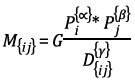
Where M{ij} is the migration flow from region i to region j, Pi and Pj denote the populations of the origin and destination, Dij is the distance between regions, and α, β, γ are parameters to be estimated (Bunea, 2012).
Given the count nature of migration flows and the presence of zero flows between many province pairs, the model is estimated using the Poisson Pseudo-Maximum Likelihood (PPML) estimator (Silva & Tenreyro, 2006). PPML is preferred to log-linear OLS because it accommodates zero outcomes, delivers consistent estimates under heteroscedasticity, and avoids biases induced by log-transforming the dependent variable. Because the empirical analysis relies on time-averaged data, it is not possible to implement origin × year and destination × year fixed effects. Instead, the expected migration flow from province i to j is modelled as:
E[Mij] = exp(β0 + β1lnPi + β2lnPj + β3lnDij + β4lnXij + μi + vj + εij)
Where Pi and Pj represent the size of SAP at the origin and destination regions; Dij is the distance between them; Xij represents a vector of averaged socio-economic and demographic covariates; μi and vj are origin and destination fixed effects, respectively; and εij is the error term. These fixed effects control for all time-invariant provincial characteristics that influence migration, such as long-run economic structure, geographic attractiveness, housing conditions, institutional quality, and established migrant networks. While time-varying multilateral resistance terms cannot be separately identified in a cross-sectional setting, the inclusion of origin and destination fixed effects captures the average level of multilateral resistance over the sample period and substantially mitigates omitted-variable bias (Head & Mayer, 2014; Correia et al., 2020).
In the gravity model of migration, population size represents the “mass” of origin and destination regions, with larger populations typically generating and attracting more migrants (Kim & Cohen, 2010). Additionally, prior knowledge of the destination, often gained through personal networks, reduces perceived costs and encourages migration. Friends and relatives already residing in the destination region provide critical information and support, illustrating the network effect, which facilitates and sustains internal migration patterns. Distance and contiguity act as proxies for physical and non-physical migration costs, such as transportation expenses and cultural or linguistic barriers, reinforcing the model’s principle that migration decreases with distance (Wajdi et al., 2017). Contiguous regions, like Barcelona and Girona, experience higher migration flows due to lower associated costs, while isolated areas see reduced movement (Van Lottum & Marks, 2012).
To extend the gravity model and better capture the complex drivers of internal migration, additional demographic and socio-economic variables are included at both the origin and destination provinces (see Table 1). Among the demographic factors, the average share of women in the immigrant population is particularly significant. In the South Asian community, many women migrate primarily for family reunification. Once families are established, internal migration tends to decline, as relocating becomes costlier and disruptive. Thus, a higher proportion of women in a migrant community often signals greater settlement stability and lower mobility. Among economic indicators, GDP per capita is a key determinant. It reflects both income levels and broader economic development, helping migrants assess expected net gains from relocating (Borjas, 2001; Bodvarsson & Van den Berg, 2013; Beine et al., 2014). Income differentials between provinces serve as an important guide for assessing opportunity. Additionally, regional disparities in job availability make employment rates at the destination another crucial factor in migration decisions. Todaro (1969) proposed using the unemployment rate as a proxy for the probability of finding employment post-migration. However, unemployment can yield counterintuitive results, as migration also influences local labour markets, potentially creating simultaneity bias (Greenwood, 1975). Economic development often prompts structural shifts from agriculture to industry and services (Rozelle et al., 1999). For many low-skilled South Asian migrants, agriculture remains a key source of employment. Therefore, the share of agricultural jobs is considered a relevant pull factor, particularly in provinces with a labour demand for cheap irregular or low-skilled workers.
Cultural and social factors also play a vital role. A high share of immigrants in a province suggests not only better economic conditions but also social acceptance and infrastructure suited to migrant needs. This fosters positive network externalities, attracting additional migrants through information sharing and support systems. Education is another critical variable influencing migration. Regions with higher levels of education, particularly those with strong educational infrastructure like universities, are both magnets for skilled migrants and indicators of broader social development (Beals, Levy, & Moses, 1967; Greenwood, 1969a; Greenwood & McDowell, 1991; Dahl, 2002). Educated individuals are typically more mobile and adaptable to new environments (Sahota, 1968). However, at a macro level, the relationship between education and migration may be non-linear. Greenwood (1969b), for instance, found that in Egypt, education negatively affected labour migration. He attributed this to two factors: improved education can increase productivity at both origin and destination, reducing incentives to move; and simultaneity bias can distort observed outcomes, as educated migrants change the average educational attainment of both sending and receiving regions. These complexities underscore the need for cautious interpretation when incorporating education into migration models. All explanatory variables are measured as period averages over 2020-2023, capturing medium-term conditions rather than short-term fluctuations.
| Category | Acronym | Metric | Source | Description |
|---|---|---|---|---|
Internal Migration | INTMIG | Number of movements | EVR 2020-2021 and EMCR 2022-2023 | Internal migration of South Asians between provinces |
| Spatial | Distance | Distance in KMs | Google maps | Distance between provinces |
| Contiguity | Contiguity (Queen) | Provincial map | Provinces sharing borders | |
| Demographic | SAP | Population size | Padron Continuo 2020-2022 and Annual Census 2023-2024 | South Asian Population at the origin and destination provinces |
| Women | South Asian Women | Padron Continuo 2020-2022 and Annual Census 2023-2024 | Proportion of South Asian women at the origin and destination provinces | |
| Economic | GDP | Gross Domestic Product | Macro-economic data (INE) | GDP at the destination provinces |
| Agri | Agriculture jobs | Macro-economic data (INE) | Proportion of people involved in agriculture at the destination provinces | |
| Emp | Employment rate | Active population survey (INE) | Proportion of employed at the origin provinces | |
| Cultural | Immpop | Immigrant Population | Padron Continuo 2020-2022 and Annual Census 2023-2024 | Share of Immigrant population at the destination provinces |
| Edu | Higher Education | Census 2021, Annual census 2023 | Share of population with higher education at the origin provinces |
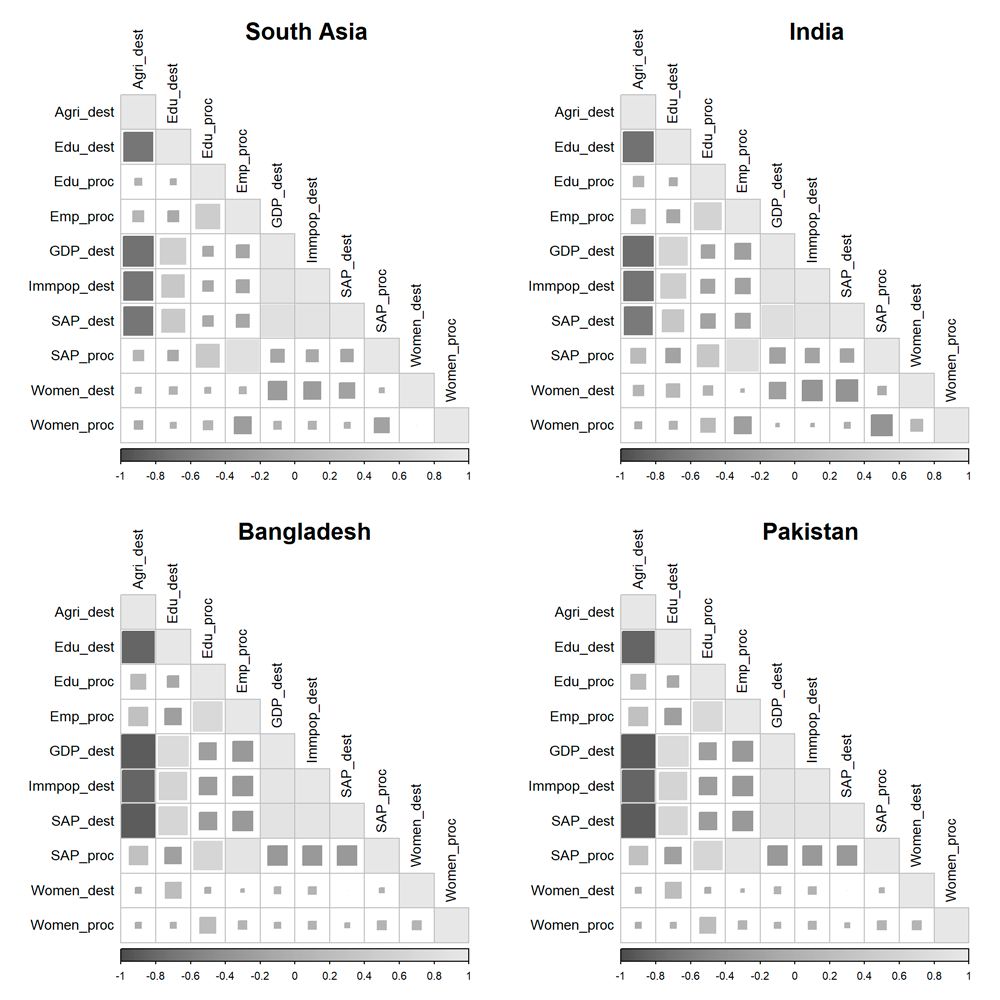
Correlation among explanatory variables is examined (Figure 1), and multicollinearity is assessed using the Variance Inflation Factor (VIF). All VIF values remain below the conventional threshold of 5 (Pan & Jackson, 2008; Kyriazos & Poga, 2023), indicating that multicollinearity does not threaten coefficient stability. In cases of high pairwise correlation, one variable is excluded to preserve interpretability.
Two specifications are estimated: (i) a baseline gravity model including only core gravity variables; and (ii) an extended model including the full set of demographic and socio-economic covariates. As a robustness check, an alternative PPML specification with province-pair (i–j) fixed effects is estimated. These bilateral fixed effects absorb all time-invariant dyadic characteristics—such as distance, historical ties, and persistent migration corridors—thereby controlling for unobserved bilateral heterogeneity. The consistency of results across specifications supports the robustness of the findings.
Source: Compiled by author
All models are estimated using the ppml() function from the gravity package (Larch et al., 2019), which is well suited for dyadic data with high-dimensional fixed effects. Continuous variables are log-transformed to facilitate elasticity interpretation. Under the PPML specification, coefficients can be interpreted as semi-elasticities: a 1% increase in an explanatory variable is associated with a percentage change in expected migration flows, holding other factors constant.
flowij = PPML(Mij ∼ β1lnPi + β2lnPj + lnDij + lnCONTij + lnGDPj + lnEMPi + lnAGRIj + lnWOMi + lnWOMj + lnIMMj + lnEDUi + lnEDUj | origin + destination)
where origin + destination specifies the two sets of fixed effects. Origin and destination fixed effects are included in all PPML specifications.
Model performance is assessed using deviance, pseudo-R2R^2R2, RMSE, and MAE, which are standard diagnostics for PPML gravity estimation (Silva & Tenreyro, 2011; Yotov et al., 2016).
3. South Asian flow and population in Spain
3.1. The influx of South Asian immigrants in Spain
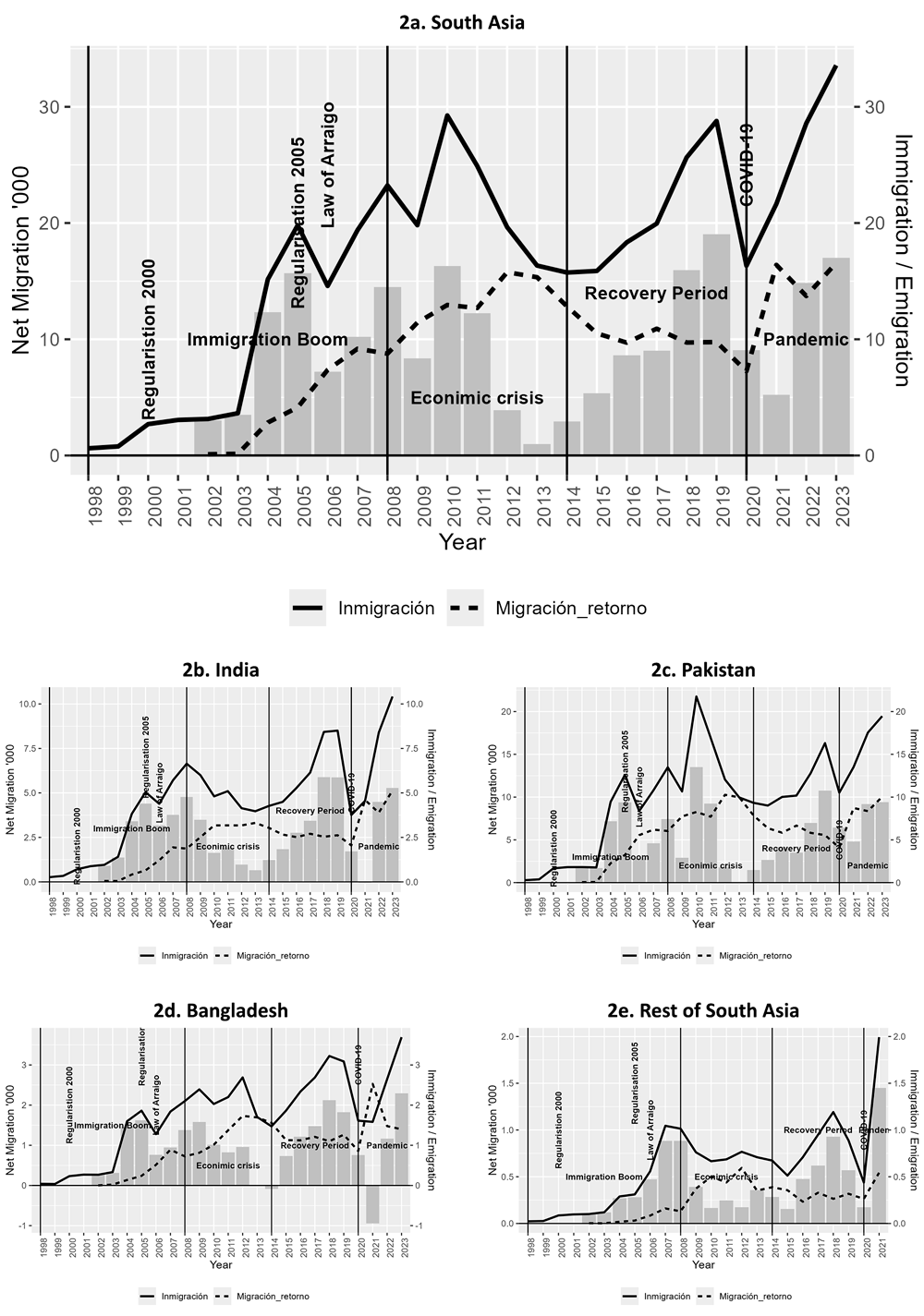
Since 1998, South Asian migration to Spain has transformed from a marginal occurrence into a significant demographic trend. Initial arrivals were minimal, with just 616 South Asians entering Spain in 1998. However, migration increased sharply during Spain’s immigration boom in the early 2000s, driven by regularisation policies in 2000 and 2005 and the Arraigo Law, which attracted a large number of South Asian migrants to Spain, who migrated to regularise their status (Garha, 2021). By 2008, arrivals peaked at 23,241. The global financial crisis of 2008 halted this growth, reducing immigration and increasing emigration. Net migration dropped significantly, reaching a low of 1,001 in 2013. However, economic recovery gradually reversed the trend, with immigration rebounding to 28,785 by 2019 and net migration to 19,024. The COVID-19 pandemic caused a brief downturn in 2020-2021, but by 2023, immigration surged to over 33,500, with net migration exceeding 17,000.
Among South Asian immigrants, the first major group to enter Spain was Indians (López-Sala, 2013). However, until 2002, annual arrivals remained below 1,000. It rose significantly from 2003 onwards, reaching 6,642 in 2008. After a decline during the crisis and a low point in 2013 (net migration of 655), a steady recovery began. Net migration reached 5,879 in 2019, followed by a brief contraction during the pandemic. By 2023, Indian immigration reached a record 10,418, with net migration of 5,286. Contrary to the gradual growth of Indian immigration, Pakistani immigration exhibited a more dramatic rise. Fewer than 400 immigrants arrived annually before 2000, but numbers surged due to Spain’s low-skilled labour demand in mining and agriculture sectors and favourable immigration policies (Aubia & Roca, 2005). By 2004, arrivals reached 9,443, and by 2005, they peaked at 12,595. Despite the economic crisis, Pakistani immigration remained relatively high, although return migration increased. Net migration turned negative in 2013 but rebounded strongly, reaching a record 10,753 in 2019. After a temporary pandemic-related dip, Pakistani immigration hit a record 19,460 in 2023, with net migration at 9,422.
In comparison to other South Asians, Bangladeshi influx was more modest but steady. Until 2003, their annual arrivals remained below 350. In 2004, it increased to 1,599 and later peaked in 2011 with over 2,200 arrivals. Although net migration briefly turned negative in 2021, a strong rebound followed, with 3,691 arrivals and a net gain of 2,292 in 2023. Migration from other South Asian countries (Nepal, Sri Lanka and Maldives), also remained minimal until the early 2000s, peaking at 1,014 arrivals in 2008. After a decline caused by the economic crisis and pandemic, numbers rose again, with 1,993 arrivals and net migration of 1,450 in 2023, evidence of growing diversity within Spain’s South Asian diaspora (Figure 2).
Source: Estadísticas de Variación Residenciales 1998-2021, and ECMR 2022-2023, INE, Spain
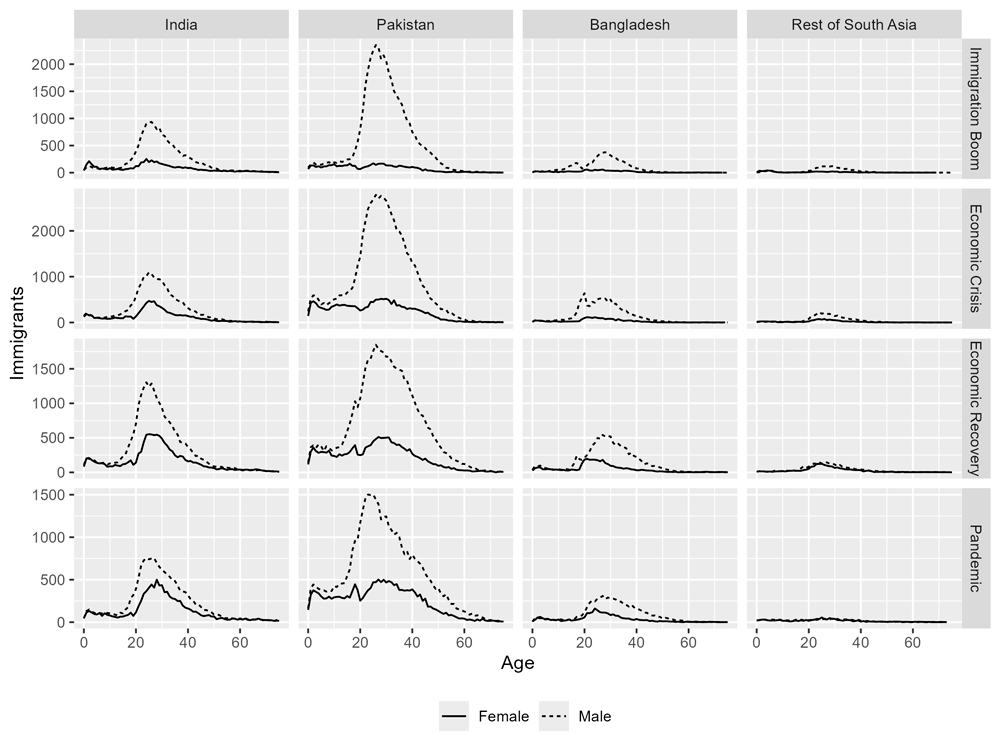
As per the age distribution of South Asian influx, since 1998, the age profile of South Asian immigrants to Spain reflected dominance of working-age adults, consistent with labour migration patterns, followed by a gradual diversification of age groups, indicating family reunification and long-term settlement trends. During the immigration boom (pre-2008), 65.7% of South Asian immigrants were adults aged 25-55, with children (0-17) comprising 13.1%, young adults (18-24) accounting for 19.2%, and elderly individuals (56+) only 1.9%. This profile underscores the demand-driven influx of labour migrants into Spain’s low- and semi-skilled sectors. However, during the 2008 financial crisis, economic uncertainty triggered a demographic shift: the adult share fell to 61.4%, while children and young adults increased to 17.0% and 20.1%, respectively, suggesting the impact of re-migration of adults and rising family reunification. In the recovery period (2014-2019), adults maintained a stable majority (61.4%), while children and young adults remained steady at 16.5% and 19.3%. The share of elderly migrants rose to 2.8%, indicating growing trends of parental reunification. The COVID-19 pandemic (2020-2021) brought further changes: adult representation dropped to 58.8%, while the proportion of children (18.8%) and elderly migrants (3.8%) increased, signalling a shift towards more permanent and multigenerational settlement.
Among South Asian nationalities, Indian immigrants exhibited a more balanced and stable age distribution. In the boom years, 61.2% were adults, with children and young adults at 14.0% and 20.6%. Elderly migrants represented 4.2%, higher than other groups. During the crisis, the adult share slightly declined, and children and young adults increased modestly. In the recovery and pandemic periods, adults remained the majority, but the elderly share rose from 3.7% to 5.1%, indicating increasing intergenerational reunification. These trends suggest that Indian migration, while labour-based, also includes skilled professionals and early family settlers. By contrast, Pakistani migrants were the most adult-dominated group. In the boom period, 68.5% were working-age adults. Children accounted for only 11.5%, and the elderly just 1.1%. During the crisis, the child share rose to 18.5%, likely due to reunification, while adults declined to 62.3%. In the pandemic period, children reached 21.8%, the highest of all groups, and the elderly rose to 3.6%, further emphasizing the shift toward family migration. Similarly, Bangladeshi migrants consistently demonstrated a young age structure. During the boom, 63.0% were adults, while children and young adults comprised 18.9% and 17.5%, respectively. The elderly population was negligible (0.6%). In the crisis period, young adults increased to 29.4%, while adults dropped to 57.5%, suggesting youth-led secondary migration and economic pressures. By the recovery period, adults regained dominance (64.1%), and the elderly share rose to 1.3%. During the pandemic, adult representation peaked at 67.1%, and elderly migration reached a high of 1.8%, reflecting a shift toward family-based settlement.
Regarding the sex composition of South Asian influx, between 1998 and 2023, South Asian immigration to Spain has remained predominantly male, although the proportion of female migrants has increased steadily over time. In 1998, only 211 South Asian women entered Spain compared to 405 men, a sex ratio of nearly 2 men per woman. This imbalance intensified in the early 2000s, with 13,273 men and only 1,881 women immigrating in 2004, reflecting a sex ratio of 7 men for every woman. However, from the mid-2000s onward, family reunification policies contributed to a rise in female immigration. By 2023, while male immigration peaked at 23,721, female arrivals also reached a record high of 9,848. Still, the sex ratio remained skewed at 2.4 men per woman, illustrating persistent gender asymmetry.
Among South Asian countries, Indian immigration has been the most gender-balanced. In 1998, arrivals were nearly equal (142 men vs. 123 women). Though a gap emerged by 2005 (3.8:1), subsequent growth in skilled and student migration, alongside family reunification, reduced disparities. By 2023, Indian immigration reached 6,925 men and 3,493 women, a 2.0:1 ratio. By contrast, Pakistani immigration has remained strongly masculine. In 1998, 220 men and 66 women immigrated (3.3:1), and by 2004, the sex ratio rose to 11.1:1. Family reunification after Spain’s 2005 regularisation programme helped increase female migration. In 2010, 6,042 Pakistani women arrived alongside 15,716 men (2.5:1). Although the gender gap has narrowed, male predominance continues; in 2023, 13,975 men and 5,485 women migrated from Pakistan. Similar to Pakistan, Bangladeshi immigration has consistently shown the highest male dominance. For example, in 2004, 1,411 men and only 188 women arrived in Spain, a 7.5:1 sex-ratio, indicative of initial labour-driven migration. However, female migration has grown in recent years. By 2021, the sex ratio dropped to 1.9, before rising again to 3.2 in 2023, as male migration rebounded post-pandemic. Migration from other South Asian countries began with low and balanced numbers. By 2007, male dominance peaked (4.9:1), but family and educational migration improved parity. In 2021, the sex ratio reached near-equality at 1.1 (Figure 3).
Source: Estadísticas de Variación Residenciales 1998-2021 and ECMR 2022-2023, INE, Spain
Overall, the higher share of working age men in the South Asian influx reflects the economic nature of this migration, particularly among Bangladeshi and Pakistani communities. Although, increasing share of children, older adults and females in the influx, often via family reunification, signals a shift toward more permanent, family-oriented, and intergenerational settlement pathway.
3.2. Demographic characteristics of the SAP in Spain
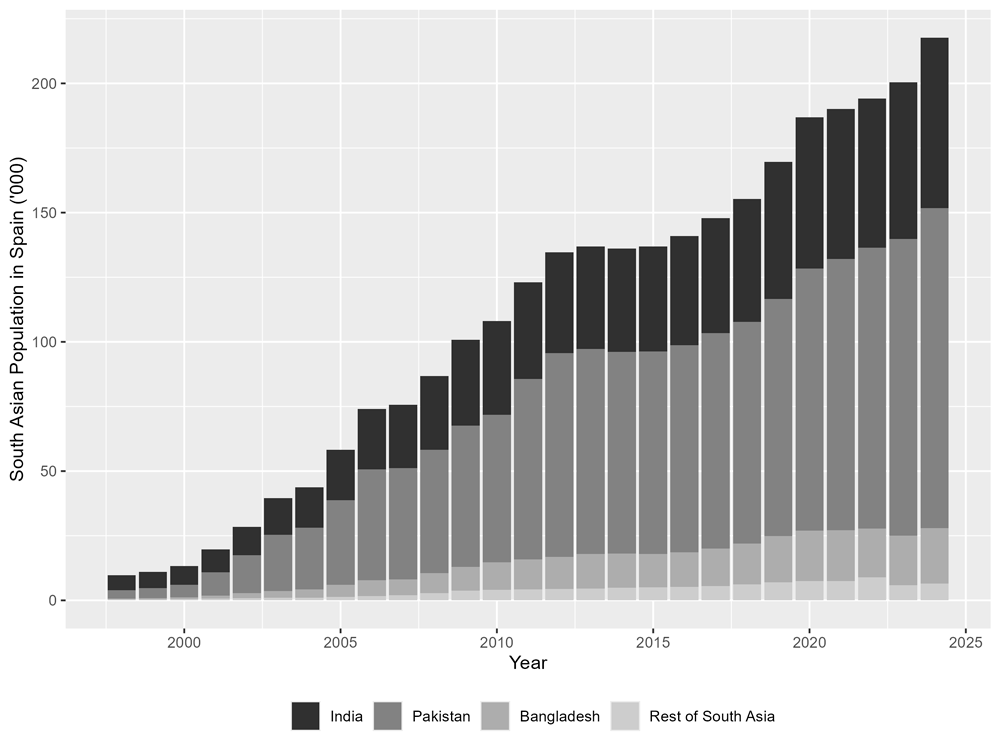
During the last two and a half decades, SAP in Spain has seen a remarkable change in its size, age structure and sex composition. It has experienced consistent and substantial growth from fewer than 20 thousand individuals in 1998 to over 217 thousand by 2024. This steady expansion, despite interruptions caused by economic crises and global health emergencies, highlights both the resilience and transformation of South Asian migration patterns in Spain. The overall trajectory reflects a shift from predominantly low skilled young male labour migration to more diversified forms that include high-skilled workers, students, family reunification and long-term settlement.
Among South Asian countries, Indian were the first to settle permanently in Spain (Navarro, 1974). They entered as merchants and settled in Canary Islands (López-Sala, 2013). Until 2000 they were the most numerous groups of South Asian origin in Spain, later overtaken by Pakistanis in the early 2000s. From 5,812 individuals in 1998 (59.9% of the SAP), their population increased to 36,250 by 2010. However, their relative share fell to 33.6% as migration from other South Asian countries intensified. The economic crisis (2008) further dampened their growth, and by 2015, their share dropped to its lowest point, i.e., 29.6%. Recovery followed in the form of new arrivals through social networks and family reunification. By 2024, there were 65,799 Indian migrants in Spain, comprising 30.2% of the SAP. In 1998, the Pakistani population in Spain (3,141) was smaller than that of Indians, the trend shifted by 2001 due to a substantial influx of low-skilled Pakistani labour migrants. By 2010, the Pakistani population had reached 56,975, accounting for 52.7% of the total SAP. Despite the global financial crisis, the number of Pakistanis continued to grow, bolstered by family reunification strategies and the desire to consolidate households during economic hardship. Between 2011 and 2012 alone, their share increased to 58.4% of the SAP. However, post-2012 growth decelerated as new migration slowed and some Pakistanis sought employment in other countries. Nonetheless, the population continued to rise, reaching 123,882 in 2024, 56.9% of the total SAP in Spain.
Similarly, Bangladeshi population also exhibited strong growth. From a small base of 355 individuals in 1998 (3.7% of the SAP), their population rose to 10,673 in 2010 and 21,416 by 2024. Despite this thirtyfold increase, their share of the total SAP remained stable at around 9.8%, suggesting a consistent but comparatively smaller demographic footprint. Migrant population from other South Asian countries contributed modestly to the overall SAP. In 1998, their combined number was 400 (4.1% of the SAP), increasing to 4,123 in 2010. Despite continuous growth, reaching 6,519 in 2024, their relative share declined to 2.9%, reflecting the disproportionate growth of larger national groups (Figure 4).
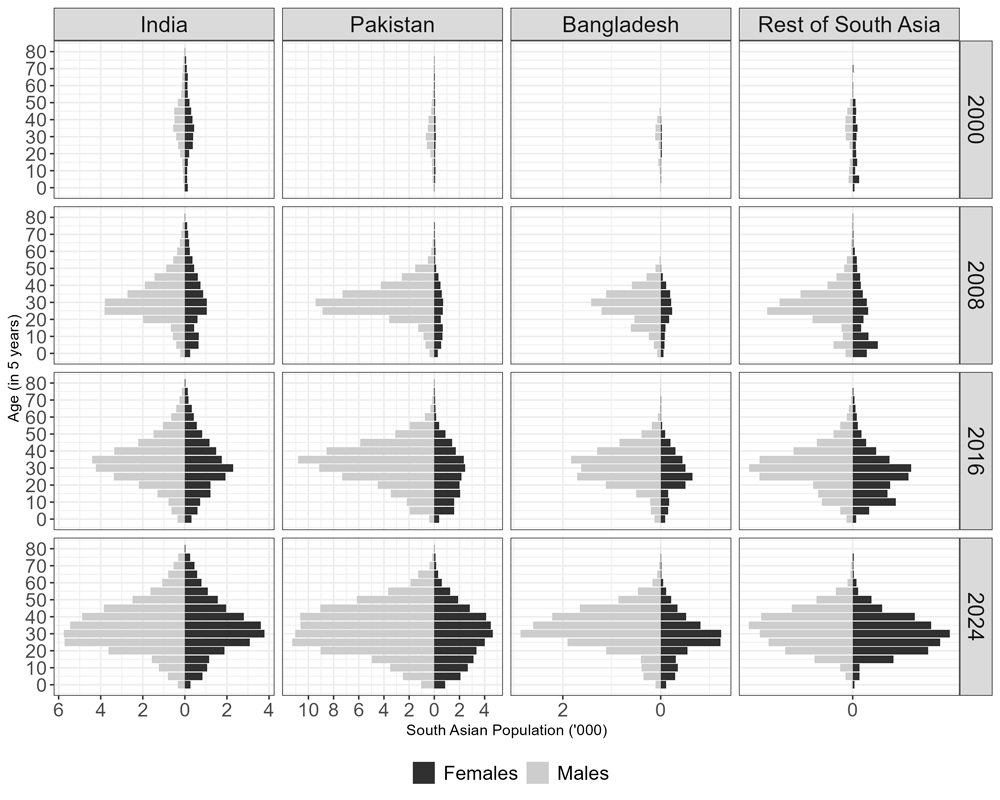
The age and sex distribution of the SAP in Spain reflects a predominantly male and working-age community, especially in the early stages of migration (Figure 5). In 2000, although the overall size of the SAP was relatively small, it already exhibited a male-dominated pattern, with a sex ratio of 1.8 men per woman. This imbalance was most pronounced among Bangladeshis (4.6), followed by Pakistanis (3.6), while Indian and other South Asian groups had a more balanced sex ratio of 1.1. At that time, a substantial majority of the SAP belonged to the working-age group (25-55 years), accounting for 80.7% of the population, while children (0-17 years) made up 12.8%, and elderly migrants (55+) represented 6.5%. Among national groups, Bangladeshis had the highest proportion of working-age individuals (84.4%), followed closely by Pakistanis (81.1%) and Indians (80.8%). In contrast, the rest of South Asia countries showed a slightly lower concentration of working-age migrants (70.6%) and a higher proportion of children (24.9%), suggesting an earlier onset of family migration. Indian migrants had the highest share of elderly individuals (8.6%), followed by other South Asians (4.5%), Pakistanis (4.4%), and Bangladeshis (0.3%).
Source: Padron Continuo 1998-2022 and Annual Census 2023-2024, INE, Spain
By 2024, the SAP continued to exhibit a strong working-age profile across all nationalities. Among males, the majority remained in the working-age group, ranging from 87.6% among Indians to 93% among migrants from the rest of South Asia. Bangladeshi and Pakistani men also showed high workforce participation, at 92.4% and 86.8%, respectively. The share of male children was modest but notable, particularly among Pakistanis (11.3%), indicating sustained family reunification. Elderly men remained a minority across all groups, comprising less than 2%. Among female migrants, the distribution was more varied. The majority were still of working age, particularly among women from the rest of South Asia (92.6%) and India (83.3%). However, higher proportions of female children were evident among Pakistanis (20.6%) and Bangladeshis (15.4%), reflecting ongoing family reunification and a possible demographic shift resulting from earlier waves of male labour migration. Elderly women remained a small fraction overall but were most prominent among Indians (5.6%), pointing to greater engagement in multigenerational settlement or family support migration.
Source: Padron Continuo 1998-2022 and Annual Census 2023-2024, INE, Spain
Overall, the 2024 data highlights a maturing migration pattern: while South Asian immigration to Spain remains economically motivated and dominated by working-age individuals, it increasingly includes family units, children, and elderly members, suggesting a transition from temporary labour migration to more permanent, community-based settlement. It offers dual benefits to Spanish society: first, by mitigating the effects of the country’s low native fertility rate through the addition of younger South Asian migrants to an aging population; and second, by supplying a youthful workforce—both low- and high-skilled—particularly in labour-intensive sectors such as agriculture, construction, and services.
4. Internal migration of the SAP in Spain
4.1. Number of internal movements, origins and destinations
Since the late 1990s, Spain has seen a steady growth in the immigration from South Asian countries. Initially, many of these migrants settled in regions where they had social networks and religious and cultural associations, which helped them in the early days of settlement (Garha & Domingo, 2017). Most of them, due to their irregular status moved to rural or semi urban areas where there was high demand for manual labour, especially in agriculture, hospitality and construction sectors and the legal requirements for work were minimal in the shadow economy (Garha, 2020). Notably, regions such as Catalonia (particularly Barcelona), Madrid, and Valencia, became early hubs for South Asian migrants, from where they moved to Murcia, Andalusia and Aragon due to seasonal agricultural work and the availability of informal employment (Garha, 2021). Over time, these migrants began to regularize their legal status under various amnesty programs (notably in 2000 and 2005) and continuous regularisation program of Arraigo (2006 onwards), which enabled greater freedom of movement within Spain. This facilitated a reverse internal migration trend from rural agricultural zones toward urban centres, driven by better employment prospects, education opportunities, and the existence of more robust ethnic and religious communities.
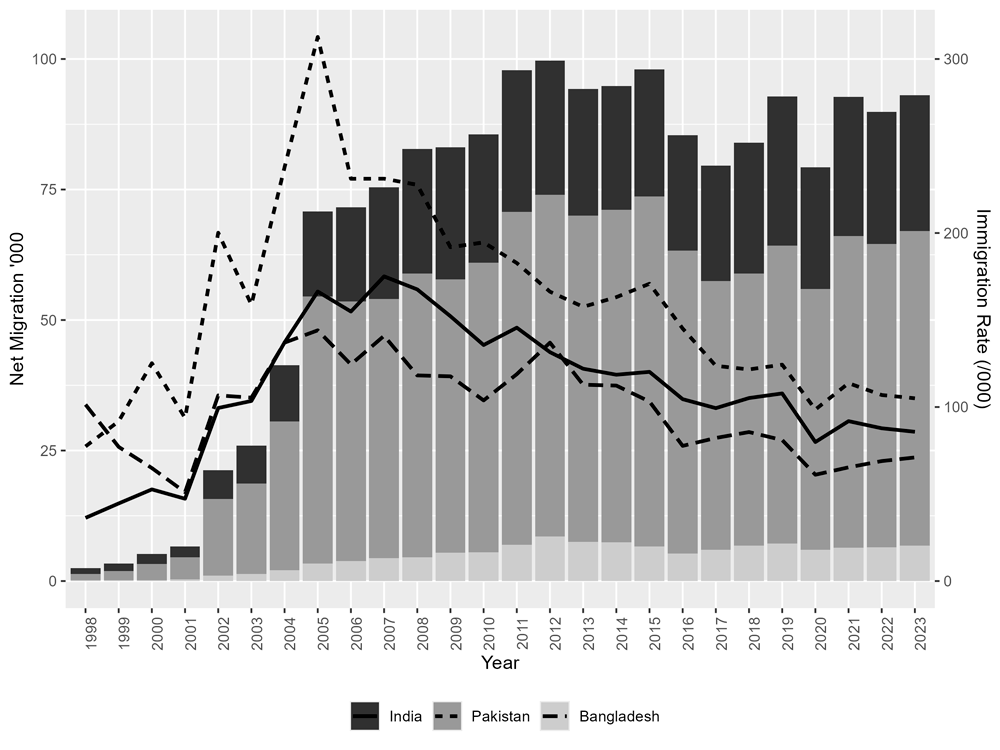
In 1998, the total number of internal movements made by the SAP was only 250, which increased ten times in the next five years and reached to 2,492 in 2002. Further, with the increased size of the SAP, their internal migration also increased to 8,159 in 2005, which shows that they started to move swiftly out of their initial entry points in search of work and business opportunities. After 2005, the internal migration slowed and kept around 8,400 in 2010. Then the economic crisis started to through people out from their first settlements due to loss of jobs and housing crisis. The internal migration reached its maximum of 10,594 movements in 2012 and then started to decline and reached 7,917 in 2023. It shows the increasing stability in the SAP in Spain. Among the South Asian countries, more than 60% of the internal movements were made by Pakistanis, followed by 25% by Indians and 8% by Bangladeshis.
In the SAP, the internal migration rates (IMR) during the early years (1998-2002), were relatively modest but already showed clear national differences. For instance, in 1998, Pakistan (77) and Bangladesh (101) had significantly higher rates than India (36). By 2002, Pakistan’s rate had more than doubled (200), reflecting a robust labour-driven migration influx, especially into sectors such as agriculture and construction (Beltrán & Sáiz-López, 2007). India and Bangladesh also experienced notable growth during this time, with rates reaching 99 and 107, respectively. From 2003 to 2007, immigration intensified across the board. By 2005, Pakistan’s IMR surged to an unprecedented 313, the highest in the entire dataset. India and Bangladesh also peaked around this time, at 166 and 144 respectively. This surge coincided with Spain’s economic boom and labour shortages, which prompted significant regularization programs that encouraged migration. Following the 2008 financial crisis, it began to stabilize and gradually declined. Between 2009 and 2015, all three countries saw reduced but steady IMR. Pakistan consistently maintained the highest IMR during this period, with figures ranging from 124 to 195, suggesting a continued demand for Pakistani labour and established migrant networks facilitating chain migration. From 2016 onward, IMR declined further, reflecting the increasing stability in the South Asian community. For example, Bangladesh's rate dropped to 78 in 2016 and hovered between 61 and 86 through 2023. India and Pakistan followed a similar trajectory, with more moderate declines. However, Pakistan remained the dominant source country in terms of rate, maintaining figures consistently above 100 in most years. Despite a brief slowdown during the COVID-19 pandemic in 2020-2021, internal migration resumed a stable pace by 2022. In 2023, IMR stood at 105 for Pakistan, 86 for India, and 71 for Bangladesh, suggesting a cautious but ongoing recovery (Figure 6).
Source: Estadísticas de Variación Residenciales 1998-2021, ECMR 2022-2023, Padron Continuo 1998-2022 and Annual Census 2023-2024, INE, Spain
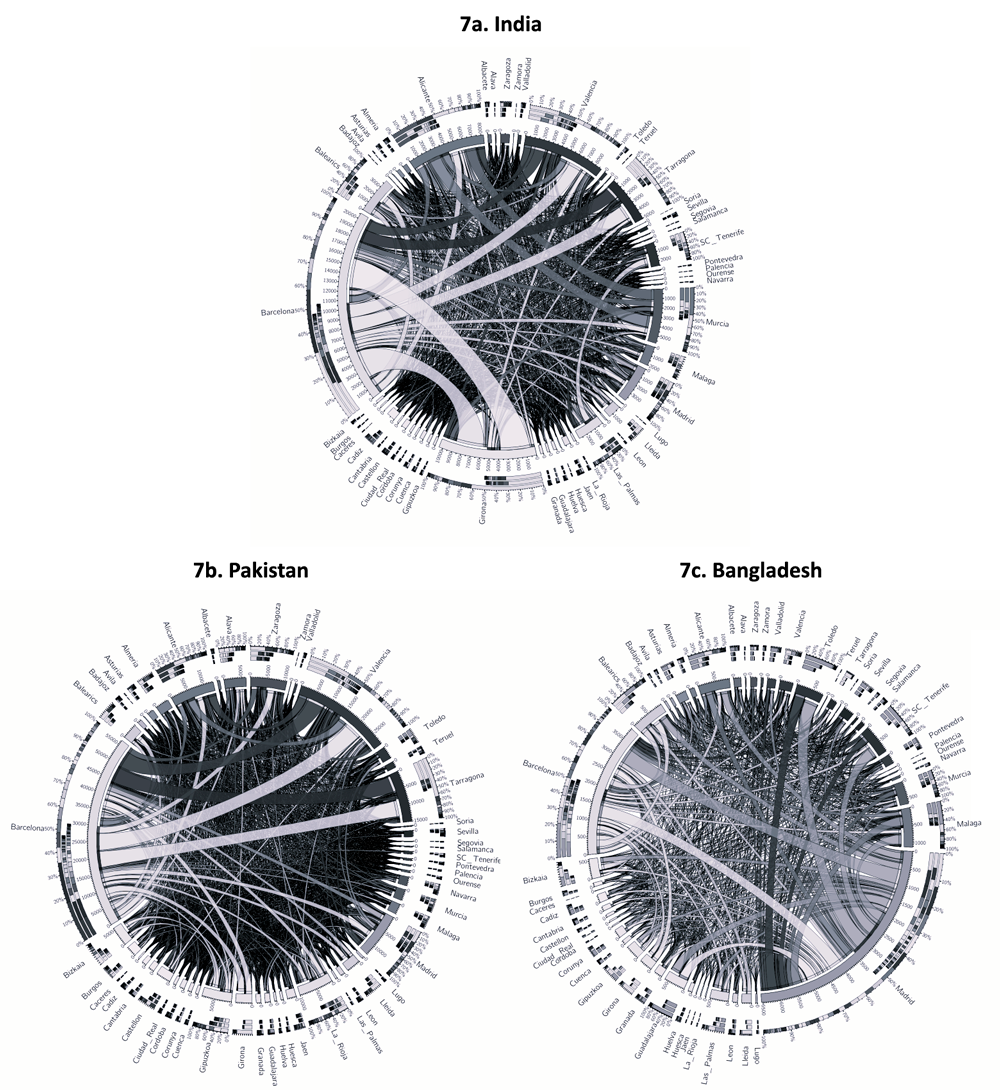
Over the past two and a half decades, several Spanish provinces have served as entry points for South Asian immigrants, facilitating their dispersion across the country. In the context of Indian migration, Barcelona has served as a key entry point and a hub for dispersing the Indian population along the Mediterranean coast and to the island provinces (Garha & Domingo, 2019). This role is largely attributed to the presence of well-established community networks and the accessibility provided by its international airport. Barcelona has remained a significant source of Indian migrants for other Catalan provinces, particularly Girona (3,097), Tarragona (1,584), and Lleida (343), where migrants relocated in search of employment in agriculture, construction, and food processing industries (Farjas, 2006) Further along the Mediterranean coast, provinces such as Valencia (1,479), Alicante (770), Murcia (559), and Malaga (288) also attracted a substantial number of Indian migrants from Barcelona. These migrants were drawn by job opportunities in the hospitality sector, prospects for small business ventures, and more affordable living conditions (Beltrán et al., 2006). The island provinces of the Balearic Islands (786) and Las Palmas (248) similarly received Indian migrants, many of whom moved to establish small businesses, such as gift shops, mobile phone stores, or food outlets, or to work in the tourism and hospitality industries (López-Sala, 2007). A smaller number (446) also relocated to Madrid from Barcelona (Figure 7a).
Source: Estadísticas de Variación Residenciales 1998-2021 and ECMR 2022-2023, INE, Spain
Similar to Indian community, Barcelona has played a central role in dispersing the Pakistani community across Spain (Tolsana-Pagès, 2007), particularly along the Mediterranean coast Significant numbers of Pakistani migrants from Barcelona relocated to Valencia (5,216), Tarragona (4,916), Alicante (1,716), Castellón (585), Almeria (568), and Malaga (429). Within Catalonia, the neighbouring provinces of Girona (2,001) and Lleida (1,210) also received substantial numbers of Pakistani migrants, many seeking employment in agriculture, construction, and service industries. Beyond the coast, Barcelona facilitated the spread of the Pakistani community along the Ebro River into Spain’s interior provinces, including Zaragoza (1,980), Gipuzkoa (1,076), La Rioja (999), Álava (838), and Bizkaia (639). The island provinces of the Balearic Islands (1,322) and Santa Cruz de Tenerife (228) also attracted Pakistani migrants, particularly for opportunities in small businesses and the hospitality sector. Additionally, Madrid received 1,548 Pakistani migrants from Barcelona, many of whom moved to engage in low-skilled service jobs or to establish small enterprises. Valencia emerged as the second major dispersal hub for the Pakistani community in Spain. Over 5,000 Pakistanis relocated from Valencia to Barcelona, followed by 2,365 to Alicante, 1,003 to Zaragoza, and 732 to Madrid. Smaller numbers also moved to nearby Mediterranean provinces such as Castellón (729) and Tarragona (559). Due to job availability in the tourism sector, the Balearic Islands received 463 Pakistani migrants from Valencia. Northern provinces like Gipuzkoa (346) and La Rioja (298) also attracted Pakistanis, particularly in agriculture and construction (Figure 7b).
In the case of the Bangladeshi community, Madrid has played a pivotal role in redistributing migrants to nearby provinces and major urban centres along the Mediterranean coast, where ample employment opportunities exist in low-skilled service and agricultural sectors. A total of 3,435 Bangladeshis relocated to other provinces in pursuit of employment and improved living conditions. Barcelona emerged as the primary destination for those moving from Madrid, receiving 446 migrants, largely due to strong social connections between the two cities. Neighbouring provinces like Toledo (402) and Guadalajara (253) also attracted significant numbers of Bangladeshi migrants, primarily for better housing options. Island provinces with robust hospitality sectors, such as Santa Cruz de Tenerife (294), the Balearic Islands (188), and Las Palmas (117), drew many Bangladeshis originally settled in Madrid. Major Mediterranean cities like Malaga (280) and Alicante (196) similarly received sizable Bangladeshi populations. In northern Spain, provinces such as Bizkaia (143) and Gipuzkoa (110) attracted smaller groups, mainly for agricultural jobs. Murcia (94), in the south, also drew low-skilled Bangladeshi workers to meet labour demands in agriculture. Barcelona, another major hub for the Bangladeshi diaspora, similarly dispersed 1,956 migrants to other parts of Spain. Madrid was the primary recipient of this secondary migration, receiving 367 individuals. Other notable destinations included nearby provinces Girona (131) and Lleida (104), as well as the island provinces of the Balearic Islands (199), Las Palmas (98), and Santa Cruz de Tenerife (83). Along the Mediterranean coast, Alicante (114), Malaga (89), and Valencia (81) attracted further numbers. In the north, Bizkaia (144) and Gipuzkoa (87) continued to receive migrants from Barcelona, reinforcing existing migration trends (Figure 7c).
Changes in net internal migration over the past two and a half decades reflect the evolving spatial distribution of the SAP in Spain. In the last two and a half decades, the Indian immigrant population in Spain experienced notable fluctuations in net migration across various provinces. During the immigration boom, the net migration of Indians was largely positive in provinces such as Valencia (+346), Santa Cruz de Tenerife (+334), and Tarragona (+318), indicating strong growth. Most of them emigrating from Barcelona and Las Palmas, experienced a significant net loss of -1,465 and -119 individuals, respectively. The Economic Crisis period saw a broader trend of out-migration, with Girona recording the largest net loss of -775, followed by Murcia (-225) and Valencia (-183), which were the main recipient of South Asians in the immigration boom period. Interestingly, some provinces saw increases despite the economic downturn, such as Alicante (+608) and the Balearic Islands (+258), suggesting localized opportunities (jobs in hospitality sector) or differing economic impacts. During the Economic Recovery phase, migration trends were mixed: Barcelona showed a strong rebound with a net gain of +351, while Alicante had the highest net loss at -573. Lastly, the Pandemic period mostly resulted in population declines, notably in Alicante (-391), Las Palmas (-134), and Madrid (-94). However, Girona experienced a remarkable net gain of +272, with Barcelona (+123) and Valencia (+118) also showing positive net migration. These figures reflect the shifting patterns of Indian migration in response to economic and social conditions in Spain over time.
The net migration of Pakistani immigrants revealed distinct patterns across provinces. In the immigration boom, provinces like Valencia (+617), Alicante (+536), and Madrid (+523) experienced the highest net gains, signalling major inflows of Pakistani migrants. However, Barcelona faced a dramatic net loss of -2,126 individuals, and La Rioja declined by -409, possibly due to saturation or migration redirection to more economically dynamic regions. During the Economic Crisis, despite overall challenges, provinces such as Gipuzkoa (+621), Zaragoza (+400), and Alicante (+309) still saw significant growth. Meanwhile, Barcelona again seen a large outflow (-818), along with La Rioja (-913) and Valencia (-550), reflecting economic downturn effects. In the Economic Recovery phase, Biscay (+502), Zaragoza (+400), and Madrid (+148) led in net positive migration. However, some provinces like Alicante (-289), Tarragona (-270), and Valencia (-258) experienced substantial losses, likely indicating post-crisis redistribution. During the Pandemic, Castellón (+170), Gipuzkoa (+206), and Valencia (+108) stood out with positive net migration, while Barcelona (-236), Alicante (-304), and Madrid (-143) experienced notable declines, reflecting the widespread socioeconomic impact of the global health crisis. These figures collectively highlight how broader economic trends and local conditions influenced the mobility and settlement of Pakistani migrants in Spain.
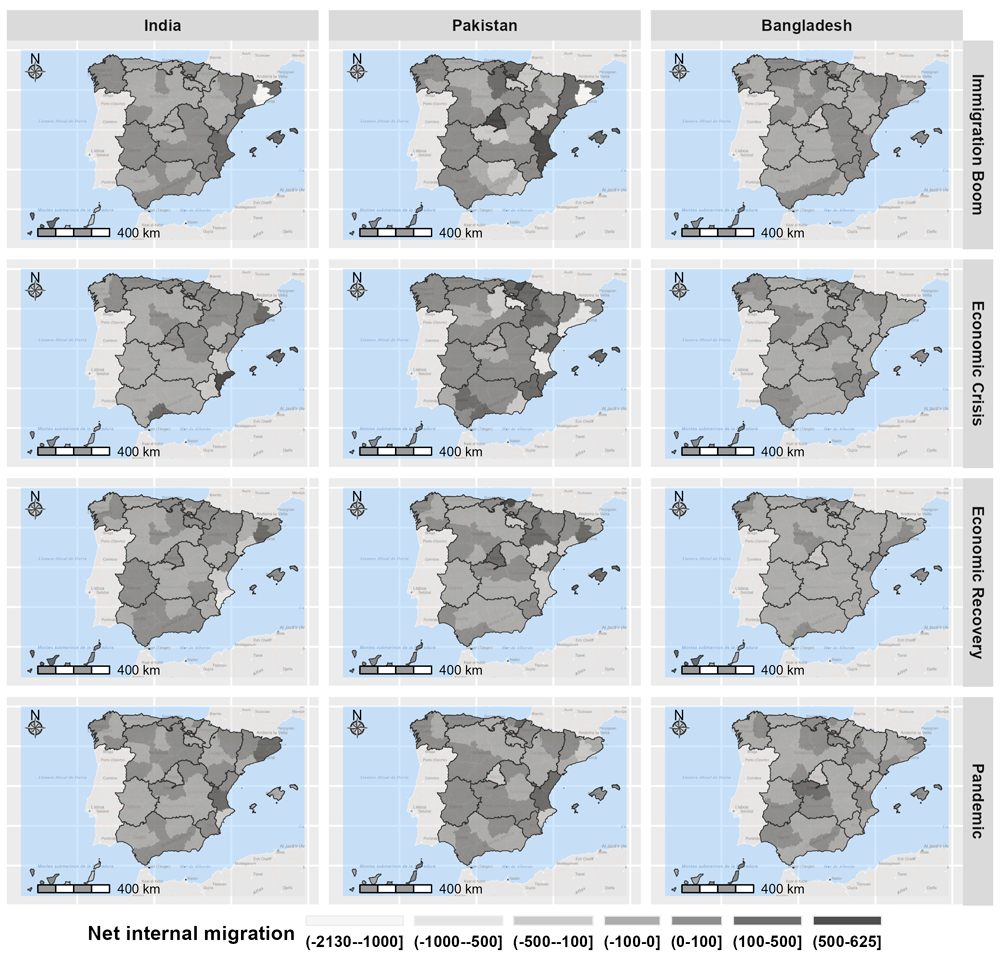
Source: Estadísticas de Variación Residenciales 1998-2021 and ECMR 2022-2023, INE, Spain
During the immigration boom period, Bangladeshi migration patterns revealed a strong preference for coastal and island provinces. Alicante reported the highest net migration gain with +72, followed by the Balearic Islands (+50) and Santa Cruz de Tenerife (+26). Conversely, Spain’s capital, Madrid, experienced a significant net loss of Bangladeshi migrants at -156, and Barcelona followed with -48, suggesting a possible outflow toward regions with better employment opportunities or lower living costs. During the subsequent Economic Crisis period, patterns shifted dramatically. While Madrid saw a net gain of +72 Bangladeshi migrants, perhaps due to internal consolidation or a return to urban centres, other provinces like Granada (-92), Girona (-38), and Barcelona (-37) experienced substantial losses. Notably, northern industrial areas such as Gipuzkoa (+87) and Biscay (+78) saw large gains, likely reflecting their economic resilience. In the Economic Recovery period, migration again favoured tourist-heavy areas such as Santa Cruz de Tenerife (+159) and the Balearic Islands (+62), while traditional urban hubs like Madrid faced a steep decline (-107). Finally, during the Pandemic period, Toledo experienced an unexpectedly high net gain (+132), followed by Las Palmas (+25), while Madrid (-126) and Barcelona (-33) continued to lose Bangladeshi migrants. These figures underscore the responsiveness of Bangladeshi migration to both economic conditions and local labour market dynamics across Spain’s diverse provinces.
4.2. Determinants of internal migration of the SAP in Spain
As seen in the previous section, the internal migration of the SAP within Spain is a complex, evolving phenomenon shaped by interplay of several spatial, economic, cultural and demographic factors that shape migrants’ decisions to relocate within the country. In this section, we will examine the impact of different factors on the internal movement of the SAP in different Spanish provinces between 2020 to 2023.
The PPML gravity estimation reveals strong and consistent spatial, demographic, economic, and cultural determinants of migration flows. Spatial factors perform as expected: distance shows a large and statistically significant negative effect in every model. For the SAP, distance reduces flows by 46% in Model 1 (β = −0.460, 95% CI [−0.501, −0.419], p < .001) and 44% in Model 2 (β = −0.441, CI [−0.512, −0.371], p < .001). Similar patterns appear in India (β = −0.337 to −0.403, p < .001), Bangladesh (β = −0.349 to −0.267, p < .05 to .001), and Pakistan (β = −0.460 to −0.441, p < .001). Contiguity significantly increases migration for SAP (β = 0.221, CI [0.104, 0.338], p < .001), highlighting the facilitative role of shared borders. At the national level, Bangladesh (β = 0.453, CI [0.008, 0.904], p < .05), and Pakistan (β = 0.221, p < .001), also showed the similar effect, although it is not significant for India (β = 0.092, p > .10).
Demographic variables—particularly those capturing SAP at origin and destination—are highly predictive of migration flows. SAP at the origin displays strong positive effects across all south Asian countries, including India (β = 0.374 to 0.225, p < .001), Bangladesh (β = 0.356 to 0.306, p < .001), and Pakistan (β = 0.313 to 0.228, p < .001). SAP at the destination has nearly identical effects: India (β = 0.364 to 0.315, p < .001), Bangladesh (β = 0.357 to 0.353, p < .001), and Pakistan (β = 0.301 to 0.228, p < .001). These magnitudes imply that a 1-unit increase in the share of SAP at either origin or destination increases migration flows by approximately 23% to 37%, relative to flows to or from non-South Asian areas.
Gender composition shows meaningful effects on the internal migration of South Asians. A higher share of women at the destination reduces South Asian and Pakistani migration flows by 46% (β = −0.459, CI [−0.747, −0.171], p < .01). Women’s share at the origin also reduces flows in South Asia (β = −0.358, p < .05), India (β = −0.450, p < .05), and Bangladesh (β = −0.388, p < .05). These gendered patterns suggest that migration corridors with higher female population shares tend to be associated with stability after the family reunification, partly caused by increased cost of migration
Economic determinants reveal mixed evidence. Higher GDP per capita at destination significantly increases migration only among Pakistanis (β = 0.273, CI [0.155, 0.391], p < .001), but is not significant for India or Bangladesh, possibly reflecting affordability issues in wealthier provinces. Employment rates at the origin have strong positive effects for India (β = 0.391, p < .001), and Pakistan (β = 0.184, p < .001), but not Bangladesh.
Cultural factors show selective significance. Immigrant population at the origin reduces flows for Pakistanis (β = −0.093, CI [−0.184, −0.002], p < .05), but not in India or Bangladesh. Higher education at the origin strongly reduces flows of Indian population (β = −1.027, p < .001), indicating that more-educated source populations are less likely to migrate within these corridors. Higher education at the destination, however, is not significant for any country model (p > .10).
Goodness-of-fit indicators demonstrate strong model performance. Pseudo-R² values range from 0.52 to 0.60, with Model 2 generally showing improved fit (e.g., India increases from 0.57 to 0.60; Bangladesh from 0.52 to 0.56). Deviance values decrease markedly between null and full models (e.g., South Asia drops from 2373.11 to 1111.66, India from 1154.66 to 493.08, Bangladesh from 473.77 to 226.16), indicating substantial explanatory power. Prediction error indicators (RMSE and MAE) remain stable across model pairs and are lowest in the South Asia sample (RMSE = 0.928; MAE = 0.700), reflecting strong predictive performance. Overall, the results show that spatial proximity and the presence of SAP at origin and destination are the most powerful and consistent predictors of migration flows, while economic and cultural variables exert more context-specific and often weaker effects. The dominance of SAP variables highlights the central role of shared regional identity, migration networks, and historical linkages in shaping mobility within and beyond South Asia.
| South Asia | India | Bangladesh | Pakistan | |||||
|---|---|---|---|---|---|---|---|---|
| Model 1 | Model 2 | Model 1 | Model 2 | Model 1 | Model 2 | Model 1 | Model 2 | |
| (Intercept) | 1.686*** [1.138, 2.231] | 1.836 [-0.427, 4.095] | -0.570 [-1.498, 0.351] | 2.408 [-1.422, 6.208] | 0.324 [-1.123, 1.743] | -3.037 [-10.012, 3.866] | 1.686*** [1.138, 2.231] | 1.836 [-0.427, 4.095] |
| s.e. = 0.279, t = 6.045 | s.e. = 1.154, t = 1.592 | s.e. = 0.472, t = -1.208 | s.e. = 1.946, t = 1.237 | s.e. = 0.731, t = 0.443 | s.e. = 3.540, t = -0.858 | s.e. = 0.279, t = 6.045 | s.e. = 1.154, t = 1.592 | |
| Spatial | ||||||||
| Distance | -0.460*** [-0.501, -0.419] | -0.441*** [-0.512, -0.371] | -0.337*** [-0.406, -0.268] | -0.403*** [-0.546, -0.259] | -0.349*** [-0.463, -0.233] | -0.267* [-0.527, -0.006] | -0.460*** [-0.501, -0.419] | -0.441*** [-0.512, -0.371] |
| s.e. = 0.021, t = -21.921 | s.e. = 0.036, t = -12.320 | s.e. = 0.035, t = -9.533 | s.e. = 0.073, t = -5.495 | s.e. = 0.059, t = -5.924 | s.e. = 0.133, t = -2.008 | s.e. = 0.021, t = -21.921 | s.e. = 0.036, t = -12.320 | |
| Contiguity | 0.221*** [0.104, 0.338] | 0.092 [-0.146, 0.332] | 0.453* [0.008, 0.904] | 0.221*** [0.104, 0.338] | ||||
| s.e. = 0.060, t = 3.707 | s.e. = 0.122, t = 0.758 | s.e. = 0.229, t = 1.982 | s.e. = 0.060, t = 3.707 | |||||
| Demographic | ||||||||
| SAP Origin | 0.313*** [0.296, 0.331] | 0.228*** [0.194, 0.262] | 0.374*** [0.345, 0.404] | 0.225*** [0.162, 0.287] | 0.356*** [0.313, 0.399] | 0.306*** [0.184, 0.430] | 0.313*** [0.296, 0.331] | 0.228*** [0.194, 0.262] |
| s.e. = 0.009, t = 35.202 | s.e. = 0.017, t = 13.306 | s.e. = 0.015, t = 24.921 | s.e. = 0.032, t = 7.077 | s.e. = 0.022, t = 16.183 | s.e. = 0.063, t = 4.884 | s.e. = 0.009, t = 35.202 | s.e. = 0.017, t = 13.306 | |
| SAP destination | 0.301*** [0.284, 0.319] | 0.228*** [0.182, 0.274] | 0.364*** [0.335, 0.393] | 0.315*** [0.239, 0.391] | 0.357*** [0.314, 0.400] | 0.353*** [0.185, 0.521] | 0.301*** [0.284, 0.319] | 0.228*** [0.182, 0.274] |
| s.e. = 0.009, t = 33.604 | s.e. = 0.023, t = 9.761 | s.e. = 0.015, t = 24.539 | s.e. = 0.039, t = 8.128 | s.e. = 0.022, t = 16.361 | s.e. = 0.086, t = 4.126 | s.e. = 0.009, t = 33.604 | s.e. = 0.023, t = 9.761 | |
Women Destination | -0.459** [-0.747, -0.171] | -0.230 [-0.631, 0.169] | -0.338+ [-0.679, 0.023] | -0.459** [-0.747, -0.171] | ||||
| s.e. = 0.147, t = -3.122 | s.e. = 0.204, t = -1.127 | s.e. = 0.179, t = -1.890 | s.e. = 0.147, t = -3.122 | |||||
| Women Origin | -0.358* [-0.635, -0.083] | -0.450* [-0.847, -0.055] | -0.388* [-0.727, -0.024] | -0.358* [-0.635, -0.083] | ||||
| s.e. = 0.141, t = -2.543 | s.e. = 0.202, t = -2.226 | s.e. = 0.179, t = -2.164 | s.e. = 0.141, t = -2.543 | |||||
| Economic | ||||||||
| GDP destination | 0.273*** [0.155, 0.391] | 0.148 [-0.086, 0.385] | 0.077 [-0.313, 0.466] | 0.273*** [0.155, 0.391] | ||||
| s.e. = 0.060, t = 4.537 | s.e. = 0.120, t = 1.234 | s.e. = 0.199, t = 0.385 | s.e. = 0.060, t = 4.537 | |||||
| Emp. Rate Origin | 0.184*** [0.122, 0.245] | 0.391*** [0.260, 0.524] | 0.086 [-0.176, 0.348] | 0.184*** [0.122, 0.245] | ||||
| s.e. = 0.031, t = 5.859 | s.e. = 0.067, t = 5.821 | s.e. = 0.134, t = 0.642 | s.e. = 0.031, t = 5.859 | |||||
Agriculture Origin | 0.025 [-0.020, 0.071] | 0.038 [-0.044, 0.122] | 0.033 [-0.156, 0.222] | 0.025 [-0.020, 0.071] | ||||
| s.e. = 0.023, t = 1.081 | s.e. = 0.042, t = 0.904 | s.e. = 0.096, t = 0.342 | s.e. = 0.023, t = 1.081 | |||||
| Cultural | ||||||||
| Immigrant Population Origin | -0.093* [-0.184, -0.002] | -0.009 [-0.208, 0.192] | -0.048 [-0.367, 0.276] | -0.093* [-0.184, -0.002] | ||||
| s.e. = 0.046, t = -2.011 | s.e. = 0.102, t = -0.086 | s.e. = 0.164, t = -0.290 | s.e. = 0.046, t = -2.011 | |||||
| Higher Education Origin | -0.312** [-0.520, -0.105] | -1.027*** [-1.510, -0.541] | 0.338 [-0.369, 1.042] | -0.312** [-0.520, -0.105] | ||||
| s.e. = 0.106, t = -2.947 | s.e. = 0.247, t = -4.151 | s.e. = 0.360, t = 0.938 | s.e. = 0.106, t = -2.947 | |||||
| Higher Education destination | -0.057 [-0.417, 0.302] | -0.103 [-0.861, 0.659] | 0.515 [-0.531, 1.557] | -0.057 [-0.417, 0.302] | ||||
| s.e. = 0.183, t = -0.312 | s.e. = 0.388, t = -0.266 | s.e. = 0.532, t = 0.967 | s.e. = 0.183, t = -0.312 | |||||
| Goodness of fit indicators | ||||||||
| Number of Obs. | 1574 | 1472 | 709 | 634 | 334 | 280 | 1574 | 1472 |
| Deviance (Full): | 1111,664 | 947,46 | 493,084 | 412,934 | 226,156 | 174,209 | 1111,664 | 947,46 |
| Deviance (Null): | 2373,11 | 2201,65 | 1154,66 | 1025,39 | 473,77 | 393,27 | 2373,11 | 2201,65 |
| Pseudo_R2: | 0,53 | 0,57 | 0,57 | 0,6 | 0,52 | 0,56 | 0,53 | 0,57 |
| RMSE: | 0,928 | 1,91 | 0,837 | 1,822 | 1,303 | 1,558 | 0,928 | 1,91 |
| MAE: | 0,7 | 1,375 | 0,615 | 1,298 | 0,982 | 1,114 | 0,7 | 1,375 |
5. Conclusions
Since the early 2000s, the SAP in Spain has transformed from a small, largely invisible group of traders and low-skilled labourers into a vibrant and fast-growing community. As of 2024, this population numbers approximately 217,000 permanent residents and contributes significantly to the demographic diversity of Spain’s major metropolitan areas. Among South Asian groups, Pakistanis are the most numerous, followed by Indians, Bangladeshis, and migrants from other South Asian countries.
Initially shaped by labour-driven migration, South Asian immigration to Spain was highly masculine and concentrated in the working-age population (18-55 years). In recent years, however, demographic patterns have begun to shift toward a more gender-balanced composition, with increasing numbers of children and elderly individuals. This change is largely attributable to family reunification policies and a rise in student migration. Nonetheless, the population remains predominantly male, particularly among Bangladeshis, followed by Pakistanis, Indians, and other South Asians.
Spatially, the SAP has expanded from its early strongholds in Barcelona, Madrid, and Valencia to a broader presence along the Mediterranean coast and in the Balearic and Canary Islands. New hubs have emerged in tourist destinations such as Tarragona, Alicante, Malaga, Palma de Mallorca, and Santa Cruz de Tenerife. Agricultural regions—including Murcia, Almeria, Andalucía, and the Ebro Valley—have also attracted South Asians seeking employment, many of whom have since transitioned to permanent residency. Despite this expansion, the western regions of Spain continue to host very small South Asian populations, likely due to limited job opportunities and weaker social networks.
Internal migration patterns within Spain illustrate the SAP’s strategic responses to economic and social conditions. Early settlement in metropolitan areas often provided access to social and religious support networks, which help new migrant to survive through the initial phase of settlement. Later they moved to agricultural zones for work due to less legal requirements in the shadow labour market. Over time, as individuals secured legal status and economic stability, they subsequently move to urban centres and smaller towns to establish businesses or secure more stable employment in the service sector. These movements reflect a complex interplay between economic opportunity, legal frameworks, housing availability, and family dynamics.
Our findings highlight that the presence of established South Asian communities at both origin and destination points is a key factor influencing internal migration. Most moves occur within relatively short distances, suggesting that geographic proximity remains a limiting factor. The presence of women through family reunification tends to reduce internal mobility by increasing household stability and migration costs. Economic factors, such as regional GDP and employment rates, are significant drivers of movement, particularly for labour-oriented migrants. Interestingly, the availability of agricultural jobs has limited influence, except among Bangladeshis, and the presence of other immigrant groups does not significantly affect internal migration patterns, except for Pakistani migrants. Provinces with a higher share of university-educated residents tend to attract fewer internal migrants from South Asia, potentially due to fewer opportunities for low-skilled labour or stronger job retention among existing residents.
This study is subject to an important methodological limitation related to the structure of the data. While our empirical strategy is grounded in well-established approaches and the methodological choices are justified in the Data Sources and Methods section, the reliance on time-averaged cross-sectional data covering the period 2020-2023 precludes the inclusion of origin × year and destination × year fixed effects. As a result, the model cannot fully account for time-varying multilateral resistance terms. This constraint limits the extent to which unobserved, time-specific shocks affecting origins or destinations can be absorbed, and therefore calls for caution in interpreting the estimated effects as fully net of all dynamic multilateral influences. Acknowledging this limitation helps situate our findings within the scope of the available data and highlights avenues for future research using longitudinal data that would allow for a more comprehensive treatment of time-varying heterogeneity.
As Spain continues to evolve as a country of immigration, understanding the intra-national mobility of one of its fastest-growing immigrant groups can inform more inclusive, responsive, and equitable public policies that support integration, regional development, and social cohesion. In future, it will be interesting to see how this internal migration pattern evolves and what impact it will have on the spatial concentration and residential segregation of SAP in Spain.
Data Access Statement
The data used in the study comes from secondary sources and are publicly available on INE website.
Acknowledgments
This article is funded by R&D&I project, MIGRA-GOC: Migraciones y estrategias de reproducción demográfica y social en España: género, origen y clase, financed by the Ministry of Economy and Competitiveness, Spain.
References
Anderson, J. E. (2011). The gravity model. Annual Review of Economics, 3, 133-160. https://doi.org/10.1146/annurev-economics-111809-125114
Aubia, M. S., & Roca, J. R. (2005). Pakistanís en España: Un estudio basado en el colectivo de la ciudad de Barcelona. Revista CIDOB d’Afers Internacionals, 68, 97-118.
Bălan, M., Vasile, V., & Stănescu, S. M. (2013). Gravity model application to estimate Romanian migration size. Knowledge Horizons. Economics, 5(2), 74-78.
Beals, R. E., Levy, M. B., & Moses, L. N. (1967). Rationality and migration in Ghana. The Review of Economics and Statistics, 49(4), 480-486. https://doi.org/10.2307/1928332
Beine, M., Bertoli, S., & Fernández-Huertas Moraga, J. (2014). A practitioners’ guide to gravity models of international migration (Documento de Trabajo 2014-03). FEDEA. https://doi.org/10.1111/twec.12265
Belot, M., & Ederveen, S. (2012). Cultural barriers in migration between OECD countries. Journal of Population Economics, 25(3), 1077-1105. https://doi.org/10.1007/s00148-011-0386-0
Beltrán, J. A., Betrisey, D., López-Sala, A. M., & Sáiz-López, A. (2006). Población y actividades económicas de las comunidades asiáticas en España (Documentos CIDOB Asia, N.º 10). Fundació CIDOB.
Beltrán, J. A., & Sáiz-López, A. (2007). La comunidad pakistaní en España (Documentos CIDOB, Relaciones España-Asia, N.º 5). Fundació CIDOB. https://ddd.uab.cat/record/236545
Bodvarsson, Ö. B., & Berg, H. (2013). The economics of immigration: Theory and policy (2nd ed.). Springer. https://doi.org/10.1007/978-3-540-77796-0
Borjas, G. J. (2001). Economics of migration. In N. J. Smelser & P. B. Baltes (eds.), International encyclopaedia of the social & behavioural sciences (pp. 9803-9809). Pergamon.
Bunea, D. (2012). Modern Gravity Models of Internal Migration: The Case of Romania. Theoretical and Applied Economics, 19(4), 127-44.
Caballero Reina, J., Crespo Cuaresma, J., Fenz, K., Zellmann, J., Yankov, T., & Taha, A. (2024). Gravity models for global migration flows: A predictive evaluation. Population Research and Policy Review, 43(2), 29. https://doi.org/10.1007/s11113-023-09810-7
Cushing, B., & Poot, J. (2004). Crossing boundaries and borders: Regional science advances in migration modelling. Papers in Regional Science, 83(1), 317-338. https://doi.org/10.1007/s10110-003-0188-5
Czaika, M., & Reinprecht, C. (2022). Migration drivers: Why do people migrate? In P. Scholten (ed.), Introduction to migration studies (pp. 49-82) Springer. https://doi.org/10.1007/978-3-030-92377-8_3
Correia, S., Guimarães, P., & Zylkin, T. (2020). Fast Poisson Estimation with High-Dimensional Fixed Effects. The Stata Journal, 20(1), 95-115. https://doi.org/10.1177/1536867X20909691
Dahl, G. B. (2002). Mobility and the return to education: Testing a Roy model with multiple markets. Econometrica, 70(6), 2367-2420.
de Haas, H. (2021). A theory of migration: The aspirations–capabilities framework. Comparative Migration Studies, 9(8). https://doi.org/10.1186/s40878-020-00210-4
Farjas, A. (2006). Indios en Olot y Lloret de Mar. Seminario Transnacionalismo y empresariado asiático: España, Gibraltar y Andorra. Fundación CIDOB.
Flores, M., Zey, M., & Hoque, N. (2013). Economic Liberalization and Contemporary Determinants of Mexico’s Internal Migration: An Application of Spatial Gravity Models. Spatial Economic Analysis, 8(2), 195-214. https://doi.org/10.1080/17421772.2013.774092
Garha, N. S. (2020). Punjabi irregular immigration to Italy and Spain: Causes and consequences. South Asian Diaspora, 12(2), 195-211. https://doi.org/10.1080/19438192.2020.1793449
Garha, N. S. (2021). From irregular immigrants to naturalised citizens: Indian immigration and immigration policies in Spain, 1985-2018. South Asian Diaspora, 13(2), 179-198. https://doi.org/10.1080/19438192.2021.1935181
Garha, N. S., Galeano, J., & Domingo, A. (2016). South Asian immigration to Spain: Socio demographic profile and territorial distribution, 2000-2014. Asian and Pacific Migration Journal, 25(2), 183-202. https://doi.org/10.1177/0117196816639166
Garha, N. S., & Domingo, A. (2017). Sikh diaspora and Spain: Migration, hypermobility and space. Diaspora Studies, 10, 193-216. https://doi.org/10.1080/09739572.2017.1324385
Garha, N. S., & Domingo, A. (2019). Migration, religion and identity: a generational perspective on Sikh immigration to Spain. South Asian Diaspora, 11, 33-50. https://doi.org/10.1080/19438192.2018.1464702
Greenwood, M. J. (1969a). An analysis of the determinants of geographic labour mobility in the United States. The Review of Economics and Statistics, 51(2), 189-194. https://doi.org/10.2307/1926728
Greenwood, M. J. (1969b). The determinants of labour migration in Egypt. Journal of Regional Science, 9(2), 283-290. https://doi.org/10.1111/j.1467-9787.1969.tb01341.x
Greenwood, M. J. (1975). Research on internal migration in the United States: A survey. Journal of Economic Literature, 13(2), 397-433. https://www.jstor.org/stable/2722115
Greenwood, M. J., & McDowell, J. M. (1991). Differential economic opportunity, transferability of skills, and immigration to the United States and Canada. The Review of Economics and Statistics, 73(4), 612-623. https://doi.org/10.2307/2109400
Head, K., & Mayer, T. (2014). Gravity Equations: Workhorse, Toolkit, and Cookbook. Handbook of International Economics, 4, 131-195. https://cepii.fr/PDF_PUB/wp/2013/wp2013-27.pdf
Karemera, D., Oguledo, V. I., & Davis, B. (2000). A gravity model analysis of international migration to North America. Applied Economics, 32(13), 1745-1755. https://doi.org/10.1080/000368400421093
Kim, K., & Cohen, J. E. (2010). Determinants of International Migration Flows to and from Industrialized Countries: A Panel Data Approach beyond Gravity. International Migration Review, 44(4), 899-932. https://doi.org/10.1111/j.1747-7379.2010.00830.x
Kyriazos, T., & Poga, M. (2023). Dealing with multicollinearity in factor analysis: The problem, detections, and solutions. Open Journal of Statistics, 13, 404-424. https://doi.org/10.4236/ojs.2023.133020
Larch, M., Wanner, J., Yotov, Y. V., & Zylkin, T. (2019). Currency unions and trade: A PPML re-assessment with high-dimensional fixed effects. Oxford Bulletin of Economics and Statistics, 81(3), 487-510. https://doi.org/10.1111/obes.12283
López-Sala, A. M. (2007). Migración internacional, vínculos trasnacionales y economía étnica: El caso de la comunidad india en Canarias. Revista CIDOB d’Afers Internacionals, 78, 77-98. https://recyt.fecyt.es/index.php/cidob/article/view/118466
López-Sala, A. M. (2013). From traders to workers: Indian immigration in Spain (CARIM-India Research Report 2013/02). European University Institute.
Maza, A., Gutiérrez-Portilla, M., Hierro, M., & Villaverde, J. (2019). Internal migration in Spain: Dealing with multilateral resistance and nonlinearities. International Migration, 57(1), 75-93. https://doi.org/10.1111/imig.12472
Maza, A. (2020). Internal migration in Spain: A complementary approach. Economies, 8(3), 59. https://doi.org/10.3390/economies8030059
Navarro, E. M. (1974). Los comerciantes hindúes en Santa Cruz de Tenerife. Estudios Geográficos, 136, 405-427.
Pan, Y., & Jackson, R. T. (2008). Ethnic difference in the relationship between acute inflammation and serum ferritin in US adult males. Epidemiology and Infection, 136, 421-431. https://doi.org/10.1017/S095026880700831X
Poot, J., Alimi, O., Cameron, M. P., & Maré, D. C. (2016). The gravity model of migration: The successful comeback of an ageing superstar in regional science. Investigaciones Regionales - Journal of Regional Research, 36, 63-86. https://doi.org/10.2139/ssrn.2864830
Ramos, R. (2016). Gravity models: A tool for migration analysis. IZA World of Labor. https://doi.org/10.15185/izawol.239
Recaño, J. V. (2020). Cambios y continuidades en las migraciones internas en España. In J.-D. Sempere-Souvannavong, Carlos Cortés Samper, Ernesto Cutilla & José Ramón Valero Escandell (eds.), Población y territorio: España tras la crisis de 2008 (pp. 229-265). Comares.
Rozelle, S., Taylor, J. E., & DeBrauw, A. (1999). Migration, remittances, and agricultural productivity in China. American Economic Review, 89(2), 287-291. https://doi.org/10.1257/aer.89.2.287
Sahota, G. S. (1968). An economic analysis of internal migration in Brazil. Journal of Political Economy, 76(2), 218-245. https://doi.org/10.1086/259395
Silva, J. M. C. S., & Tenreyro, S. (2006). The log of gravity. The Review of Economics and Statistics, 88(4), 641-658. https://doi.org/10.1162/rest.88.4.641
Silva, J. S., & Tenreyro, S. (2011). Further simulation evidence on the performance of the Poisson pseudo-maximum likelihood estimator. Economics Letters, 112(2), 220-222. https://doi.org/10.1016/j.econlet.2011.05.008
Todaro, M. P. (1969). A model of labor migration and urban unemployment in less developed countries. American Economic Review, 59(1), 138-148. https://www.jstor.org/stable/1811100
Tolsana-Pagès, M. (2007). Las calles de Barcelona, las casas de Paquistán: Transnacionalismo y generación pos-migratoria. Revista CIDOB d’Afers Internacionals, 78, 33-56.
Van Lottum, J., & Marks, D. (2012). The Determinants of Internal Migration in a Developing Country: Quantitative Evidence for Indonesia, 1930-2000. Applied Economics, 44(34), 4485-94. https://doi.org/10.1080/00036846.2011.591735
Wajdi, N., Adioetomo, S. M., & Mulder, C. H. (2017). Gravity Models of Interregional Migration in Indonesia. Bulletin of Indonesian Economic Studies, 53(3), 309-332. https://doi.org/10.1080/00074918.2017.1298719
Yotov, Y. V., Piermartini, R., Monteiro, J., & Larch, M. (2016). An advanced guide to trade policy analysis: The structural gravity model. WTO & UNCTAD. https://www.wto.org/english/res_e/booksp_e/advancedwtounctad2016_e.pdf
Zipf, G. K. (1946). The P1 P2/D hypothesis: On the intercity movement of persons. American Sociological Review, 11(6), 677-686. https://doi.org/10.2307/2087063