Emprendimiento inmigrante y turismo rural en una región rezagada, Sayago (Zamora, España)



Rural Sayago (Zamora, Spain), on the Portuguese border, exemplifies long-term depopulation and ageing processes in Southern Europe. This study examines the tourism-migration nexus, asking how tourism development influences the arrival, settlement and economic incorporation of internal and international immigrants. We combine qualitative fieldwork from two projects—semi-structured interviews with migrant entrepreneurs in accommodation, hospitality and agritourism—with analysis of official demographic data. Results show that tourism-related activities enable livelihood diversification and self-employment that support newcomer settlement, especially internal in-migrants with inherited property and lifestyle international immigrants. Newcomers act as innovators, expanding rural accommodation and experience-based offers. However, seasonality, thin markets and limited services constrain broader demographic recovery. We conclude that rural tourism can stabilise population locally by enabling immigrant settlement, but it requires place-based policies that strengthen everyday infrastructures and trans-border coordination.
Sayago rural (Zamora, España), en la frontera con Portugal, ejemplifica los procesos de despoblación y envejecimiento del sur de Europa. Este estudio examina el nexo turismo-migración y analiza cómo el turismo influye en la llegada, el asentamiento y la inserción económica de inmigrantes internos e internacionales. Se basa en trabajo de campo con entrevistas semiestructuradas a emprendedores inmigrantes del sector turístico, así como en el análisis de estadísticas oficiales. Los resultados muestran que el turismo genera oportunidades de autoempleo y diversificación de ingresos que favorecen el arraigo, especialmente entre migrantes internos con vivienda familiar y migrantes internacionales por estilo de vida. Estos migrantes amplían e innovan la oferta turística local. Sin embargo, la estacionalidad, el reducido tamaño del mercado y la limitada disponibilidad de servicios restringen su impacto demográfico. El turismo rural puede contribuir a estabilizar la población, aunque requiere políticas integradas de apoyo institucional, infraestructural y cooperación transfronteriza.

Rural tourism; agritourism; immigration; local development; Sayago (Zamora)
Turismo rural; agroturismo; inmigración; desarrollo local; Sayago (Zamora)

1. Introduction
This article examines the tourism-migration nexus in Sayago, a comarca1 that has experienced a slow but steady expansion of tourism-oriented activities over the past two decades. Rather than treating tourism as an isolated economic sector, we approach it as a field shaped by the arrival and settlement of new residents. Our analysis focuses in particular on the role of internal in-migrants and international immigrants, in sustaining, diversifying and reshaping the local tourism economy. The article shows how these immigrants are involved in a wide range of entrepreneur initiatives in tourism: from rural guesthouses and small hotels to agritourism projects in a context of long-term depopulation and demographic ageing. Their presence also helps to maintain basic services, stimulate local economies, and project an image of Sayago as a liveable and visitable place. By tracing their trajectories, motivations and strategies, the article argues that these immigrant entrepreneurs are not merely beneficiaries of rural tourism policies, but key agents in reconfiguring what tourism is and can be in a marginal Southern European rural region.
Over recent decades, rural tourism has gained increasing prominence across Europe, opening new pathways for the economic diversification of rural areas (e.g. Sharpley, 2002; Lane & Kastenholz, 2015; European Committee of the Regions & UN Tourism; 2024). In the case of Spain, this impact has been particularly relevant in the country’s most disadvantaged regions (Cedeño et al., 2020), which have benefited from sustained institutional support for this type of tourism, both from national and regional administrations as well as from European Union rural development programmes (Cànoves et al., 2005; Varisco, 2016). Indeed, Spanish official data on the evolution of tourist accommodation confirms the growing role of the sector in rural areas, with the number of rural accommodation establishments rising from 5,868 in 2001 to 16,922 in 2023 for the country as a whole (Instituto Nacional de Estadística, 2025). This represents an increase of 188.1% (15.7% average annual growth). Spain also reached a record in rural tourism in 2024, with a total number of 4.5 million travellers (an 11% increase compared to the previous year), and 12 million of overnight stays in such establishments (Instituto Nacional de Estadística, 2025).
Tourism has come to be seen as a potential solution to the structural problems of depopulation, ageing and the decline of the agricultural sector in Spanish rural regions (Cànoves et al., 2005). In many cases, it is presented as one of the few viable options for generating employment, attracting new residents and seasonal populations alike, and reinforcing local identities. However, the extent to which rural tourism can effectively contribute to demographic and socio-economic revitalisation remains contested and uneven across territories. Its benefits tend to concentrate in specific locations and depend on factors such as accessibility, the strength of local institutional networks and the capacity of local actors to manage and adapt tourism initiatives (Cànoves et al., 2004; Mendoza & Domínguez-Mujica, 2025). Understanding how rural tourism interacts with long-term demographic trends, labour markets and social cohesion is therefore crucial to assessing its real potential as a tool for rural development, especially in the most fragile and depopulated areas.
Rural tourism constitutes a complex and ambivalent system that generates both benefits and negative externalities for host communities (Samper-Mendívil et al., 2025; Liu et al., 2023). Among its most significant contributions are the diversification and revitalisation of local productive systems, population retention, and the valorisation of cultural and natural capital (Campón-Cerro et al., 2017; MacDonald & Jolliffe, 2003). Yet structural challenges remain, including employment seasonality, environmental pressures associated with increased visitation, and unplanned urban development disconnected from landscape considerations—factors that collectively threaten the long-term sustainability of the sector (Garau, 2015; Guaita et al., 2019).
This complex and ambivalent system cannot be understood today without acknowledging the role of immigration in tourism development and specialisation in rural areas. Specifically, the growth of rural, nature-based tourism and agritourism has generated new opportunities for entrepreneurship and self-employment, attracting immigrants who engage in accommodation services, hospitality, leisure and cultural activities. This is partly because immigrant entrepreneurs perceive tourism as an industry with relatively low barriers to entry and strong growth potential (Thulemark et al., 2014). In this regard, lifestyle entrepreneurship is frequently observed in tourism, particularly among those who, in search of a better quality of life, establish businesses that involve new ways of living and working (Stone & Stubbs, 2007; Parreño-Castellano & Domínguez-Mujica, 2016; Carson & Carson, 2018). Thus, in the intersection between immigration and rural tourism, the intrinsic features of lifestyle-driven migration converge with the opportunities for economic diversification and employment generated by tourism specialisation.
Set in this context, this article examines the potential of rural tourism and agritourism as drivers of local development and rural revitalisation, closely intertwined with new migration processes. Specifically, the article analyses the relationship between rural tourism and immigration in Spain’s so-called “left-behind” rural areas, based on the hypothesis that tourism activity functions as a population attractor, supporting the settlement of newcomers and contributing to processes of rural repopulation and socioeconomic revitalisation. By examining how tourism businesses and related services led by immigrants are created, managed, and sustained, the article assesses the extent to which tourism can offset long-standing trends of depopulation, ageing, and economic decline, and identifies the conditions under which this transformative potential is effectively realised.
To examine this hypothesis, the objective of this article is to analyse how different types of internal in-migrants and international immigrants, including those who move into the area for lifestyle reasons, engage in tourism-related activities in Sayago and how, through these activities, they contribute to local development and demographic revitalisation. In addition to this overarching objective, the study pursues several specific aims: to examine how tourism entrepreneurship functions as a strategy of socio-spatial viability rather than as a conventional “development sector;” to identify the limitations of fragmented and sector-based governance frameworks in border areas characterized by differentiated place-based policy instruments; and to explore in greater depth the heterogeneous settlement logics of newcomers.
Building on this framework, the article proceeds in three steps. It first situates Sayago within the longer-term demographic dynamics that condition both settlement and economic viability in the comarca. Secondly, it analyses the trajectories, socio-labour profiles, and settlement motivations of internal in-migrants and international immigrants engaged in tourist activities, examining the forms of entrepreneurship and livelihood diversification through which they insert themselves into a thin rural economy. In doing so, it maps the current configuration of tourism and related infrastructures, with particular attention to accommodation, agritourism, and heritage/cultural/gastronomic initiatives. Finally, the discussion assesses the extent (and limits) of tourism-migration linkages for employment creation, population retention, and socio-spatial reconfiguration in this border region, highlighting the governance conditions under which immigrant-led initiatives can generate more durable local effects.
2. Theoretical Framework: Immigration in Rural Areas
Many parts of rural Europe face depopulation and ageing, dynamics that weaken local economies and heighten territorial vulnerability to natural hazards. This creates a vicious circle: older populations are often forced to abandon former economic activities, while youth emigration inhibits the creation of new ones. Although some studies have recognised the potential of both internal and international migration to prevent—or at least slow—depopulation (Bayona-i-Carrasco & Gil-Alonso, 2013; Hedberg & Haandrikman, 2014; Collantes et al., 2014; Camarero & Sampedro, 2020), immigration has not traditionally been considered a key driver of economic development in rural areas (Stockdale, 2004; Bell & Osti, 2010; Milbourne & Kitchen, 2014), and only recently has the role of immigrants in sustaining local services, vital economic sectors and small-scale entrepreneurship begun to receive systematic attention (McAreavey, 2017; Bianchi et al., 2023; Tomay & Berger, 2024).
Since the 1970s in Europe, traditional rural-to-urban flows have increasingly been paralleled by urban-to-rural movements—i.e. counter-urbanisation (Phillips, 2010; Nefedova et al., 2016)—which have mainly been examined as forms of internal migration linked to the neo-rural trend (Paniagua, 2002; Bijker & Haartsen, 2012). These “new residents” are generally families or individuals from medium-sized and large cities who move to small municipalities in search of employment, lower housing costs and alternative life projects (Mitchell, 2004; Stockdale, 2004). Their trajectories often combine elements of necessity (unemployment, urban precarity, housing constraints) with lifestyle aspirations (tranquillity, contact with nature, stronger community ties), giving rise to diverse migratory profiles that range from amenity- and lifestyle-oriented migrants to more economically driven movers (Milbourne & Kitchen, 2014; Benson & O’Reilly, 2016; McAreavey, 2017).
The figure of the neo-rural entrepreneur—a former urban resident who relocates to the countryside and reorients their career towards farming, services and tourism—has been documented across a wide range of European contexts (McAreavey, 2017). For the Netherlands, Bijker and Haartsen (2012) have described how urban middle-class in-migrants settle in less-popular rural areas and establish small businesses that combine livelihood strategies with lifestyle goals. In the UK, research on in-migrant owners of small tourism firms in Northumberland similarly highlights their role in diversifying rural economies and promoting new forms of heritage- and nature-based tourism (Bosworth & Farrell, 2011). In the Spanish case, for the Las Batuecas-Sierra de Francia comarca of Salamanca, close to Sayago, Rivera Escrivano (2022) demonstrates that return migrants frequently reopen small shops and rural accommodation, drawing on family properties and pre-existing social networks. Similarly, Fernández-Álvarez et al. (2025) and Martín Gil and Martín Herranz (2014) show how these newcomers engage in rural socially-oriented initiatives that go beyond agriculture, focusing on landscape valorisation, heritage preservation and recreational uses in Castilla y León. Overall, this literature on neo-rural migration highlights that many newcomers from urban areas enter local economies through self-employment or micro-entrepreneurship, especially in the service and tourism sectors.
Recent scholarship has also examined how foreign-born lifestyle migrants become entrepreneurs. Lifestyle migrants are typically characterised as relatively affluent, privileged, middle-class and highly educated individuals who relocate across borders not primarily for economic reasons, but to pursue a different way of life and to reinvent themselves (Benson & O’Reilly, 2016). In doing so, they cultivate specific skills and dispositions that enable alternative lifestyles, such as creating a preferred work-life balance and re-establishing a close relationship with the natural environment, seeking a more “exclusive” and “authentic” sense of place (Osbaldiston, 2012; Vannini & Taggart, 2014; Benson & O’Reilly, 2016). Yet the need to secure at least some income, combined with the desire to remain in locations valued for their environmental qualities, frequently prompts them to set up small businesses.
The literature shows that the tourism sector often facilitates this transition into entrepreneurship (Eimermann, 2016; Iversen & Jacobsen, 2017). Thus, it is common for lifestyle migrants to invest in small catering establishments (cafés, restaurants), to open accommodation businesses, or to create tourism-based ventures (Parreño-Castellano & Domínguez-Mujica, 2016; Torkington et al., 2025). Similar patterns can be observed among some international retirees who, after migration, decide to initiate small enterprises and take on responsibilities and tasks that did not previously figure among their interests or life plans (Hoey, 2005; Domínguez-Mujica & Parreño-Castellano, 2014).
In many cases, tourism entrepreneurship becomes the cornerstone of the migratory project and reshapes relations between long-standing residents and newcomers. Sometimes, these entrepreneurs are families combining income from accommodation and other sources (e.g. guided routes, wine tourism, local gastronomy), aligning with small-scale, lifestyle-oriented projects (Paniagua, 2002; Del Olmo-García et al., 2023). These ventures mainly rely on local relational capital (see also Mendoza et al., 2025) but also benefit from rural development programmes and emerging tourism markets. Within this context, rural tourism displays distinctive features regarding entrepreneurship: a high prevalence of self-employment, various forms of family labour and a strong blending of lifestyle and business logics (López-Martínez & Espeso-Molinero, 2025).
In scarcely populated Spanish regions, rural tourism, and specifically agritourism, is conceived not merely as an economic alternative but also as a territorial resilience strategy against rural abandonment (Esparcia, 2000; Nieto Masot & Cárdenas Alonso, 2017). The articulation of agriculture, cultural heritage and nature offers remarkable potential: from viticulture linked to protected designations of origin (such as Pirnar in Sayago, Toro and Tierra del Vino in the province of Zamora), to livestock farming associated with dehesa (Iberian agro-silvo-pastoral system) landscapes, to culinary traditions and local festivities that can be incorporated into tourism offerings (Plaza & Fernández, 2020). Certainly, rural tourism (and particularly agritourism) can be understood as a hybrid practice that blends economy, culture and sustainability. However, rural tourism and agritourism development in Spain faces several limitations: demand seasonality, insufficient professionalism in some cases, and the need for coherent strategies among administrations, associations and local producers (Pulido & Cárdenas, 2011).
Beyond its strictly economic dimension, rural tourism and agritourism constitutes a social and territorial project aimed at revitalising rural areas through the valorisation of their agro-ecological and cultural heritage, thereby contributing both to economic diversification and to the preservation of local identities (Montero, 2025; Potente Castro et al., 2023; Mancha Cáceres & Ramírez-García, 2025). Many of these initiatives are led by immigrants and follow logics driven less by classical business rationales than by values of place attachment, temporal flexibility and environmental/community coherence (López-Martínez & Espeso-Molinero, 2025). In this context, both internal and international immigration engaged in tourism activities might contribute to the demographic and economic revitalisation of left-behind rural areas in Spain, although this contribution remains selective and fragile. Hospitality and tourism-related entrepreneurship might create services and employment where agriculture alone is insufficient, yet they face structural constraints. The success of these projects appears to depend not only on tourism market conditions, but also on local social integration and on cooperation between long-standing residents and newcomers (Paniagua, 2002).
3. Study Area and Methodological Approach
This research examines the involvement of both internal and international immigrants in the tourism sector of the region of Sayago, a predominantly rural area located in the province of Zamora, adjacent to the Portuguese border (Figure 1). The region was selected on the basis of two indices: a European-level regional index and a municipal local development index (for further methodological details, see Sandu, 2024), which together identify it as one of the most disadvantaged areas in the Iberian interior. The Regional Human Development Index at NUTS3 level was constructed with harmonized Eurostat data, aggregating a) economic capital (GDP per capita, % EU average), b) socio-human capital (share of households with Next Generation Access (NGA) fibre), and c) health (a mortality index of under-5 mortality, overall mortality, and the Standardized Mortality Ratio (SMR), transformed to a Hull-style ≈0–100 score). In parallel, the Local Human Development Index was computed for local administrative units (LAUs) and operationalizes local “community capital” along three dimensions: a) material capital (measured through (i) average living space per dwelling; (ii) average household gas consumption per capita; and (iii) personal income tax per capita); b) socio-human capital (measured through the degree of household internet penetration), and c) health capital (measured through the standardized mortality ratio).
This paper is based on two separated research projects. First, it is grounded on the ELDEMOR project, funded by the Spanish Ministry of Science, Innovation and Universities, analyses the labour and social incorporation of immigrants into rural areas of Portugal and Spain, whose aim was assessing the relevance of these new residents for endogenous local development. The article also uses data collected for RE-PLACE, funded by the European Union. This focuses on economically lagging, non-metropolitan regions, examining the impact of spatial (im)mobility on areas of origin and destination, and exploring how migration can be leveraged to improve local development, human capital formation, wellbeing and sustainability across different contexts. Although both projects share Sayago as a study area, they were conceived and implemented as independent research endeavours, with no overlap in funding, and the specific objectives of each project were achieved separately.
The study adopts an ethnographic qualitative approach based on 15 semi-structured interviews with internal in-migrants and international immigrants who engage fully or partially in tourism-related entrepreneurship, complemented by official statistics (Population and Housing Censuses 2001 and Annual Population Census 2024). The sample includes business owners and self-employed workers in tourism accommodation, as well as actors in activities indirectly linked to tourism (e.g., crafts, food production, wineries). Interviews lasted approximately one hour and were carried out at times and locations convenient for participants. All interviews were recorded and fully transcribed. Data collection continued until thematic saturation was reached, such that additional interviews no longer produced substantively new insights.
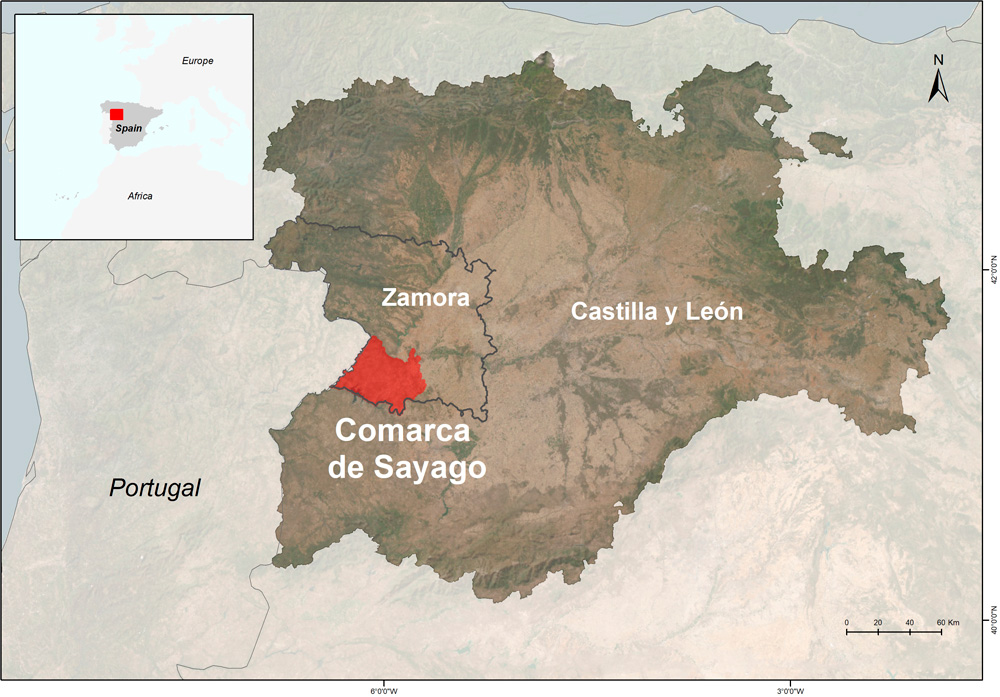
Source: ELDEMOR Project (2024)
Immigrant entrepreneurs were identified and recruited through snowball sampling, starting from initial contacts established during fieldwork and then expanding via interviewees’ recommendations and local networks. This approach was particularly appropriate given the small scale of the tourism economy in Sayago and the absence of comprehensive lists of immigrant-led businesses. Recruitment sought to capture maximum variation in terms of gender, age, origin, and type of tourism activity. While we aimed for a balanced composition, women are slightly overrepresented, reflecting both availability and the prominent role of women in several tourism and agritourism initiatives in the area.
The final analytical subsample comprises 15 immigrant entrepreneurs. Participants span several age groups, although the predominant range is 45-52 years, consistent with the life-course stage at which households often have accumulated some savings and work experience and can contemplate relocation and self-employment. In terms of migratory profile, the sample is dominated by internal in-migrants with strong family roots in Sayago, who account for 10 of the 15 cases. With the exception of three returnees, these individuals were born elsewhere in Spain but maintain close family ties to the comarca and typically have a long-standing relationship with the area (e.g., regular visits, summer stays, inherited housing, or family property), which facilitates settlement and investment. The remaining five participants are foreign-born immigrants. Four originate from other EU countries, and one from Latin America. Although numerically smaller, these cases are analytically relevant because they help capture the diversity of settlement motivations and the role of lifestyle-oriented international migration in shaping new rural economic practices.
To address concerns about the analytical procedure and avoid any impression of selective use of evidence, the analysis followed a systematic thematic analysis of the full set of immigrant transcripts. First, all transcripts were read in full and coded using a combination of deductive codes derived from the research questions (e.g., migration trajectories, motivations, forms of tourism engagement, constraints, and support mechanisms) and inductive codes emerging from repeated patterns in the material. Codes were then grouped into higher-order themes and compared across cases to identify convergences and variation. Finally, illustrative quotations were selected to represent themes that were recurrent across multiple interviews and to capture diversity within each theme, rather than to support isolated claims. This procedure increases transparency, as findings are grounded in patterns observed across the corpus rather than in single cases.
4. Results
4.1. Mobility and Migration in the Tourism Sector
Over recent decades, the region of Sayago has experienced a pronounced process of depopulation that has not been reversed by the arrival of immigrants. According to data from the Spanish National Statistics Institute, between 2001 and 2024 the region lost approximately one-third of its inhabitants, a trend observed across its 24 municipalities, although with varying intensity. Since 2001, the area shows clear signs of demographic ageing: more than 40% of its population is over 65, and the sex ratio is clearly male dominated, and it has increased by ten percentage points over the analysed period (Table 1). This male bias is largely the result of selective out-migration and ageing: younger women are more likely to leave in search of education and employment in urban areas, while older men remain in the villages, often tied to land and livestock. In addition, recent inflows into agriculture and other manual activities are also slightly skewed towards men, reinforcing this imbalance (see also Leibert, 2016, who documents this phenomenon in rural Eastern Germany).
| Variables | 2001 | 2024 | % Change |
|---|---|---|---|
| Total population | 10,604 | 7.441 | –29.8 |
| Sex ratio | 102.3 | 112.6 | +10.3 |
| Population aged 65+ | 40.2% | 41.7% | +1.5 |
| Foreign-born population | 0.7% | 7.0% | +6.3 |
At the same time, the share of foreign population remains notably low compared to the national average. In 2024, foreign-born residents represented 7.0% of the population in Sayago, compared to 13.4% in Spain as a whole (Instituto Nacional de Estadística, 2024). Nevertheless, in proportional terms, the increase has been substantial: from 0.7% in 2001 to 7.0% in 2024 (Table 2). The most common nationalities are Portuguese, accounting for nearly half of all foreign residents, followed by German, Moroccan, Argentine and Colombian nationals (Instituto Nacional de Estadística, 2024).
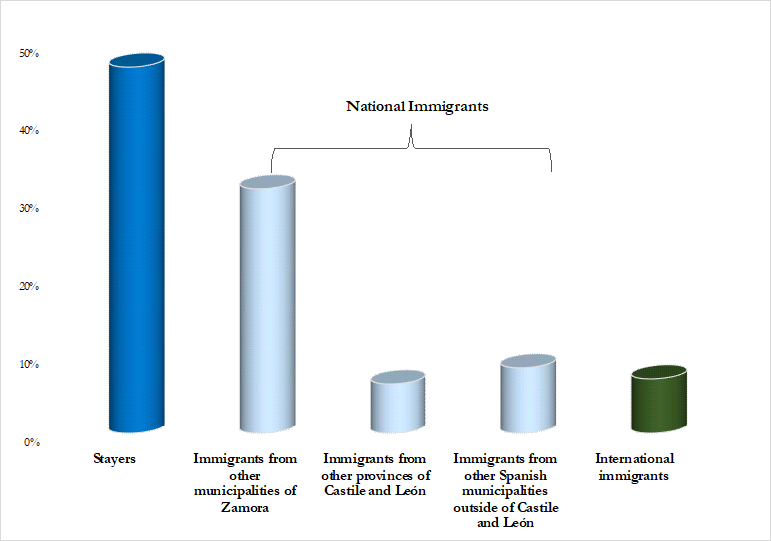
Source: Instituto Nacional de Estadística, 2024. Authors’ compilation
Internal migration is significant in the region, with a predominance of new residents from other municipalities in the province of Zamora and, more broadly, from other parts of Castile and León (approximately 36%) (Figure 2). According to our fieldwork, many of these internal in-migrants possess family roots in the region—parents, grandparents or other kinship ties—and often maintain inherited property in the area. Notably, almost 50% of all current residents of Sayago were born in the region itself (Figure 2).
Against this backdrop, the interviewed entrepreneurs can be grouped into two broad profiles:
Internal in-migrants with family roots in the area (including a small fraction of return migrants). This is the largest and most dynamic group interviewed. Most are born elsewhere in Spain but have family ties to the comarca and a strong sense of attachment that shapes their decision to settle in Sayago. Return migrants form a smaller subset, coming back after long periods away and often maintaining links through regular visits and summer stays. In-migrants frequently revalue inherited houses or family properties, and they actively engage in tourism and agritourism, often framed through belonging and identity discourses. Some pursue more “traditional” rural tourism (lodgings, small restaurants—sometimes supported by restoration funds), while others are more explicitly lifestyle-driven, seeking a calmer pace of life. Most are in their 40s-50s with children; returnees focused on inherited property tend to be older (50s-60s).
International (mainly lifestyle) immigrants. Like their internal counterparts, these international newcomers are economically innovative and active in tourism and agritourism. They share similar age ranges and family compositions (often families with children). Some narrate “falling in love” with the area during previous visits, but more commonly their arrival is linked to a partner who originates from Sayago or nearby.
4.2. Immigrant Involvement in Tourist Accommodation
The expansion of tourist accommodation in Sayago (rural hotels, rural lodges and a campsite) is partially linked to the arrival and initiatives of immigrants. In this process, the European Regional Development Funds (ERDF), channelled through the local action group ADERISA, have provided an important financial framework. The region currently offers 1,487 bed places (Junta de Castilla y León, 2025), 34% of which correspond to the Los Arribes campsite (Figure 3), located in the municipality of Villar del Buey. According to the owner, himself a returnee, the campsite is not only planning to expand its capacity (tents and bungalows), but also to diversify into restaurant services and complementary activities such as solar-energy production and sheep farming. In this regard, key informants were clear that accommodation entrepreneurs typically need to combine tourism with agriculture and other forms of self-employment in order to make their businesses viable.
The complementary role of tourism within migrant livelihood strategies is clearly illustrated by a couple running a rural hotel—he an internal in-migrant, she a Peruvian immigrant. Their testimony highlights how the husband’s salaried employment as an engineer was crucial for keeping the business afloat, particularly during the COVID-19 crisis, while the wife took the lead in developing new tourism products. Drawing on her culinary background and transnational ties, she organised Peruvian gastronomic events that not only attracted visitors but also broadened the region’s limited tourism offer:
It is necessary to launch initiatives; some friends suggested Peruvian food, and it has been a success. We do it over eight weekends, and every weekend we offer two starters and one main course. In total there are 24 different dishes. I think it is about knowing a little what people might like. […] People who come to eat here come back. We change the menu. But there is no fixed menu. Here you take a risk. […] My husband helps me on his days off because he is an engineer and he is the one who covers the fixed expenses; he saved the family economy during COVID-19. Everything we serve in our restaurant is organic. (Et-F-60-2)
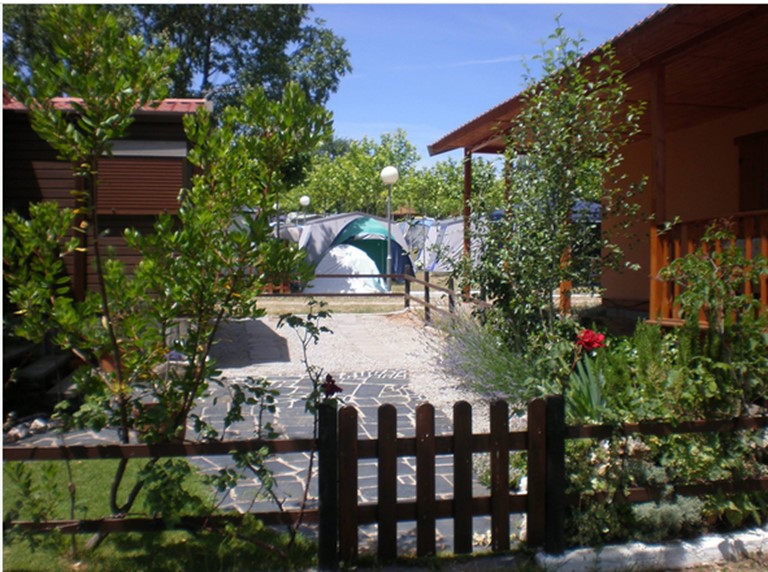
Source: NAME Project (2024)
Despite these efforts, the interviews convey a shared perception that initiatives explicitly designed to showcase and capitalise on Sayago’s landscapes and ethnographic heritage are still scarce. A notable exception is the ruta del vino (wine route), largely promoted by newcomers from different origins who have settled in the area and invested in small wineries and tourist-related activities. This route links together wineries, rural lodgings and other businesses, and demonstrates how cooperation among newcomers can structure and promote local resources in a more integrated way.
Beyond this example, however, interviewees repeatedly emphasise the lack of projects that translate Sayago’s cultural and environmental assets into coherent tourism products such as nature trails, heritage/environmental interpretation centres, or guided activities. In their view, this results in a systematic underuse of the region’s heritage potential. As one rural accommodation entrepreneur, an internal in-migrant with family ties in the area, explains:
In this area, which is close to Portugal, there was a meeting between entrepreneurs from both sides of the border (organised by the Duero-Douro Association), where I was invited as a tourism accommodation provider, and common tourism projects were proposed with the Spanish Cultural Routes (RCE)2 that cross Sayago but end at the border. […] It would be very important to promote the creation of trails that make the local heritage visible, such as the chiviteros.3 […] There is still a need to foster appreciation of Sayagués heritage. (Et-M-68-1)
In sum, the case of Sayago reveals a tourism sector that has expanded significantly in terms of accommodation capacity, in large part thanks to immigrant entrepreneurs and to ERDF support. At the same time, it remains structurally weak and highly dependent on complementary incomes from agriculture and other occupations within households. While some newcomers are driving innovative projects (e.g. ruta del vino or gastronomic events that introduce new cultural references), these remain isolated efforts within a fragmented local tourism fabric. Overall, Sayago’s accommodation model can be characterised as emergent and precarious, yet with clear opportunities for consolidation if the role of both internal in-migrants and international immigrants is recognised and supported through integrated strategies that valorise the comarca’s cultural and environmental assets.
4.3. Lifestyle Entrepreneurs in Agritourism
The previous section highlighted the wine route as an initiative largely led by newcomers. Agritourism in Sayago is likewise being driven largely by lifestyle-oriented internal and international immigrants, who are reworking local agricultural resources into marketable tourism experiences. While the region hosts various agritourism assets—wineries offering visits, small agro-industrial enterprises with direct sales to the public, and producers who in some cases also showcase their production processes (cheese dairies, olive oil mills, artisanal jam makers) (Figure 4)—it is newcomers, rather than long-standing residents, who most actively experiment with these possibilities (Figure 4).
The role of international lifestyle immigrants in agritourism is exemplified by an Arribes winemaker who has reoriented a previous urban, non-agricultural career towards small-scale wine tourism. An economist by training, he settled in the region attracted by its landscape and quality of life, in line with the lifestyle migration literature (Marcelo-Zunino et al., 2016; Rodes-García & Rodríguez Rodríguez, 2018; Valero-Juan, 2012). Beyond the typical “falling in love with the place” narrative, his case is particularly relevant because it articulates a forward-looking vision for wine tourism in Sayago. As a member of the board of the Arribes Designation of Origin, responsible for marketing and promotion, he works to position the area and its largely unknown producers in national and international markets and has proposed creating a wine “interpretation laboratory” as a complement to traditional cellar visits. At the same time, his reflections highlight structural obstacles that, in his view, constrain tourism development in the comarca:
I arrived in 2016. I am an economist and had worked in various businesses, none of them related to wine. I am 43 years old and came here when I was 35, with the idea of setting up a small winery and having my own vineyard. The story begins in 2004, when I did an exchange stay at the University of Salamanca and got to know the area. I bought a vineyard and eventually settled here. Within the Designation of Origin, I am responsible for marketing and promoting our wines, explaining where Arribes is located, because our grapes and producers are largely unknown. For example, I have travelled to Japan for this purpose. My idea now is to create a ‘laboratory’ to receive visitors. There is tourism here, of course, but the big problem is that the tourists who come are low-spending tourists. (At-M-43-2)
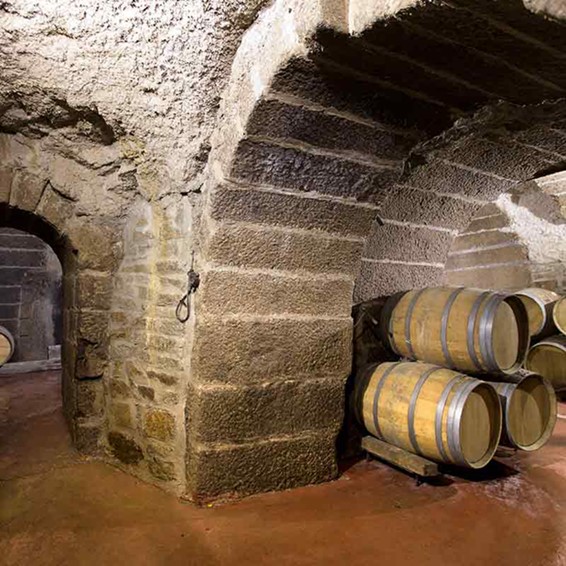
Source: NAME Project (2024)
A similar pattern appears in the case of an internal in-migrant who runs a cheesemaking business in the provincial capital and whose family origins lie in a small village in Sayago. Building on these roots, she plans to create an interpretation centre in her family’s former home, presenting agricultural lifestyles and local food culture, although at the time of the interview she was still seeking funding for the necessary renovations. Her project illustrates how internal in-migrants with inherited property can revalorise both buildings and memories through agritourism.
Other initiatives show how newcomers introduce new forms of experience-based agritourism. One example is a shepherd from the Basque Country who has settled in a Sayago village and organises guided “grazing mornings.” Targeted at visitors—particularly children from urban areas—these outings combine environmental education with direct contact with extensive livestock farming, a traditional livelihood in the region that is increasingly unfamiliar to outsiders. Tourists express strong interest in both the activity and the challenges it entails, although local reactions are sometimes ambivalent:
I organise what I call “grazing mornings.” The idea came from some friends who visited me. I’ve had families and couples who come along with me and the sheep, and I explain what my work involves and what this world is like. For people from the city, this is another world. Others are curious about my personal situation, how I adapt, whether it’s cold in winter… People come and they leave really happy. For me, it’s also a kind of therapy, because in the end you talk to people. I’ve also received criticism from some locals, who ask how they are supposed to learn from me, given that I’m not from here. It doesn’t bother me. For children, it’s an incredibly powerful activity, and their parents can relax and enjoy themselves. (At-F-49-1)
The Basque shepherd’s project is a clear example of social innovation, bringing environmental education and participatory agritourism into a territory where such activities did not previously exist. Taken together, these cases suggest that immigrants, both internal and international, are acting as particularly innovative actors in Sayago’s agritourism field. They mobilise external knowledge, networks and cultural repertoires to create new products (wine interpretation laboratories, heritage-based cheese centres, educational shepherding tours) that expand and diversify the local offer.
This role resonates with evidence from other European rural contexts, where lifestyle immigrant entrepreneurs are shown to diversify local economies, create niche tourism products and stimulate learning and innovation through new ideas, networks and practices (Mendoza et al., 2025; Torkington et al., 2025). In depopulated rural areas, newcomers in particular can contribute to social regeneration and endogenous development by opening businesses, attracting visitors, mobilising external resources and revalorising local cultural and environmental assets. Within this broader framework, the initiatives documented in Sayago can be interpreted as expressions of social and tourism innovation led by lifestyle-oriented internal and international immigrants, strengthening the region’s capacity to position itself in emerging, sustainability-oriented agritourism markets.
4.4. Immigrant Initiatives in Heritage, Cultural and Gastronomic Tourism
Heritage-based tourism in Sayago is emerging above all through the initiatives of internal and international immigrants who reinterpret local landscapes, traditions and food as tourism resources. The area has considerable potential, particularly in its nature-based dimension. A key asset is the Arribes del Duero Natural Park, which spans the provinces of Salamanca and Zamora along the border with Portugal. Its most distinctive geographical feature is the system of river canyons carved by the Duero and its tributaries, with slopes exceeding 400 metres, forming a protected area noted for its high biodiversity. The park also encompasses a rich cultural and ethnographic heritage, shaped by centuries of agricultural, livestock and winegrowing practices in an environmentally fragile setting (Fernández, 2018). Complementing these assets are local gastronomic products (cheeses, honey, cured meats) and traditional rock-cut wine cellars associated with the Arribes Designation of Origin, which covers part of the region. Many of these cellars constitute an emerging wine-tourism resource that enhances the agritourism offer (Potente Castro et al., 2023). In several cases, it is lifestyle-oriented immigrants—both foreign-born and from elsewhere in Spain—who have been most proactive in making them accessible to visitors or integrating them into tasting experiences.
Paradoxically, despite the presence of hiking routes and several long-distance trails crossing the area, waymarking is limited and there are no travel agencies specialising in these services. In contrast to other lagging regions in Spain (Mendoza & Domínguez-Mujica, 2025; Mendoza et al., 2025), the supply of active tourism in Sayago remains modest, revealing a potential niche for diversification that could be potentially developed by the same immigrant entrepreneurs already involved in accommodation and agritourism.
Cultural tourism is mainly organised around local festivals, most of which take place during the summer months and attract numerous visitors with family ties to the area (i.e. emigrants and descendants who live elsewhere in Spain and come back for holidays). In this context, some initiatives with a clearer tourism orientation are led by mobile residents. A cultural magazine, Vive Zamora, reports on local activities and collaborates in training young scholarship holders; it is managed by a resident who alternates his time between Madrid and Bermillo de Sayago (the regional capital), exemplifying the role of internal circulatory migration in sustaining cultural life and visibility. However, this form of tourism is highly seasonal and, according to interviewees, attendance at festivities has declined over time, in parallel with the ageing of the cohorts who migrated in previous decades.
By contrast, the gastronomic offer remains relatively limited, partly due to competition from the restaurant sector in Miranda do Douro (a Portuguese border town directly opposite Sayago), which, as highlighted in the interviews, provides a broader range of services at lower prices. Local restaurants are mainly oriented towards daytime service, catering to lunchtime demand from local workers and tourists visiting the Arribes area. Aware of this weakness, local entrepreneurs—among them internal and international immigrants active in accommodation and catering—are testing strategies to strengthen gastronomic promotion and to anchor visitors more firmly in the comarca:
My wife is in charge of the tourism sector in the business association. Recently, gastronomic days have been organised with the participation of all the restaurants in the region, in order to highlight our gastronomic heritage—our cheeses, our cured meats, our wines. We are aware of this potential. (Et-M-68-1)
As in the case of agritourism, these initiatives show how newcomers play a catalytic role in organising and marketing local products that long-standing residents value but rarely package as tourism experiences.
Finally, an illustrative example of successful cultural-environmental tourism is provided by the environmental cruises that navigate the Duero river and offer bilingual (Spanish-Portuguese) scientific commentaries along the route (Figure 5).
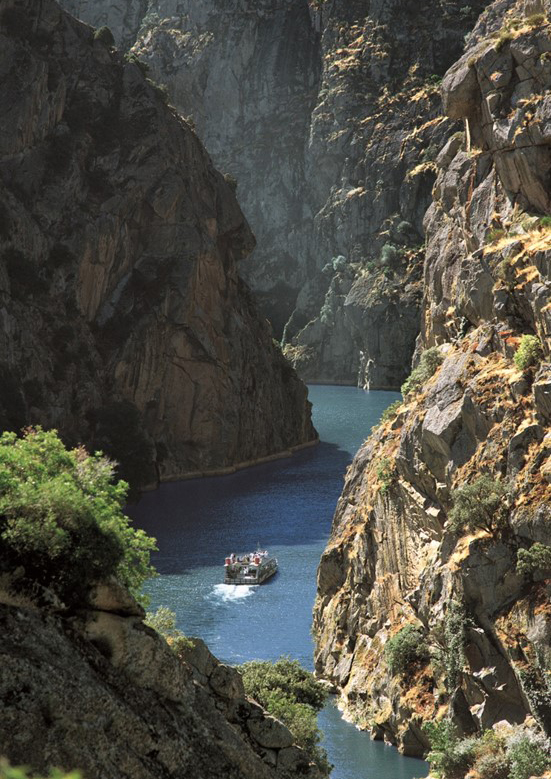
Source: NAME Project (2024)
According to the manager, many tourists travel to the region specifically for this activity, often combining it with lunch in Miranda do Douro before continuing their journey elsewhere. The project is embedded in a cross-border context of mobility of tourists, and is closely linked to the Duero-Douro International Biological Station, an organisation dedicated to research, technological innovation, environmental education and the study of biodiversity:
We have promoted the Duero-Douro International Biological Station (EBI), an organisation dedicated to research, technological innovation, environmental education and the study of biodiversity, seeking to reconcile the conservation of natural areas with the development of sustainable ecotourism. […] We operate an environmental cruise along the Arribes del Duero, sailing beneath its vertical cliffs on the stretch of the river that marks the border between Zamora (Spain) and Miranda do Douro (Portugal). During the trip, technicians from the Biological Station interpret the ethnographic resources, fauna, flora and geology of the park’s spectacular escarpments. (Es-M-52-1)
Overall, the case of the environmental cruise on the Duero river, together with immigrant-led initiatives in gastronomy, cultural promotion and wine tourism, illustrates both the strengths and limitations of the current tourism model in Sayago. On the one hand, it shows the capacity of newcomers to create high-quality, environmentally and culturally oriented products that attract visitors specifically to the area. On the other hand, the absence of complementary services and coordinated strategies for extending stays means that much of this tourism remains highly transient, generating only limited spillover effects on the wider local economy. This underscores the need for more integrated territorial planning and product development that explicitly recognises and supports the role of immigrants as key actors in the development of heritage, cultural and gastronomic tourism in Sayago.
5. Discussion
The Sayago case clarifies a central tension in contemporary migration-development agendas for “left-behind” rural Europe: while tourism and immigration are increasingly framed as mutually reinforcing engines of revitalisation, the empirical conditions of peripheral regions make it hard to translate these expectations into stable outcomes. Rather than functioning as a straightforward mechanism of growth, tourism-related entrepreneurship in Sayago appears embedded in constrained opportunity structures and thin markets. Therefore, the settlement of newcomers is often contingent on assets, networks, and life-course configurations that public policy can only partially shape.
Conceptually, the Sayago case shows that the tourism-migration nexus in left-behind rural areas operates less as a growth engine than as a settlement-infrastructure mechanism. Tourism creates viable livelihood niches primarily when coupled with housing access, household diversification, and everyday services. It also advances borderlands scholarship by demonstrating how cross-border asymmetries shapes migrant entrepreneurship and place-making, producing “leaky” tourism economies where revitalisation depends on multi-scalar coordination rather than local initiative alone.
The findings suggest, first, that tourism entrepreneurship operates primarily as a strategy of socio-spatial viability, not as a conventional “development sector” with predictable scaling potential. Immigrants engage in rural accommodation, gastronomy, wine and agritourism because these activities can be combined with household life and lifestyle aspirations in a territory with limited salaried work. This implies that policies centred on start-up incentives or branding alone are likely to underperform if they do not address the everyday infrastructures that enable permanence: housing availability, childcare, health access, accessibility, and digital connectivity. In other words, the locus of intervention is not only the “tourism product” but the settlement ecosystem that allows immigrant projects to endure.
Second, Sayago highlights the limits of fragmented and sectoral governance. Interviewees describe a nascent and partly precarious tourism model in which innovation exists (new products, interpretive proposals, niche experiences) but remains weakly integrated into a coherent territorial offer. This pattern is common in peripheral rural contexts where multiple public bodies, short project cycles, and limited professional capacity lead to piecemeal interventions (e.g. Hodge & Adams, 2016; Fred, 2020; Domorenok et al., 2021). The policy difficulty is not simply insufficient funding but scarce coordination capacity: aligning municipalities, provincial and regional bodies, local action groups, and private actors around shared priorities (routes, interpretation, joint promotion, quality standards, complementary tourist offer). Without this, the benefits of immigrant-led innovation remain dependent on individual resilience and may not generate cumulative effects (longer stays, higher visitor spend, thicker local supply chains).
Third, as a border comarca, Sayago is shaped by cross-border asymmetries that complicate place-based policy tools. Border proximity can expand potential markets and circuits, yet it can also generate leakage and competition when services and prices differ across the frontier. Moreover, the lived geography of everyday life is frequently cross-border, while policy instruments are typically bounded by national and regional jurisdictions. This creates a governance mismatch: strategies to leverage the border (integrated itineraries, complementary branding, shared interpretation of landscapes and heritage) require bilateral collaboration and administrative flexibility that are difficult to achieve through standard rural development instruments. In practical terms, the border condition increases the need for cross-border policy design while simultaneously making it harder to implement.
Fourth, the case raises a broader methodological and political point relevant for migration studies: policies often treat “immigrants” as a homogeneous category of potential repopulators, but the empirical trajectories in Sayago indicate heterogeneous settlement logics. Some internal movers are enabled by inherited housing and family ties; international lifestyle immigrants often arrive through partnership links; others pursue entrepreneurial projects that depend on niche demand. This diversity makes it difficult to design “targeted” migration policies without reproducing selectivity: interventions may benefit those who already have assets, social capital, and mobility resources, while doing little to create conditions for less-advantaged newcomers to remain. The policy challenge, therefore, is not simply attraction but retention and consolidation, which hinges on services, social integration, and institutional support rather than on symbolic place promotion.
Taken together, the Sayago evidence suggests that effective policy in remote borderlands must move beyond the assumption that tourism and immigration are quasi-automatic remedies. Instead, it should be framed as a multi-level territorial strategy that (i) stabilises settlement infrastructures; (ii) coordinates product development and service complementarities; (iii) manages cross-border opportunities and leakages through bilateral cooperation; and (iv) actively supports social coexistence between long-standing residents and newcomers. In this sense, the main policy lesson is that migration-led revitalisation in border peripheries requires governance capacity and everyday infrastructures at least as much as it requires entrepreneurial initiative.
Overall, the findings support the main premises of the hypothesis: tourism-related activity can attract and help retain newcomers by enabling self-employment and livelihood diversification. However, it does not, on its own, reverse depopulation or deliver broad-based revitalisation under conditions of seasonality, thin markets, and limited services.
6. Conclusions
This article has examined the socio-spatial dynamics of Sayago (Zamora) as a left-behind rural border region, focusing on the interrelations between tourism development, immigration, and local revitalisation. The findings confirm the structural vulnerabilities documented for many rural European territories—long-term depopulation, pronounced ageing, and limited capacity to attract and retain new residents—while also showing that internal and international immigrants contribute to sustaining services and opening new economic activities in tourism-related sectors.
The analysis shows that migrants’ motivations and settlement trajectories are diverse yet patterned: internal in-migrants, some of whom are returnees, frequently mobilise affective and family ties (villages of parents or grandparents, inherited housing) that make return plausible, while international lifestyle immigrants are generally drawn by landscape and perceived tranquillity and often consolidate settlement through partnership links. Across profiles, tourism entrepreneurship appears less as a pure growth opportunity than as a livelihood strategy. At the same time, the immigration demographic effects remain insufficient to reverse depopulation, and tourism projects face persistent constraints: thin markets, limited visitor spending, competition with neighbouring destinations, and at times ambivalent local reception.
Having said that, the article highlights the decisive role of internal and international immigrants as innovative actors in rural tourism, agritourism and related activities. Lifestyle-oriented entrepreneurs have begun to introduce new products and practices (e.g. wine routes, educational shepherding tours) and are developing proposals for tourist-oriented cultural initiatives (e.g. wine interpretation laboratories, prospective interpretation centres on agrarian life) that revalorise local cultural and environmental heritage and have the potential to broaden the tourism offer beyond conventional accommodation. These initiatives align with wider European evidence on the contribution of lifestyle immigrant entrepreneurs to rural diversification, niche tourism and social innovation, and they show how migratory trajectories, personal projects and territorial opportunities intersect in the production of new rural futures (see, for instance, Carson & Carson, 2018; Pinar & Altin, 2024; Mendoza et al., 2025)
The results also point to the need for integrated, multi-level governance strategies that connect tourism, migration and local development policies. In practical terms, this implies supporting immigrant and local entrepreneurs through tailored advisory services, facilitating cooperative networks (e.g. routes, joint marketing, shared infrastructures), investing in signage and interpretation of landscape and ethnographic heritage, and designing cross-border projects that leverage the strategic position of Sayago along the Spanish-Portuguese frontier. Equally important is recognising and addressing the social dimension of these transformations, by promoting spaces of encounter and dialogue between long-standing residents and newcomers, and by ensuring that tourism growth is compatible with environmental conservation and community wellbeing.
Finally, this case study has certain limitations that open up lines for future research. The empirical evidence is based on qualitative fieldwork in a single region and on a non-representative sample of immigrant entrepreneurs and key informants, which calls for comparative studies across different types of left-behind areas and for longitudinal approaches that capture the evolution of projects over time. Future research could also deepen the analysis of gender, class and nationality/origin differences in tourism-related migration, as well as the role of public and private intermediaries in shaping opportunities and constraints. Even so, the Sayago case contributes to the growing literature on rural tourism and migration by showing, in a concrete territorial context, how rural tourism, agritourism and related activities can act as both vectors of innovation and mirrors of the structural tensions that mark contemporary rural Europe.
Acknowledgments
This article is based on two projects: ELDEMOR (Endogenous Local Development and Mobilities in Rural Areas of Spanish and Portuguese Peripherical Regions) project that has been funded by the Spanish Ministry of Science and Innovation (CNS2022-135614); and RE-PLACE project (Reframing Non-Metropolitan Left Behind Places Through Mobility and Alternative Development), EU Horizon Framework Programme for Research and Innovation. Agreement no. 101094087).
References
Bayona-i-Carrasco, J., & Gil-Alonso, F. (2013). Is foreign immigration the solution to rural depopulation? The case of Catalonia (1996-2009). Sociologia Ruralis, 53(1), 26-51. https://doi.org/10.1111/j.1467-9523.2012.00577.x
Bell, M., & Osti, G. (2010). Mobilities and ruralities: An introduction. Sociologia Ruralis, 50(3), 199-204. https://doi.org/10.1111/j.1467-9523.2010.00518.x
Benson, M., & O’Reilly, K. (2016). From lifestyle migration to lifestyle in migration: Categories, concepts and ways of thinking. Migration Studies, 4(1), 20-37. https://doi.org/10.1093/migration/mnv015
Bianchi, M., Caputo, M. L., Lo Cascio, M., & Baglioni, S. (2023). Migrants in the economy of European rural and mountain areas: A cross-national investigation of their economic integration. Journal of Rural Studies, 99, 62-70. https://doi.org/10.1016/j.jrurstud.2023.02.010
Bijker, R. A., & Haartsen, T. (2012). More than Counter-urbanisation: Migration to Popular and Less-popular Rural Areas in the Netherlands. Population, Space and Place, 18(5), 643-657. https://doi.org/10.1002/psp.687
Bosworth, G., & Farrell, H. (2011). Tourism entrepreneurs in Northumberland. Annals of Tourism Research, 38(4), 1474-1494. https://doi.org/10.1016/j.annals.2011.03.015
Camarero, L., & Sampedro, R. (2020). La inmigración dinamiza la España rural. Fundación “la Caixa.” El Observatorio Social. https://elobservatoriosocial.fundacionlacaixa.org/es/-/la-inmigracion-dinamiza-la-espana-rural
Campón-Cerro, A. M., Hernández-Mogollón, J. M., & Alves, H. (2017). Sustainable improvement of competitiveness in rural tourism destinations: The quest for tourist loyalty in Spain. Journal of Destination Marketing & Management, 6(3), 252-266. https://doi.org/10.1016/j.jdmm.2016.04.005
Cànoves, G., Herrera, L., & Villarino, M. (2005). Turismo rural en España: paisajes y usuarios, nuevos usos y nuevas visiones. Cuadernos de Turismo, 15, 63-76. https://hdl.handle.net/10201/13040
Cànoves, G., Villarino, M., Herrera, L., & Cuesta, L. (2004). Turismo rural en Cataluña y Galicia: algunos problemas sin resolver. Cuadernos Geográficos, 34(1), 111-128. https://revistaseug.ugr.es/index.php/cuadgeo/article/view/1823
Carson, D. A., & Carson, D. B. (2018). International lifestyle immigrants and their contributions to rural tourism innovation. Journal of Rural Studies, 64(8), 230-240. https://doi.org/10.1016/j.jrurstud.2017.08.004
Cedeño, C. A., Loor, L., & Ruiz, A. B. (2020). Estrategias para la gestión sostenible del turismo rural alternativo en la Ruta del Encanto del cantón de Portoviejo. RECUS: Revista Electrónica Cooperación Universidad Sociedad, 5(1), 77-89. https://doi.org/10.33936/recus.v5i1.2257
Collantes, F., Pinilla, V., Sáez, L. A., & Silvestre, J. (2014). Reducing depopulation in rural Spain: The impact of immigration. Population, Space and Place, 20(7), 606-621. https://doi.org/10.1002/psp.1797
Del Olmo-García, F., Domínguez-Fabián, I., Crecente-Romero, F. J., & del Val-Núñez, M. T. (2023). Determinant factors for the development of rural entrepreneurship. Technological Forecasting and Social Change, 191, 122487. https://doi.org/10.1016/j.techfore.2023.122487
Domorenok, E., Graziano, P., & Polverari, L. (2021). Introduction: policy integration and institutional capacity. Theoretical, conceptual and empirical challenges. Policy and Society, 40(1), 1-18. https://doi.org/10.1080/14494035.2021.1902058
Eimermann, M. (2016). Two sides of the same coin: Dutch rural tourism entrepreneurs and countryside capital in Sweden. Rural Society, 25(1), 55-73. https://doi.org/10.1080/10371656.2016.1152033
Esparcia, J. (2000). The LEADER Programme and the Rise of Rural Development in Spain. Sociologia Ruralis, 40(2), 200-207. https://doi.org/10.1111/1467-9523.00142
European Committee of the Regions & UN Tourism. (2024). Tourism and Rural Development in Europe. https://www.untourism.int/news/european-committee-of-the-regions-and-un-tourism-break-new-ground-with-study-on-rural-tourism-and-development-in-europe
Fernández, J. (2018). La comarca natural de los Arribes del Duero. Desafíos demográficos y potencialidades turísticas. Studia Zamorensia, 17, 195-207. https://revistas.uned.es/index.php/studiazamo/article/view/23488
Fernández-Álvarez, Ó., González-González, M., & Ouali-Fernández, S. (2025). The paradox of neo-ruralism in Castile and León, Spain: Urbanites in the countryside and rural dwellers in the city. Humans, 5(2), 10. https://doi.org/10.3390/humans5020010
Fred, M. (2020). Local government projectification in practice—a multiple institutional logic perspective. Local Government Studies, 46(3), 351-370. https://doi.org/10.1080/03003930.2019.1606799
Garau, C. (2015). Perspectives on cultural and sustainable rural tourism in a smart region: The case study of Marmilla in Sardinia (Italy). Sustainability, 7(6), 6412-6434. https://doi.org/10.3390/su7066412
Guaita, J. M., Martín, J. M., Salina, J. A., & Mogorrón-Guerrero, H. (2019). An analysis of the stability of rural tourism as a desired condition for sustainable tourism. Journal of Business Research, 100, 165-174. https://doi.org/10.1016/j.jbusres.2019.03.033
Hedberg, C., & Haandrikman, K. (2014). Repopulation of the Swedish countryside: Globalisation by international migration. Journal of Rural Studies, 34, 128-138. https://doi.org/10.1016/j.jrurstud.2014.01.005
Hodge, I., & Adams, W. M. (2016). Short-Term Projects versus Adaptive Governance: Conflicting Demands in the Management of Ecological Restoration. Land, 5(4), 39. https://doi.org/10.3390/land5040039
Hoey, B. (2005). From pi to pie: Moral narratives of noneconomic migration and starting over in the postindustrial Midwest. Journal of Contemporary Ethnography, 34(5), 586-624. https://doi.org/10.1177/0891241605279016
Instituto Nacional de Estadística. (2001). Censos de Población y Viviendas 2001. Resultados definitivos. https://www.ine.es/censo_accesible/es/inicio.jsp
Instituto Nacional de Estadística. (2024). Censo anual de población 2021-2024. Resultados por municipios. Población por sexo, edad (grandes grupos) y relación entre lugar de nacimiento y lugar de residencia. https://www.ine.es/jaxiT3/Datos.htm?t=68540#_tabs-tabla
Instituto Nacional de Estadística. (2025). Alojamientos de turismo rural: Encuesta de ocupación en alojamientos turísticos extrahoteleros. https://www.ine.es/dyngs/INEbase/es/operacion.htm?c=Estadistica_C&cid=1254736176963&menu=ultiDatos&idp=1254735576863
Iversen, I., & Jacobsen, J. K. S. (2017). Migrant tourism entrepreneurship in rural Norway. Scandinavian Journal of Hospitality and Tourism, 16(4), 484-499. https://doi.org/10.1080/15022250.2015.1113887
Junta de Castilla y León. (2025). Registro de Turismo de Castilla y León. https://analisis.datosabiertos.jcyl.es/explore/dataset/registro-de-turismo-de-castilla-y-leon/table/?flg=es-es
Lane, B., & Kastenholz, E. (2015). Rural tourism: The evolution of practice and research approaches—towards a new generation concept? In B. Lane & E. Kastenholz (eds.), Rural tourism (pp. 1-21) Routledge. https://doi.org/10.1080/09669582.2015.1083997
Leibert, T. (2016). She leaves, he stays? Sex-selective migration in rural East Germany. Journal of Rural Studies, 43, 267-279. https://doi.org/10.1016/j.jrurstud.2015.06.004
Liu, Y. L., Chiang, J. T., & Ko, P. F. (2023). The benefits of tourism for rural community development. Humanities and Social Sciences Communications, 10(1), 1-12. https://doi.org/10.1057/s41599-023-01610-4
López-Martínez, G., & Espeso-Molinero, P. (2025). La cultura laboral del emprendedor autónomo en el turismo rural. Cuadernos de Turismo, (55), 139-158. https://doi.org/10.6018/turismo.663321
MacDonald, R., & Jolliffe, L. (2003). Cultural rural tourism: Evidence from Canada. Annals of tourism research, 30(2), 307-322. https://doi.org/10.1016/S0160-7383(02)00061-0
Mancha Cáceres, O. I., & Ramírez-García, S. (coords.) (2025). Ruralidades y turismos: Miradas para la regeneración ecosocial de lo rural. Catarata.
Marcelo-Zunino, H., Espinoza Arévalo, L., & Vallejos Romero, A. (2016). Los migrantes por estilo de vida como agentes de transformación en la Norpatagonia chilena. Revista de Estudios Sociales, 55, 163-176. https://doi.org/10.7440/res55.2016.11
McAreavey, R. (2017). New Immigration Destinations: Migrating to Rural and Peripheral Areas. Routledge. https://doi.org/10.1201/9780415540056
Mendoza, C., & Domínguez-Mujica, J. (2025). Immigration and Local Endogenous Development in Rural Border Areas: A Comparative Study of Two Left-Behind Spanish Regions. Agriculture, 15(8), 806. https://doi.org/10.3390/agriculture15080806
Mendoza, C., Domínguez-Mujica, J., & Parreño-Castellano, J. M. (2025). Islands on the move: Non-mass tourism and migration in El Hierro (Spain) and Pico (Portugal). Annals of Tourism Research Empirical Insights, 6(1), 100171. https://doi.org/10.1016/j.annale.2025.100171
Milbourne, P., & Kitchen, L. (2014). Rural mobilities: Connecting movement and fixity in rural places. Journal of Rural Studies, 34, 326-336. https://doi.org/10.1016/j.jrurstud.2014.01.004
Mitchell, C. (2004). Making Sense of Counterurbanization. Journal of Rural Studies, 20(1), 15-34. https://doi.org/10.1016/S0743-0167(03)00031-7
Montero, R. A. (2025). El agroturismo en el contexto sociocultural como propuesta para el desarrollo del Cantón San Francisco de Milagro, provincia del Guayas, Ecuador: una aproximación teórica. Journal of Multidisciplinary Novel Journeys & Explorations, 3(1), 1-10. https://doi.org/10.63688/93ted702
Nefedova, T. G., Pokrovskii, N. E., & Treivish, A. I. (2016). Urbanization, counterurbanization, and rural-urban communities facing growing horizontal mobility. Sociological Research, 55(3), 195-210. https://doi.org/10.1080/10610154.2016.1245570
Nieto Masot, A., & Cárdenas Alonso, G. (2017). 25 años de políticas europeas en Extremadura: turismo rural y método LEADER. Cuadernos de Turismo, 39, 389-416. https://doi.org/10.6018/turismo.39.290621
Osbaldiston, N. (2012). Seeking Authenticity in Place, Culture, and the Self: The Great Urban Escape. Palgrave Macmillan. https://doi.org/10.1057/9781137007636
Paniagua, Á. (2002). Urban-rural migration, tourism entrepreneurs and rural restructuring in Spain. Tourism Geographies, 4(4), 349-371. https://doi.org/10.1080/14616680210158128
Parreño-Castellano, J. M., & Domínguez-Mujica, J. (2016). Working and retiring in sunny Spain: Lifestyle migration further explored. Hungarian Geographical Bulletin, 65(4), 407-420. https://doi.org/10.15201/hungeobull.65.4.8
Phillips, M. (2010). Counterurbanisation and rural gentrification: an exploration of the terms. Population, Space and Place, 16(6), 539-558. https://doi.org/10.1002/psp.570
Pirnar, İ., & Altin, H. O. (2024). International Immigrant Entrepreneurship in Tourism Industry: A Comprehensive Literature Review. Ege Academic Review, 24(3), 447-462. https://doi.org/10.21121/eab.20240307
Plaza, J. I., & Fernández, R. (2020). Valor patrimonial de los paisajes del vino y su promoción en los valles y llanuras del este de Zamora. Estudios Geográficos, 81(289), e046. https://doi.org/10.3989/estgeogr.202060.060
Potente Castro, M., Colino Prieto, F., Gutiérrez Aparicio, D., Navarro Zamora, A., & López Tárraga, A. B. (2023). Turismo y patrimonio como motores de desarrollo rural: el caso de las bodegas históricas de Fermoselle (Zamora). Cuadernos Geográficos, 62(2), 115-132. https://doi.org/10.30827/cuadgeo.v62i2.27430
Pulido, J. I., & Cárdenas, P. J. (2011). El turismo rural en España: Orientaciones estratégicas para una tipología aún en desarrollo. Boletín de la Asociación de Geógrafos Españoles, (56), 155-176. https://bage.age-geografia.es/ojs/index.php/bage/article/view/1348
RE-PLACE Project. (2024). Re-Place Project. Reframing Non-Metropolitan Left Behind Places Through Mobility and Alternative Development. https://replace-horizon.eu/about/#about
Rivera Escribano, M. J. (2022). Nuevos residentes y despoblación rural en España. Mediterráneo Económico, (35), 279-295.
Rodes-García, J., & Rodríguez Rodríguez, V. (2018). Migrantes de retiro en España: Estilos de vida multilocales y patrones de integración. Migraciones Internacionales, 9(3), 193-222. https://doi.org/10.17428/rmi.v9i34.422
Samper-Mendívil, M., Aramendia-Muneta, M. E., & Alarcón-López, R. (2025). Assessing sustainability in rural tourism: insights from accommodation managers and residents in Navarre. Journal of Rural Studies, 120, 103866. https://doi.org/10.1016/j.jrurstud.2025.103866
Sandu, D. (2024). Local Human Development Index for Spain, 2021-2022 (LHDI_ES) [SPAIN] [Computer file]. Bucharest, Romania: Research Institute for the Quality of Life - Romanian Academy of Science and Universidad de Las Palmas de Gran Canaria [producers]. Re-Place Project, Horizon Europe Grant Agreement No. 101094087.
Sharpley, R. (2002). Rural tourism and the challenge of tourism diversification: the case of Cyprus. Tourism Management, 23(3), 233-244. https://doi.org/10.1016/S0261-5177(01)00078-4
Stockdale, A. (2004). Rural Out-Migration: Community Consequences and Individual Migrant Experiences. Sociologia Ruralis, 44(2), 167-194. https://doi.org/10.1111/j.1467-9523.2004.00269.x
Stone, I., & Stubbs, C. (2007). Enterprising expatriates: Lifestyle migration and entrepreneurship in rural southern Europe. Entrepreneurship & Regional Development, 19(5), 433-450. https://doi.org/10.1080/08985620701552389
Thulemark, M., Lundmark, M., & Heldt-Cassel, S. (2014). Tourism Employment and Creative In-migrants. Scandinavian Journal of Hospitality and Tourism, 14(4), 403-421. https://doi.org/10.1080/15022250.2014.968000
Tomay, K., & Berger, V. (2024). Inclusion or exclusion? The spatial habitus of rural gentrifiers. Social Inclusion, 12, 7787. https://doi.org/10.17645/si.7787
Torkington, K., Eimermann, M., Ribeiro, F. P., & Conceição, S. (2025). Challenges for tourism-related lifestyle migrant entrepreneurship in rural areas of the Algarve, Portugal. Journal of Rural Studies, 115, 103562. https://doi.org/10.1016/j.jrurstud.2025.103562
Valero-Juan, L. F. (2012). Inmigración y estilos de vida saludables en España. Atención Primaria, 44(8), 505-506. https://doi.org/10.1016/j.aprim.2011.11.009
Vannini, P., & Taggart, J. (2014). Off the Grid: Re-Assembling Domestic Life. Routledge. https://doi.org/10.4324/978020374406
Varisco, C. A. (2016). Turismo rural: propuesta metodológica para un enfoque sistémico. Pasos: Revista de Turismo y Patrimonio Cultural, 14(1), 153-167. https://doi.org/10.25145/j.pasos.2016.14.010